


Maintaining robust seedling shelves and indoor plant displays often involves traditional lighting fixtures that utilize low-pressure gas-discharge technology. Many indoor gardeners wonder about what is in fluorescent light bulbs when setting up propagation racks, replacing worn tubes, or handling accidental breakage around delicate foliage. Understanding the internal chemistry reveals how electrical arcs interact with vaporized elements and mineral coatings to produce visible plant light. Whether you operate linear shop fixtures or compact desktop setups, learning about these internal elements ensures safer handling and more informed lighting choices for your indoor garden.
Fluorescent lamps have supported indoor horticulture for decades, serving as dependable sources of diffuse illumination for vegetative propagation and microgreens before broad-spectrum solid-state arrays became widespread. Fixtures such as T5 high output grow lights demonstrate how high-output gas-discharge designs can provide balanced light across multi-tier propagation shelving. Knowing the specific role of internal gases, metallic vapors, and luminous powders helps growers optimize vegetative photoperiods while avoiding unnecessary contamination risks. Examining these components also clarifies how distinct color temperatures, from warm soft white to crisp daylight, are generated inside sealed glass envelopes.





Understanding What Is in Fluorescent Light Bulbs and How They Function
Every fluorescent light bulb operates as an engineered low-pressure gas-discharge system designed to convert electrical potential into usable visible photons. At its most fundamental level, a fluorescent lamp consists of a sealed glass envelope containing an inert noble gas, a microscopic quantity of liquid and vaporized mercury, two heated tungsten electrodes, and an internal coating of luminescent phosphor powder. When electrical current energizes the lamp, an arc forms through the ionized gas, exciting mercury atoms that emit invisible ultraviolet radiation. That ultraviolet radiation strikes the mineral phosphor coating on the interior glass wall, which absorbs the high-energy photons and fluoresces, producing broad-spectrum illumination suitable for human environments and indoor plant cultivation.
The Sealed Glass Envelope and Mechanical Construction
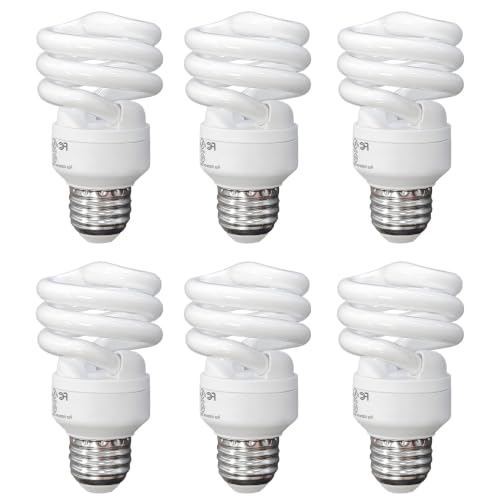
The outer shell of every fluorescent lamp is formed from durable soda-lime or borosilicate glass, which serves as a vacuum-tight pressure vessel. This glass structure isolates the internal chemical environment from atmospheric air while filtering out dangerous shortwave radiation from escaping into your living space or grow room. Manufacturers produce these envelopes in diverse form factors, ranging from straight four-foot tubes like the Konideke F32T8 48-inch linear tube with standard G13 medium bi-pin bases to tightly coiled spiral compact fluorescents like Xtricity T2 spiral bulbs. The glass wall thickness is precisely calibrated to withstand mechanical stress during socket insertion while maintaining thermal stability during continuous photoperiod cycles.
Inside the glass envelope, engineers apply a transparent protective barrier layer before dusting the phosphor compound onto the surface. This barrier layer, often composed of aluminum oxide or silicon compounds, prevents migrating mercury atoms from reacting with the sodium in soda-lime glass. Without this protective barrier, mercury would chemically bond with the glass over thousands of operating hours, turning the tube dark gray and drastically reducing lumen output. The physical integrity of the envelope also dictates lamp safety, because any crack compromises the partial vacuum and immediately quenches the internal gas discharge arc.
Inert Noble Gases and Penning Mixtures
Inside the sealed tube, the space is not empty but filled with a carefully balanced low-pressure noble gas mixture. Most modern commercial and residential fluorescent lamps utilize argon gas, occasionally blended with krypton or small fractions of neon, at an internal pressure of approximately two to three torr. This low operational pressure represents less than one percent of standard sea-level atmospheric pressure, allowing electrons to move freely between electrodes without excessive collision resistance. The noble gas acts as a buffer that protects the delicate tungsten filaments from rapid thermal erosion when the lamp is first energized.
These noble gases also facilitate what physicists describe as a Penning mixture, lowering the initial breakdown voltage required to strike an electrical arc. Argon atoms possess metastable energy states that transfer kinetic energy to nearby mercury atoms through physical collisions, making it much easier to ionize the mercury at standard household voltages. In specialized cold-weather or high-efficiency applications, manufacturers incorporate krypton gas to reduce electrical resistance and decrease operational wattage draw. Understanding this gas combination explains why cold garage environments or unheated winter grow rooms can cause fluorescent bulbs to flicker or take several minutes to reach full brightness.
Mercury Vapor and Ultraviolet Radiation Generation
Mercury is the essential active element responsible for generating radiant energy inside every fluorescent light bulb. Manufacturers introduce a tiny dose of elemental mercury, typically ranging between two and five milligrams in modern low-mercury designs, into each sealed lamp. At room temperature, most of this mercury rests as microscopic liquid beads against the glass wall or within the internal stem structure. As current flows and warms the lamp, a precise equilibrium vapor pressure develops, suspending vaporized mercury atoms throughout the low-pressure argon atmosphere.
When energetic electrons from the electrical discharge collide with these free gaseous mercury atoms, they excite the valence electrons into higher orbital energy states. As those excited electrons instantly drop back to their ground state, they release photons at specific ultraviolet wavelengths, primarily at 253.7 nanometers and secondarily at 185 nanometers. This intense ultraviolet emission is entirely invisible to the human eye and incapable of driving vegetative photosynthesis directly. The entire efficiency of the fluorescent design hinges on converting this harsh shortwave ultraviolet energy into visible, photosynthetically active photons before it escapes the bulb.
Phosphor Powder Chemistry and Color Temperature Control
The luminous white glow associated with fluorescent lighting originates entirely from the dry mineral phosphor coating applied to the interior glass surface. When the 253.7 nanometer ultraviolet photons strike this chemical coating, the phosphor molecules absorb the energetic radiation and re-emit the energy at longer visible wavelengths through photoluminescence. Early lamps relied on basic halophosphates that delivered poor color rendering and limited photosynthetic usefulness. Modern performance bulbs utilize advanced tri-phosphor blends containing rare-earth activators, including europium and terbium, embedded in aluminate or silicate crystal matrixes.
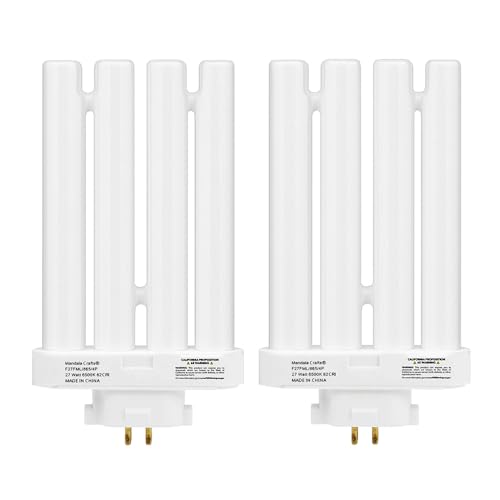
By altering the chemical ratios of red-emitting, green-emitting, and blue-emitting phosphors, lighting manufacturers precisely tune the correlated color temperature of the emitted light. For example, the Sunlite quad tube plug-in and MyGift fluorescent replacement bulbs utilize daylight phosphor mixtures rated at 6500K, emitting abundant blue photons that keep seedling stems stocky and compact. Conversely, bulbs like the UNITEDLUX 13-watt spiral lamp feature a 2700K soft white phosphor composition that shifts output toward warmer orange and red wavelengths. Understanding light spectrum selection for indoor plants allows growers to match these chemical phosphor recipes directly to specific vegetative or floral developmental goals.
Tungsten Electrodes, Cathode Coatings, and Base Assemblies
At each end of a linear tube or inside the base of a compact spiral, you will find coiled tungsten wire electrodes known as cathodes. These tungsten filaments are painted with a specialized thermionic emission coating consisting of alkaline earth oxides, primarily barium oxide, strontium oxide, and calcium oxide. When current passes through the filament, the heating effect causes this oxide paste to emit a steady stream of free electrons into the tube atmosphere. Without these electron-emitting oxide coatings, the electrical arc would require thousands of volts to initiate rather than standard line voltage.
Over time, continuous starting cycles and high operating temperatures gradually vaporize this oxide coating from the tungsten coils. When the barium and strontium particles sputter off the filament, they collect on the adjacent glass wall, creating the familiar dark rings seen at the ends of aging fluorescent tubes. Once the emitter coating completely depletes, the cathode can no longer release electrons, resulting in severe end-blackening, persistent flickering, or total lamp failure. Pin-based designs, such as the GX10q-4 quad-pin base or the G13 bi-pin connector, transfer current directly from fixture sockets to these delicate electrode stems.
Ballast Electronics and Power Regulation
Fluorescent lamps possess negative electrical resistance, meaning that once the internal gas ionizes, electrical current would spike uncontrollably and destroy the lamp without external regulation. For this reason, every fluorescent system requires an integrated or external ballast to limit electrical current and provide the initial starting voltage surge. In self-ballasted compact lamps like Xtricity E26 screw-in bulbs or UNITEDLUX GU24 twist-lock fixtures, an electronic circuit board is packed directly inside the plastic base. This miniature ballast board contains diode rectifiers, smoothing capacitors, high-frequency switching transistors, and magnetic chokes that convert standard 60-hertz alternating current into high-frequency power.
In contrast, plug-in linear tubes and dedicated multi-tube fixtures rely on remote external ballasts mounted directly to the fixture housing. Modern electronic ballasts operate at frequencies above twenty kilohertz, eliminating the visible sixty-hertz strobing and audible magnetic hum that plagued older legacy shop lights. Operating at high frequencies also improves overall fixture efficacy, generating more lumens per watt while reducing thermal stress on the internal cathode filaments. When setting up multi-tier plant shelving, growers should note whether replacement bulbs are self-ballasted or require specific fixture circuitry before making purchase decisions.
Practical Horticultural Performance and Canopy Penetration
In indoor cultivation, the broad surface area of fluorescent glass tubes provides diffuse light that reduces harsh shadows across crowded seedling flats. Because fluorescent lamps distribute light across long cylindrical surfaces or folded multi-tube arrays like KOR triple-tube plug-in bulbs, they generate lower radiant heat per square inch than high-intensity discharge systems. This soft thermal profile allows gardeners to position fixtures just a few inches above delicate plant canopies without causing leaf margin curling or photobleaching. Gardeners utilizing indoor growing setups with built-in lights often appreciate how compact tube configurations fit into tight vertical shelving where clearance is limited.
However, fluorescent technology exhibits steep center-to-edge light falloff and limited photon penetration through dense plant foliage. While 6500K daylight tubes provide exceptional blue spectrum energy for germinating seeds, rooting cuttings, and maintaining microgreens, they struggle to produce sufficient photon density for high-light fruiting crops. Additionally, the phosphor coating degrades gradually as running hours accumulate, causing both photon output and spectral quality to decline long before the bulb physically burns out. Growers who monitor canopy growth often rotate or replace fluorescent tubes every twelve to eighteen months to ensure active vegetative development remains consistent.
Safe Handling, Mercury Containment, and Indoor Disposal
Because elemental mercury remains sealed inside every fluorescent lamp, proper handling and prompt emergency response are essential in residential growing spaces. If an accidental impact breaks a fluorescent bulb over your plant shelves, immediately turn off any circulating fans or tent exhaust systems to prevent airborne vapor distribution. Evacuate the room for at least ten to fifteen minutes while opening windows to dilute localized concentrations of mercury vapor. Never use a standard household vacuum cleaner on broken fluorescent debris, as the vacuum exhaust will vaporize liquid mercury beads and spread toxic particulates into your living environment.
Instead, wear protective gloves and carefully scoop up large glass fragments and phosphor powder using stiff cardboard or heavy paper. Use adhesive tape to lift remaining microscopic glass shards and fine dust, then wipe the affected shelf or floor area with a damp paper towel. Seal all collected debris, tape, and contaminated soil in a glass jar or heavy-duty plastic bag before storing it in an exterior location. Intact spent fluorescent lamps should never be thrown into household trash bins, but rather brought to local municipal recycling facilities that process hazardous universal waste in compliance with environmental standards.
Evaluating Fluorescents Against Modern Solid-State Alternatives
As solid-state light-emitting diode technology advances, understanding the operational differences between gas-discharge lamps and LED arrays helps growers make practical equipment decisions. Fluorescent bulbs rely on thermal excitation, electrical arcing, and indirect phosphor conversion, which inevitably wastes a portion of input power as ambient heat. Modern horticultural LEDs generate photons through direct semiconductor electroluminescence, delivering higher photosynthetic photon efficacy and directional light output without requiring heavy glass tubes. Furthermore, LED fixtures eliminate hazardous mercury entirely, removing contamination risks from food-safe indoor herb gardens and residential living spaces.
Despite the advantages of solid-state fixtures, traditional fluorescent setups remain functional, cost-effective options for propagation stations and low-demand foliage. Gardeners with existing linear T8 shop fixtures or four-pin desk lamps can continue maintaining healthy houseplants by choosing quality replacement bulbs with matched bases and appropriate kelvin ratings. By understanding the mechanical components, noble gas chemistry, and phosphor formulations inside each bulb, you can operate your existing fixtures safely while maximizing plant health across every indoor season. Always verify fixture socket compatibility, base pin spacing, and wattage requirements before installing replacement lamps into your indoor setup.


Write Your Review
No reviews yet. Be the first to share your experience!