


Indoor gardeners balancing gentle illumination for seedlings and sensitive tropical plants often ask what is the fluorescent lamp and how it operates compared to modern solid-state arrays. Traditional fluorescent lighting relies on a low-pressure gas discharge tube to generate ultraviolet energy that excites an internal phosphor coating, producing smooth, diffuse illumination. This low-intensity output makes fluorescent tubes a long-time staple for propagation shelves, vegetative cloning racks, and low-light living spaces. Understanding how these lamps interact with plant photobiology requires checking your canopy against a detailed indoor lighting spectrum guide to ensure proper chlorophyll absorption.
While high-power light-emitting diodes dominate commercial flowering spaces, fluorescent lamps remain widely used in utility fixtures, multi-tube shop arrays, and specialized desktop setups. Exploring what is the fluorescent mechanism clarifies why these bulbs run cooler along their glass surfaces than high-intensity discharge lamps, preventing immediate canopy scorch on fragile foliage. By examining internal phosphors, ballast electronics, and color temperatures, indoor hobbyists can make informed decisions for their seed trays, terrariums, and utility areas. Let us examine how these fixtures function, where they excel, and how they compare to modern lighting alternatives.







Understanding Fluorescent Technology: Principles, Operation, and Indoor Applications
To understand what is the fluorescent lamp, you must look at how electrical energy excites gas molecules to produce visible illumination rather than heating a metal filament. A fluorescent lamp is a low-pressure gas-discharge device containing a small droplet of mercury vapor and inert filler gas like argon inside a sealed glass tube. When an electrical arc passes between the internal tungsten electrodes, the excited mercury atoms release invisible ultraviolet energy. The white phosphor powder coating the interior tube wall absorbs this ultraviolet radiation and immediately converts it into visible broad-spectrum light. This process provides a diffuse, uniform illumination that has served offices, workbenches, and indoor propagation racks for decades.
The Core Physics of Fluorescence and Gas Discharge
The fundamental phenomenon of fluorescence involves an instantaneous conversion of high-energy ultraviolet radiation into longer, visible light wavelengths. Inside an energized glass tube, free electrons collide with mercury atoms, exciting atomic electrons to elevated orbital energy states. When these electrons fall back to their baseline ground state, they release photons in the ultraviolet spectrum, primarily around the 253.7-nanometer wavelength. Because ultraviolet radiation remains invisible and hazardous to human eyes, the lamp requires an intermediary converting medium to generate usable illumination.
The interior surface of the glass envelope features a micro-crystalline layer of fluorescent phosphors that perform this crucial wavelength conversion. As ultraviolet photons strike these phosphors, the coating re-emits lower-energy visible photons across selected portions of the color spectrum. This conversion happens almost instantaneously, ensuring a steady, continuous glow as long as electrical current flows through the tube. Unlike incandescent bulbs that lose most energy as radiant infrared heat through a glowing tungsten wire, fluorescent tubes achieve far greater luminous efficiency by generating light through phosphorescence.
Maintaining a stable electrical arc inside the low-pressure tube requires careful regulation of the incoming voltage. Gases exhibit negative electrical resistance once ionized, meaning resistance drops as current increases, which would cause an unregulated circuit to burn out instantly. Every fluorescent lighting system therefore depends on an external ballast to provide an initial high strike voltage followed by steady current limiting. This operational balance ensures that the gas discharge remains stable, predictable, and thermally manageable throughout hours of continuous runtime.
Fluorescent Lamp Form Factors: Linear Tubes and Compact Twin-Tubes
Linear fluorescent fixtures have long been classified by tube diameter measured in eighths of an inch. Traditional T12 tubes measure one and a half inches across, whereas modern high-output T5 tubes measure five-eighths of an inch in diameter and operate with significantly higher luminous efficiency. Thinner tubes allow tighter optical control, fitting into slim reflective fixtures that direct maximum photon output toward target surfaces. Many gardeners still favor high-output T5 fixtures because their elongated profile creates exceptionally uniform light across seed flats without intense center hot spots.
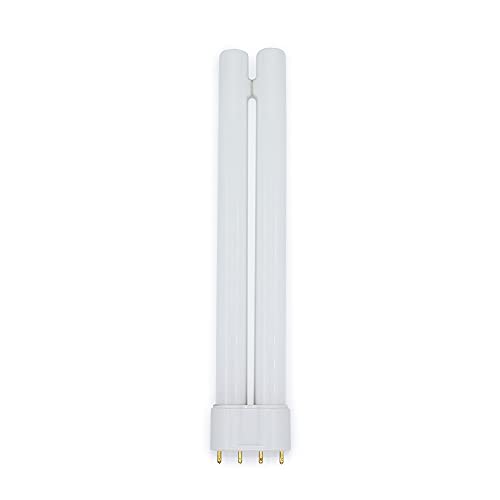
Compact fluorescent lamps alter the linear layout by folding or bridging multiple parallel glass tubes to fit tighter fixtures. Long twin-tube designs, such as the Philips 30044-2 – PL-L 40W/41/RS/IS, place two slim tubes side by side on a shared four-pin base. These fixtures deliver substantial light output from a compact footprint, making them popular in recessed ceiling troffers, workbench fixtures, and specialized propagation chambers. Equivalent replacement lamps like the Lumenivo 40 Watt Replacement Bulb fit the same four-pin sockets, restoring full optical output to aging utility fixtures.
Choosing between linear tubes and compact folded designs depends heavily on the intended application and physical space. Broad propagation shelves benefit from long linear strips that span the entire tray length, ensuring edge-to-edge coverage for expanding seedlings. In contrast, compact twin-tube lamps concentrate higher lumen density into enclosed fixtures, cabinet interiors, or desktop grow stations. Both form factors rely on the same fundamental gas-discharge principles, requiring dedicated ballasts engineered to match their wattage and pin configurations.
Photobiological Performance: PAR Spectrum and Vegetative Growth
In horticultural applications, fluorescent lamps provide a gentle, non-aggressive photon stream that excels during early vegetative phases. Fragile seedlings, rooting cuttings, and tender microgreens require moderate photosynthetic photon flux density (PPFD) without excessive radiant heat. Placing delicate sprouts under intense high-power arrays often leads to photobleaching, moisture stress, or leaf margin curling. Fluorescent lamps spread light evenly over broad surface areas, allowing young root systems to establish without dealing with severe environmental stress.
The broad spectral output generated by quality phosphors satisfies the primary absorption bands of chlorophyll a and chlorophyll b. While early red-blue grow lights created harsh purple glare, balanced white fluorescent tubes deliver natural rendering that simplifies pest inspection and foliar disease diagnosis. Gardeners outfitting dedicated seedling racks frequently rely on high output T5 fluorescent fixtures to keep early stem nodes compact and stout. Consistent photoperiods under these fixtures prevent the weak, spindly etiolation that occurs when sprouts reach desperately for insufficient natural window light.
Despite their effectiveness during vegetative stages, standard fluorescent fixtures show distinct limitations during dense flowering and fruiting cycles. Flowering crops generally require photosynthetic photon flux densities exceeding six hundred micromoles per square meter per second, a threshold that standard fluorescent tubes struggle to reach efficiently. The light from fluorescent tubes also exhibits rapid intensity falloff as distance increases, penetrating upper canopies poorly compared to focused solid-state panels. Consequently, growers typically transition fruiting crops to higher-intensity light sources once the vegetative foundation is complete.
Phosphors, Color Temperature, and Spectral Distribution
The visual color and horticultural utility of any fluorescent tube depend entirely on the chemical composition of its internal phosphor blend. Manufacturers mix rare-earth elements and halophosphates to tune emissions toward warm, neutral, or cool white color temperatures. For example, a 3500K lamp produces warm white light with balanced yellow and red tones, creating comfortable ambient visibility in utility and office environments. Conversely, a 4100K lamp, such as the PL-L twin-tube format, shifts spectral output toward cool white, providing sharp visual contrast that mimics midday brightness.
Color Rendering Index, commonly abbreviated as CRI, measures how accurately a light source reveals true object colors compared to natural sunlight. Early halo-phosphor tubes suffered from poor color rendering, casting an unflattering greenish tint across living areas and distorting plant leaf shades. Modern tri-phosphor blends combine precise narrow-band emissions in the red, green, and blue spectra, achieving CRI ratings above eighty. This spectral refinement produces a vibrant, crisp visual environment where yellowing leaves, mite infestations, and nutrient deficiencies can be spotted quickly.
Horticultural growers often combine different color temperatures within multi-tube fixtures to construct a broader synthetic spectrum. Pairing 6500K daylight tubes with 3000K warm tubes blends blue-rich photons that suppress stem elongation with red photons that support robust leaf expansion. This custom balancing mimics seasonal shifts in natural daylight, giving indoor growers flexibility without modifying fixture hardware. Understanding color temperature ratings ensures you select replacement tubes that support your specific botanical goals or interior aesthetic preferences.
Electrical Architecture: Ballasts, Starters, and Socket Pin Types
Every fluorescent lamp requires a compatible ballast to regulate electrical current and initiate the discharge arc. Older fixtures utilized heavy magnetic ballasts with separate starters that cycled current through internal cathode filaments to preheat the gas. These vintage systems often produced an audible sixty-cycle electrical hum and noticeable visual flicker that contributed to eye fatigue in closed rooms. Modern electronic ballasts replace magnetic coils with solid-state circuit boards, operating at frequencies above twenty kilohertz to eliminate perceptible flicker and reduce operational noise.
Ballasts are categorized by their starting method, including rapid start, instant start, and programmed start architectures. Instant-start ballasts apply a high initial voltage spike to ignite the cold lamp without preheating the cathodes, maximizing energy efficiency in fixtures that run continuously for long periods. Rapid-start ballasts apply lower voltage while continuously warming cathode filaments, extending tube longevity in environments with frequent on-off power cycling. Matching replacement lamps to ballast specifications is critical, as misaligned components cause premature tube blackening or driver failure.
Socket configurations must also align with lamp base geometry to ensure safe electrical contact. Twin-tube PL-L lamps rely on a 2G11 four-pin inline base, which locks firmly into spring-loaded plastic lampholders to prevent accidental disconnection. Linear tubes employ bi-pin G5 or G13 connections that twist or slide into place, securing electrical contact while supporting the physical weight of the glass tube. Inspecting socket pin contacts for corrosion, heat discoloration, or loose tension helps maintain stable arc conduction and prevents localized resistance heating.
Ultraviolet Excitation and Specialty Phosphor Applications
The ability of ultraviolet energy to excite phosphors extends beyond general white illumination into specialized fluorescence detection and display. When a light source emits long-wave UV-A radiation, such as the 395-nanometer output produced by the CONALUX 395nm 10W LED Black Light with US Standard fixture, it triggers visible glowing responses in reactive compounds. Certain organic substances, laundry brighteners, and synthetic pigments absorb UV photons and re-emit visible wavelengths through secondary fluorescence. This effect is widely used in stage lighting, security document authentication, and decorative fluorescent poster illumination.
Natural minerals and petrified specimens also display stunning fluorescence under targeted ultraviolet excitation. As documented in reference works like Minerals, Fossils, And Fluorescents of Arizona, trace activator ions such as manganese, uranium, or europium cause ordinary-looking desert stones to glow vivid neon hues in darkness. Geologists and mineral collectors use portable blacklights in field surveys to locate reactive mineral veins and verify specimen authenticity. The underlying physical principle remains identical to a standard fluorescent tube, demonstrating how electromagnetic energy transitions between atomic orbitals.
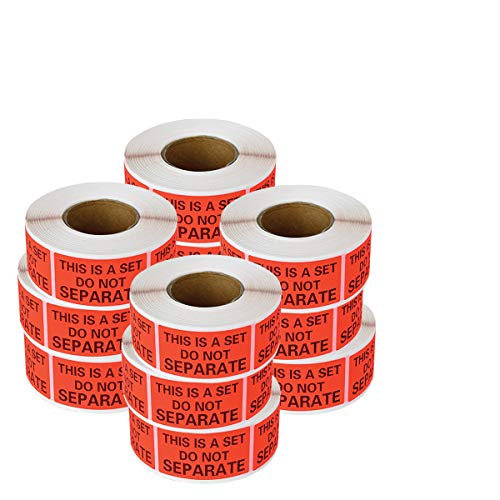
Industrial labeling and packaging also capitalize on bright fluorescent pigments to ensure critical shipping instructions remain unmissable. High-visibility warehouse stickers, such as Anylabel 1″ x 2″ This is a Set Do Not Separate labels and the multi-roll sets produced by BETCKEY, use fluorescent red and orange dyes that catch human attention instantly. These dyes absorb ambient ultraviolet and blue light, re-emitting visible light that appears noticeably brighter than ordinary reflective ink. Whether verifying shipping bundles or inspecting mineral samples, fluorescent technology offers visual utility far beyond ordinary room lighting.
Thermal Dynamics and Canopy Clearance Management
Thermal management in fluorescent fixtures differs fundamentally from high-intensity discharge bulbs and focused LED grow panels. Fluorescent lamps distribute waste heat evenly along the length of their glass envelopes rather than concentrating extreme thermal energy at a single focal point. This broad heat dispersion keeps glass surface temperatures relatively mild, allowing growers to position fixtures just inches away from foliage without scorching leaves. Maintaining close proximity is essential because fluorescent light intensity drops rapidly with every added inch of distance.
When using fluorescent fixtures over germination trays, keeping lamps three to six inches above plant tips delivers adequate photosynthetic photon flux without thermal injury. As seedlings expand upward, growers must adjust suspension cables regularly to maintain this optimal clearance zone. If lamps are placed too high, foliage receives inadequate photons and begins stretching, creating weak, floppy stems prone to lodging. Incorporating multi-tier shelving or indoor vertical grow towers allows hobbyists to cultivate dense greenery across stacked vertical tiers without accumulating massive ambient heat loads.
Although the glass envelope remains touchable, the ballast housing within the fixture does generate steady conductive heat during extended photoperiods. Proper ambient ventilation prevents this heat from accumulating inside enclosed propagation tents or unventilated shelving cabinets. Ensuring an inch of open air clearance around fixture housings preserves internal electronic components and keeps ballast operating temperatures within manufacturer ratings. Routine checks with an infrared thermometer can verify that canopy foliage and ballast enclosures remain comfortably within safe thermal operating limits.
Fluorescent Fixtures vs. Modern LED Horticultural Arrays
Evaluating fluorescent lamps against modern solid-state diodes reveals significant operational differences in energy efficiency, spectral flexibility, and operating lifespan. Horticultural LED panels routinely achieve photosynthetic photon efficacies above two micromoles per joule, while standard fluorescent tubes operate closer to one micromole per joule. This difference means LED fixtures consume less true wall wattage while delivering equivalent or superior photon density to plant canopies. Over multi-month cultivation cycles, the lower power draw of solid-state systems translates directly into reduced monthly electric utility expenditures.
Diode arrays also eliminate the need for periodic lamp replacement, maintaining stable photon output for tens of thousands of operating hours without noticeable decay. In contrast, fluorescent tubes experience internal phosphor degradation and cathode sputtering, causing lumen output to decline significantly before the bulb actually burns out. Growers using fluorescent tubes often replace bulbs every twelve to eighteen months to preserve consistent photosynthetic delivery. Additionally, solid-state LED systems permit precise spectral tailoring, incorporating deep red, far-red, and UV diodes directly into the board layout.
Despite the technological advantages of modern diodes, fluorescent fixtures retain distinct practical appeal for specific budget-conscious hobbyists and propagation nurseries. The initial purchase price of linear fluorescent housings and replacement tubes remains accessible, lowering entry barriers for seasonal vegetable gardeners starting spring seeds. The ultra-diffuse light spread from multi-tube T5 fixtures also prevents the directional harshness and leaf shadowing sometimes associated with compact LED quantum boards. For growers managing shallow propagation racks, fluorescent lighting continues to represent a proven, dependable technology that delivers predictable botanical outcomes.
Practical Handling, Installation, and Safe Disposal Guidelines
Handling fluorescent lamps requires care because the glass envelope contains a small quantity of metallic mercury sealed under low vacuum pressure. If a tube breaks, the mercury vaporizes quickly into the surrounding room air, presenting an inhalation hazard if not addressed promptly. In the event of tube breakage, turn off central ventilation, open exterior windows, and sweep up debris using stiff cardboard rather than a standard vacuum cleaner. Placing broken fragments in a sealed glass container prevents hazardous vapor dispersion and protects household occupants.
Routine maintenance involves keeping the exterior glass envelope clean from dust accumulation, foliar spray residues, and humidity deposits. Dust layers on the glass surface absorb visible photons, reducing the usable light reaching lower leaves by a noticeable margin. De-energize the fixture completely and allow the tubes to cool before gently wiping them down with a dry or lightly dampened microfiber cloth. Inspect the socket end caps for signs of carbon tracking or brittle plastic, ensuring reliable mechanical support and proper electrical contact.
Because of their mercury content, spent fluorescent tubes and compact twin-tube lamps must never be discarded in ordinary municipal trash bins. Most regional hardware retailers and local municipal waste districts operate dedicated hazardous waste recycling drop-offs where mercury-bearing lamps are processed safely. Specialized recyclers separate the aluminum end caps, reclaim the elemental mercury, and recycle the crushed glass into industrial aggregates. Following proper recycling protocols ensures that these useful lighting tools do not contribute to long-term environmental contamination.
Ultimately, understanding what is the fluorescent lighting architecture demystifies why these legacy fixtures remain a familiar sight across seedling nurseries, workshops, and propagation benches. While solid-state diodes continue advancing rapidly across commercial indoor agriculture, fluorescent lamps offer gentle thermal characteristics, diffuse beam distribution, and accessible hardware for low-intensity growing phases. Verifying socket compatibility, monitoring canopy clearance distances, and selecting appropriate phosphor color temperatures ensures reliable performance across every indoor cultivation project. Matching your lighting technology to the specific physiological needs of your plants remains the key to thriving indoor greenery season after season.


Write Your Review
No reviews yet. Be the first to share your experience!