


Building Durable Backyard Perimeters That Last
Sagging fence gates dragging across turf and bent top rails create constant headaches for property owners trying to secure their yards. Setting up the best post and chain link fence hardware requires balancing galvanized corrosion resistance with proper pipe diameters so your barrier handles wind load and active dogs. Property owners frequently deal with loose terminal posts or latch misalignment after seasonal ground movement. Upgrading to heavy-duty fence components like reinforced gate hinges, solid concrete base flanges, and extension brackets keeps your boundary rigid without needing a full yard tear-out. After post installation and digging, restoring damaged turf along the fence line with the best lawn fertilizer for clay soil helps re-establish thick root systems that prevent perimeter erosion.
Careful analysis of manufacturer technical data sheets and installer feedback shows that matching outer diameter tubing sizes is critical for long-term reliability. A standard 1-3/8 inch top rail paired with a 2-3/8 inch terminal post creates a stable framework that resists sagging under heavy tension wire. Hot-dip galvanized finishes and powder coatings shield steel from rust, while solar post caps add practical lighting along property lines without running electrical conduit. Selecting precision-sized steel hardware prevents loose connections, eliminates rattling during windstorms, and keeps your chain link barrier functioning smoothly for decades.


Frequently Asked Questions
What post diameter is standard for the best post and chain link fence?
Terminal posts typically measure 2-3/8 inches outer diameter, while line posts measure 1-7/8 inches and top rails measure 1-3/8 inches. Standard sizing ensures that components like gate hinges and latches clamp securely without slipping. Always measure the outside diameter rather than the inside pipe diameter before ordering replacement hardware.
Can you install chain link fence posts onto concrete without digging holes?
Yes, floor flange post bases allow you to bolt chain link posts directly onto concrete slabs or low retaining walls. Heavy-gauge steel post bases feature pre-drilled holes for 5/8-inch anchor bolts to eliminate messy core drilling. This mounting method provides a rigid foundation across patios, kennels, and commercial enclosures.
How do you prevent dogs from jumping over a chain link fence?
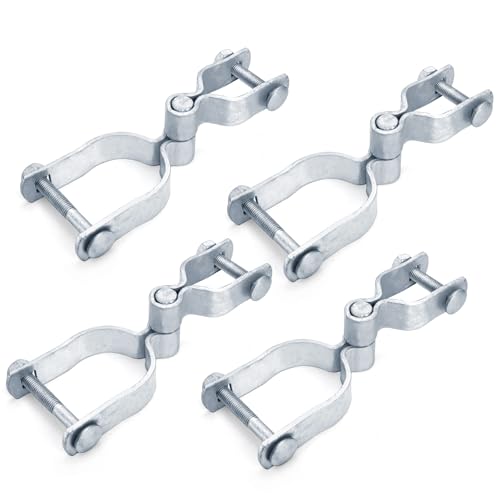
Steel fence extensions add up to 20 inches of vertical height to your existing top rail without replacing your posts. Heavy-duty U-joint arms clamp onto standard 1-3/8 inch rails at vertical or 45-degree angles to discourage athletic dogs from leaping. You can easily attach extra mesh or privacy screening across the extended framework.
Why does a chain link gate latch stop closing properly over time?
Gate latch failure usually occurs due to post shifting, hinge slippage, or improper gap spacing between your gate and terminal post. Standard fork latches require an opening between 1.8 inches and 3.4 inches to capture the latch post securely. Tightening your galvanized hinge bolts or realigning the fork restores a smooth 90-degree swing.
Are solar post caps compatible with different chain link pipe sizes in 2026?
Yes, multi-fit solar post caps include internal adapter rings designed to mount onto 2-inch, 2-3/8-inch, and 2.5-inch diameter metal posts. Durable ABS housings with rechargeable batteries illuminate fence perimeters automatically in 2026 without trenching electrical wire. Applying the best selling reliable spikes fertilizer keeps perimeter hedges thriving beneath your newly lit boundary line.
What hardware coating provides the best rust protection for chain link fences?
Hot-dip galvanized steel delivers superior corrosion resistance compared to standard zinc plating. The hot-dip process fuses molten zinc directly to the metal to protect against rust from road salt and rainfall. High-quality powder coatings also shield carbon steel flanges and brackets while providing a clean modern appearance.


Write Your Review
No reviews yet. Be the first to share your experience!