


Sagging gate frames dragging across lawn turf and loose galvanized mesh flapping in strong gusts quickly ruin property boundaries. Setting up or repairing a reliable residential enclosure requires heavy-duty fittings that keep wire mesh tight against tubular rails while resisting coastal moisture and corrosion. Assembling the Best Small Chain Link Fence demands precision components, including snug 1-3/8-inch gate elbows, thick 11-gauge aluminum tie wires, and reliable locking latches that hold up under daily pet impacts. After evaluating manufacturer specifications and homeowner installation experiences, selecting durable, corrosion-resistant parts prevents post-installation headaches like warped gate frames or rusted connection hardware.
Ground excavation around corner posts and terminal footings often churns up heavy subsoil that requires targeted care, making it smart to nourish disturbed turf edges with effective lawn fertilizer for clay soil after setting concrete sleeves. Securing your fence line with weather-treated components ensures rot-resistant perimeter security that stands firm against energetic dogs, weed trimmers, and harsh freeze-thaw cycles without seasonal breakdowns.




Frequently Asked Questions About Small Chain Link Fencing
What pipe diameter is standard for small residential chain link fence gates?
1-3/8 inches outside diameter is the standard framework size for small residential chain link gates and top rails. Matching corner elbows like WRINGKIT aluminum corners are engineered specifically for this 1-3/8-inch outer diameter tubing. Using incorrect bracket dimensions causes loose, wobbly corners that lead to severe gate sagging.
How much clearance is required between posts for a 1-3/8 inch chain link fork latch?
Between 1.8 inches and 3.4 inches of clearance between round posts is necessary for a standard 1-3/8-inch fork latch to operate smoothly. Hardware like the VIVIDA gate latch clamps directly onto a 1-3/8-inch gate upright and catches a matching latch post within that specific gap range. Installing posts closer than 1.8 inches jams the fork mechanism, while wider gaps allow the latch arm to swing clear without catching.
What gauge wire ties should be used to fasten chain link fabric to small fence frames?
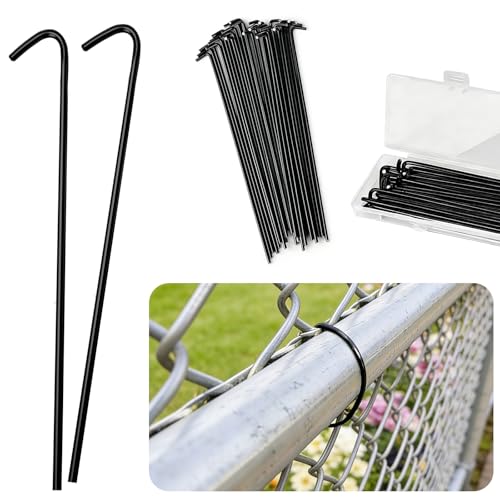
11-gauge aluminum tie wires offer the ideal balance of bendable flexibility and tensile holding strength for residential fence mesh. Wire ties such as SparkSway 10-inch or U0U 11-gauge hooks allow homeowners to wrap the wire around rails and posts by hand or with pliers without snapping the metal. Thinner 12.5-gauge ties stretch under pet pressure, while 9-gauge ties often require heavy bending tools that can scratch protective post coatings.
Can privacy tape be added to a Best Small Chain Link Fence to block visibility?
Yes, high-density polyethylene privacy tape weaves directly through chain link mesh diamonds to obscure sightlines while permitting adequate airflow. Fenpro privacy tape provides an Obsidian Black finish that creates an attractive privacy screen for gardens or kennels. Because privacy slats and tape increase wind resistance against the framework, posts must be set securely in deep concrete footings. Once the ground settles after digging post holes, overseeding thin bare spots with quality fertilizer for ryegrass helps restore lush sod along the fence line.
How do you stop a small chain link gate from sagging over time?
Installing rigid aluminum corner brackets and properly spaced diagonal brace wire stops gate frames from dropping out of square. Kits like WRINGKIT 4-pack gate corners distribute frame stress evenly across horizontal and vertical 1-3/8-inch rails using secure mechanical bolts. Adding a secondary stainless steel chain lock or carabiner tether prevents dogs or livestock from bending the bottom corners outward.
Is hot-dip galvanized or aluminum hardware better for outdoor chain link components in 2026?
Aluminum and hot-dip galvanized steel both provide exceptional rust resistance, but aluminum offers superior corrosion resistance in acidic soils and coastal air. Galvanized fittings rely on a sacrificial zinc coating that can slowly degrade over decades in moist environments. Choosing powder-coated or polyethylene-sleeved aluminum ties ensures long-lasting boundary protection without unsightly rust stains running down your fence fabric.







Write Your Review
No reviews yet. Be the first to share your experience!