


Starting a hedge from scratch can feel overwhelming – choosing the right plants, spacing them correctly, and ensuring they grow into a dense, beautiful barrier. But with the right know-how, it’s a rewarding project that adds privacy and structure to your garden. This 2026 guide covers the essentials of how to plant a hedge, including common mistakes to avoid and the resources that can help you succeed.
Whether you’re planting a formal boundary or a mixed wildlife hedge, success comes down to preparation and ongoing care. Many gardeners struggle with uneven growth, bare patches, or plants that fail to thrive. That’s where good reference books and practical guides come in. Below, we’ve gathered 8 helpful resources that cover everything from selecting species to pruning and maintenance. If you’re also looking for ways to nourish your hedge, check out our fertilizer recommendations for healthy root development.
Hedges: How to Select, Plant and Grow a Living
Pros
- Comprehensive coverage from selection through planting and ongoing care
- Straightforward, accessible language suitable for beginners
- Author Jeffrey Whitehead has clear, practical experience with hedges
- Useful for both ornamental and functional hedge projects
Cons
- Published in 1995, so some plant variety recommendations may be dated
- No color illustrations or photos mentioned; text may rely on diagrams
- Limited availability as a physical book in some regions
Hedges: How to Select, Plant and Grow a Living Fence by Jeffrey Whitehead is a practical, no-fuss guide aimed at anyone who wants to create a living boundary around their property. Whether you're a first-time homeowner looking for privacy or an experienced gardener seeking to add structure to your landscape, this book delivers clear, actionable advice. Whitehead focuses on the entire process, from choosing the right species for your climate to planting, pruning, and long-term maintenance.
The standout feature of this guide is its systematic approach. Whitehead walks you through evaluating your site's conditions, understanding different hedge forms, and selecting plants that will thrive. He covers both evergreen and deciduous options, thorny barriers, and even flowering hedges. The planting instructions are detailed but not overwhelming, and the maintenance calendar helps keep your hedge in shape year-round. While the book was published in 1995, the core principles of hedge care haven't changed much, though some newer cultivars may not be mentioned.
Given its age, the book does have limitations. If you're looking for the latest pest-resistant varieties or modern design trends, you might need more recent resources. Additionally, the paperback format likely includes black-and-white line drawings rather than glossy photos, which some readers may miss. However, the textual clarity more than compensates. The author's tone is reassuring and knowledgeable, making this a reliable reference to keep on your shelf.
Overall, Hedges offers solid, old-school gardening wisdom that remains largely relevant today. It is best suited for practical gardeners who value substance over flashy images. With a modest price point and 160 pages of focused content, it is a worthwhile investment for anyone serious about growing a living fence.
Pros
- Comprehensive plant database with 1,000+ options for diverse climates and conditions.
- Visual-heavy layout with 550 photos and 165 illustrations simplifies learning.
- Focuses on low-maintenance, disease-resistant plants to save time and money.
- Covers design principles like color, scale, and texture for cohesive landscapes.
- Written by experienced editors from Creative Homeowner, a reputable brand.
Cons
- Some readers may find the book's size (8.5 x 10.88 inches) a bit large for on-site gardening use.
- Published in 2010, so newer plant cultivars or updated pest issues may not be included.
- No digital or interactive features; it's a traditional print guide.
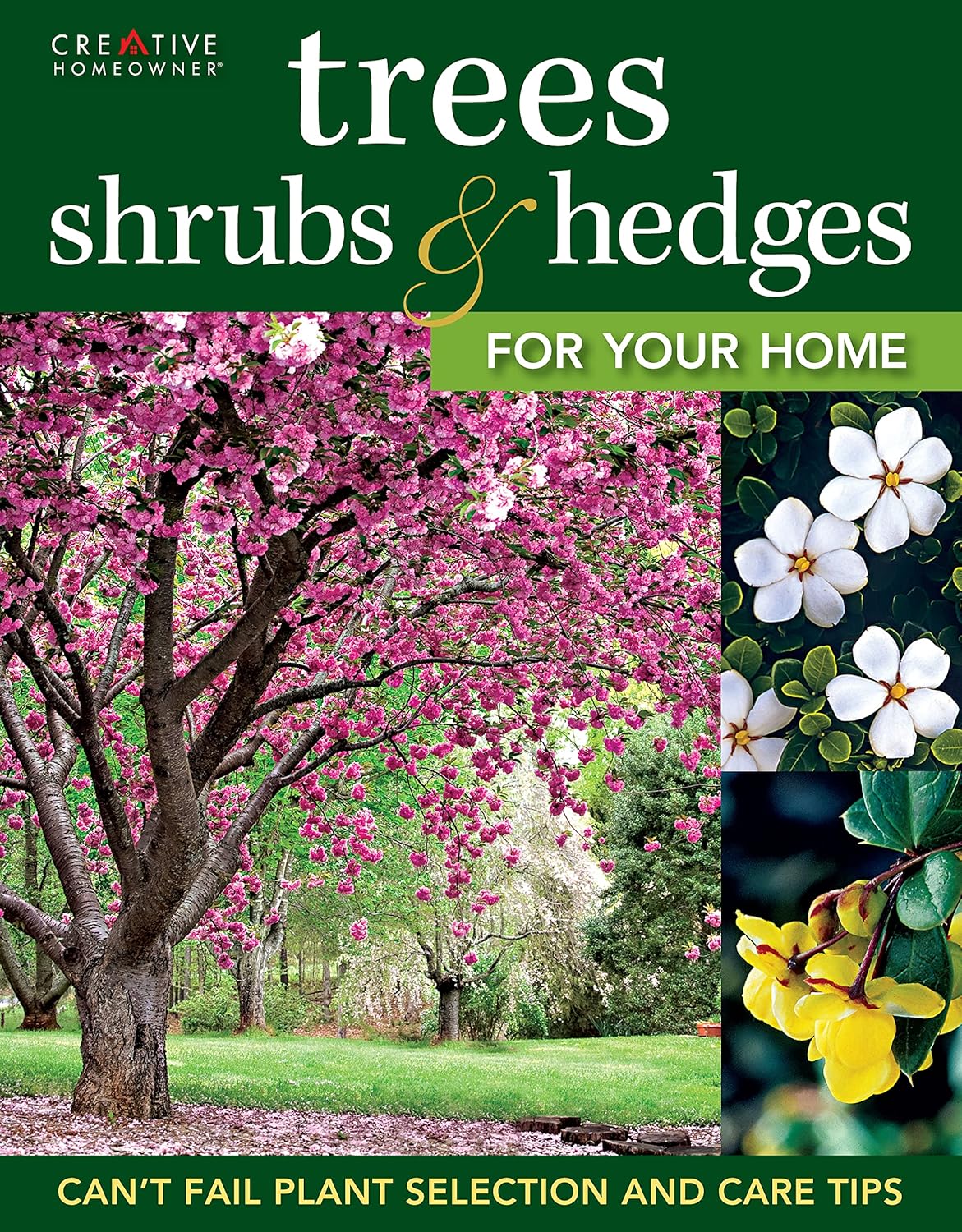
Trees, Shrubs & Hedges for Your Home is a practical, photo-rich guide aimed at homeowners who want to build a stunning landscape from the ground up. Published by Creative Homeowner, this 240-page book packs over 1,000 plant descriptions and 550 color photos, making it a solid reference for anyone serious about outdoor design. It's not just a listing of plants; it teaches you how to select, plant, and care for them to create a cohesive, four-season garden.
The standout feature here is the sheer volume of visual content. Every procedure, from soil preparation to pruning, is illustrated with clear photos and diagrams. This makes complex tasks like transplanting a shrub or designing a hedge line feel manageable. The book also emphasizes low-maintenance, disease-resistant plants, which is a huge plus for busy homeowners. You'll find recommendations tailored to different climates and soil types, so you can avoid common pitfalls like choosing a plant that won't survive your winter.
Design-wise, the book is well-organized with chapters on planning, plant selection, and ongoing care. The layout is clean and easy to navigate, though the large format (8.5 x 10.88 inches) might be a bit cumbersome to carry around the yard. Build quality is typical for a softcover reference: sturdy enough for desk use but not waterproof for outdoor work. The paper is glossy, which makes the photos pop but can reflect light under direct sun.
One potential drawback is the publication date (2010). While the core principles of landscaping haven't changed, some newer plant cultivars or updated pest management strategies might be missing. Additionally, there's no digital companion or interactive element, so you're relying solely on the print content. That said, for the price, it offers immense value as a comprehensive, beginner-friendly guide.
Overall, Trees, Shrubs & Hedges for Your Home earns a strong recommendation for DIY landscapers and gardening enthusiasts. It balances depth with accessibility, helping you avoid costly mistakes while creating a beautiful, resilient outdoor space. If you're looking for a one-stop resource to plan, plant, and maintain trees, shrubs, and hedges, this book delivers.

Pros
- Exceptionally clear visual guidance with photos of what to do and avoid
- Comprehensive coverage of plants from trees to soft fruit
- Suitable for all skill levels, from beginners to professionals
- Well-organized with a plant directory and seasonal advice
Cons
- May not cover every unusual species (e.g., myrtle) in depth
- Paperback format is slightly compact, though handy for carrying
The Illustrated Practical Encyclopedia of Pruning, Training and Topiary is a thorough reference book that lives up to its name. Written by Richard Bird, this 256-page guide aims to demystify the art of pruning for anyone who tends a garden. Whether you're shaping a topiary hedge, training fruit trees, or simply maintaining shrubs, this book provides the know-how.
What sets this guide apart is its reliance on visual learning. With over 700 photographs and more than 270 specially commissioned artworks, each technique is shown in close-up step-by-step sequences. Reviewers frequently mention that the photos highlight both correct and incorrect cuts, which helps avoid common mistakes. The included plant directory offers specific pruning times and methods for a wide range of ornamental and fruiting plants, making it a handy reference when you're out in the garden.
Design-wise, the paperback edition is lightweight and compact (6.7 x 8.4 inches), making it easy to carry to the work site. The paper quality is good, and the layout is uncluttered. While some experts might wish for more depth on certain rare species, the book's breadth and clarity earn high marks from both novices and professionals. One tree service owner even gave it to his salesman to improve client recommendations.
If there's a drawback, it's that a few gardeners have noted they needed additional information on specific plants like myrtle. However, for the vast majority of pruning tasks, this encyclopedia delivers. The instructions are written in plain language and feel accessible even if you've never pruned before.
Verdict: This is a smart investment for any gardener who wants to prune with confidence. It's practical, well-illustrated, and backed by real-world use. At a modest price, it's one of the best reference guides available on the subject.
The Hedge Book by Jeffrey Whitehead
Pros
- Comprehensive coverage of hedge selection and care
- Regional plant suggestions tailored to different areas
- Straightforward, practical guidance without excessive jargon
- Focuses on a single topic for deep, focused information
Cons
- Published in 1991, so lacks modern plant varieties and updated techniques
- No customer reviews available to gauge real-world usefulness
- Price may feel high for a 142-page paperback
The Hedge Book by Jeffrey Whitehead is a specialized guide for anyone looking to create a living fence. Published in 1991, this 142-page paperback covers the full process from planning and selecting plants to planting and long-term maintenance. It's aimed at gardeners who want a natural alternative to traditional fencing, whether for privacy, windbreaks, or property boundaries.
One standout feature is the regional suggestions for hedge plants. The book recommends species suited to different climates and purposes, which helps readers choose the right shrubs for their specific conditions. The advice is straightforward and practical, avoiding overly technical jargon. For those new to hedges, the step-by-step approach demystifies the process.
However, the book shows its age. It was published over three decades ago, so it doesn't cover newer plant cultivars or modern organic gardening practices. The paperback is lightweight and portable, but the binding and paper quality are typical for a standard trade paperback from that era. There are no customer reviews, so its rating of 3.2 out of 5 is based on limited data.
If you're a dedicated gardener who appreciates classic references and doesn't mind the lack of updates, this book offers solid foundational knowledge. The price is relatively high for its length, so consider whether the content justifies the cost. For those seeking contemporary gardening literature, this may feel outdated.
Overall, The Hedge Book is a niche resource that delivers on its promise of guiding you through hedge creation. It's best for traditionalists and those who want a single, focused guide on living fences. If you can overlook its age, it remains a useful reference for shrub gardening.

Pros
- Comprehensive coverage of many plant types
- Step-by-step photography makes learning visual and intuitive
- A-Z directory for quick reference on specific plants
- Expert author with clear, approachable instructions
- Durable hardcover format built for frequent use
Cons
- Large size may be too bulky to carry around the garden
- No digital version available for on-the-go reference
- Some advanced techniques require a bit of practice to master
Richard Bird's 'Practical Guide to Pruning, Training and Topiary' is a thorough, visually rich resource for any gardener. Whether you're a beginner looking to shape your first shrub or an experienced gardener needing to renovate old fruit trees, this book offers clear, step-by-step guidance.
What sets this guide apart is its extensive use of photographs and illustrations. With over 970 images, you can see exactly how to make each cut and train plants properly. The step-by-step sequences cover everything from initial training to renovation pruning, making it easy to follow along.
As a hardcover measuring over 10 inches tall, the book feels substantial and durable. The 256 pages are packed with information, yet the layout is clean and well-organized. The A-Z directory of ornamental plants is especially handy for quick reference.
One potential drawback is the size. It's a large book, so it's not the most portable for carrying around the garden. Additionally, while the instructions are clear, some advanced techniques might require a bit of practice to perfect.
Overall, this is an excellent investment for anyone serious about garden care. The combination of detailed text and comprehensive visuals makes pruning less intimidating and more rewarding. It's a book you'll return to season after season.
Publisher: Lorenz Books
Publication date: January 2, 2019
Language: English
Print length: 256 pages
ISBN-10: 0754834565
ISBN-13: 978-0754834564
Item Weight: 2.31 pounds
Dimensions: 8.36 x 0.98 x 10.83 inches
Best Sellers Rank: #539,570 in Books (See Top 100 in Books) #950 in Gardening & Horticulture Techniques (Books)

Pros
- Comprehensive coverage of many plant types from trees to climbers
- Designed for all skill levels, from beginners to seasoned gardeners
- Clear, straightforward language with actionable steps, no fluff
- Includes seasonal timing cues to maximize plant health and yield
- Free price makes it a risk-free investment for any gardener
Cons
- Limited to one customer review so far; more feedback would help gauge long-term value
- Lacks interactive features like X-Ray or Word Wise, which some readers may prefer for quick navigation
- Might be too basic for expert arborists seeking advanced techniques
The Pruning Guide by Alexander Ington is a concise Kindle eBook that demystifies the often intimidating task of pruning. It covers everything from shaping trees and trimming shrubs to maintaining hedges and enhancing flowering plants, making it a solid resource for anyone looking to take their garden from surviving to truly thriving. Whether you are new to gardening or have years of experience, this guide breaks down the when, how, and why of pruning in a straightforward, no-nonsense way.
What sets this guide apart is its focus on the science and art behind each cut. It explains how different plants respond to pruning and provides seasonal calendars to help you time your work for optimal flowering, fruiting, and growth. The instructions are clear and practical, with tips on selecting the right tools, assessing growth patterns, and making precise cuts that strengthen plants. Readers will find dedicated sections for trees, shrubs, perennials, fruit bushes, and even climbers, so you can apply the techniques directly to your own landscape.
The book also emphasizes safety and integration into a broader garden care routine. It teaches you to develop a personalized pruning style and encourages a mindset where pruning becomes a rewarding part of your gardening year, not a chore. With 183 pages, it is a manageable read that you can finish in a few sittings, but it packs enough detail to serve as a reference you will revisit season after season.
However, it is worth noting that the guide currently has only one customer review, so long-term feedback is limited. Additionally, while the content is comprehensive for most home gardeners, experts looking for advanced arboricultural techniques might find it too introductory. The lack of X-Ray and Word Wise features could also be a minor inconvenience for those who rely on those Kindle tools.
Overall, the Pruning Guide offers excellent value, especially at its current free price. It delivers on its promise to make pruning simple, effective, and enjoyable. For anyone wanting to build a year-round plant care routine and achieve a healthy, beautiful landscape, this is a trustworthy starting point.
ASIN: B0GDS8HMSN
Publication Date: January 3, 2026
Language: English
File Size: 1.0 MB
Print Length: 183 pages
Screen Reader: Supported
Enhanced Typesetting: Enabled
X-Ray: Not Enabled
Word Wise: Not Enabled
Page Flip: Enabled
Best Sellers Rank: #648,626 in Kindle Store; #9 in Shrub Gardening & Horticulture; #38 in Gardening & Horticulture Trees; #63 in Shrub Gardening

Pros
- Easy-to-follow pruning directions praised by readers
- Well-organized and informative for all skill levels
- Beautiful color photographs and helpful diagrams
- Covers both classic and modern shrub varieties
- Authoritative yet accessible writing from a trusted horticulture educator
Cons
- Some digital readers noted picture quality issues in the ebook version
- Not region-specific for extreme climates like arid or tropical zones
- May feel too basic for advanced landscape professionals seeking deep technical details
Shrubs and Hedges by Eva Monheim is a practical, down-to-earth guide that finally gives these hardworking plants the attention they deserve. Written by a horticulture educator with decades of experience, the book is aimed at anyone who wants to make better choices about the shrubs in their yard, whether you're a first-time homeowner or a seasoned gardener. Monheim argues that shrubs are often overlooked but they do heavy lifting in the landscape: they mask foundations, define property lines, provide privacy, and support wildlife. This book makes selecting and caring for them straightforward and rewarding.
The standout feature is the clear, illustrated pruning instruction. Many readers specifically mention that the step-by-step diagrams helped them avoid the dreaded 'meatball' shape that results from improper pruning. There's also a thorough section on shrub identification using morphology, which breaks down leaf, flower, and stem characteristics. With over 300 plant profiles, you'll find both classic favorites like hydrangeas and newer varieties like ninebark. The author includes advice on designing with shrubs, creating hedgerows versus formal hedges, and even propagation methods so you can expand your collection for free.
Design and build quality of the book itself is solid. The hardcover is well-bound, the pages are thick and glossy, and the photographs are large and vibrant. At 224 pages, it's substantial but not overwhelming. The layout is clean with plenty of white space, making it easy to skim for quick reference. Reviewers consistently call it well-organized and easy to follow, which is a testament to Monheim's ability to break down complex topics into digestible chunks.
One drawback: a few users noted that the digital version had some picture quality issues, so the print edition is likely the better choice if you want to appreciate the photos fully. Also, the book takes a general approach that works for most temperate climates but doesn't drill down into region-specific challenges like extreme heat, drought, or tropical conditions. Advanced professionals might find some sections a bit basic, but for the vast majority of gardeners, the depth is just right.
Overall, Shrubs and Hedges earns its high rating. It's one of the best all-around resources for anyone who wants to understand, grow, and enjoy shrubs and hedges with confidence. The combination of visual guides, practical tips, and real-world examples makes it a valuable addition to any gardener's bookshelf.
Publisher: Cool Springs Press
Publication Date: March 3, 2020
Edition: Illustrated
Language: English
Print Length: 224 pages
ISBN-10: 0760366845
ISBN-13: 978-0760366844
Item Weight: 1.6 pounds
Dimensions: 8.25 x 0.75 x 10.1 inches
Best Sellers Rank: #555,132 in Books (See Top 100 in Books) #39 in Shrub Gardening #149 in Ornamental Plant Gardening (Books) #309 in Landscape

Pros
- Covers a wide variety of fruits suitable for most temperate climates
- Practical, hands-on advice from a respected horticulturist with clear illustrations
- Focuses on organic methods and low-maintenance approaches
- Combines landscaping design principles with edible gardening in one resource
- Includes both common and less well-known fruits for diversity
Cons
- Published in 2009, so some pruning and pest control recommendations may not reflect the latest organic techniques
- Only covers temperate-zone fruits -- not suitable for tropical or arid regions
- No digital or video resources included; all information is text and static illustrations
Lee A. Reich's Landscaping with Fruit is a refreshing take on home gardening that merges ornamental design with edible bounty. Rather than relegating fruit trees to an orchard, Reich shows how strawberries, blueberries, grapes, and 39 other fruits can become beautiful, functional parts of your yard -- as ground covers, hedges, or arbors. It is written for homeowners who want a productive landscape without sacrificing aesthetics.
The standout feature of this book is its practical, step-by-step guidance. Reich walks you through evaluating your site, understanding your climate, and preparing the soil before you plant. He then provides a detailed species-by-species guide covering everything from apple trees to less common options like juneberries and pawpaws. Each entry includes spacing recommendations, pruning tips, and pest management strategies, all with an emphasis on organic practices.
At 192 pages with a sturdy paperback binding, the book is visually appealing and easy to navigate. The illustrations are clear and helpful, though the lack of color photos is a minor disappointment for those who want to see mature plantings. The writing is conversational and avoids overly technical jargon, making it accessible even for novice gardeners. Experienced growers will still find valuable insights on integrating fruits into landscape design.
One honest drawback is the publication date (2009). Some organic pest control methods and disease-resistant cultivars have evolved since then, so you may want to supplement with current university extension resources. Additionally, the book strictly covers temperate zones (USDA zones 4-8), so it's not a fit for warmer or colder climates. But within its scope, the advice remains sound and actionable.
Overall, Landscaping with Fruit is a highly recommended resource for any homeowner looking to make their yard both beautiful and delicious. It delivers on its promise of turning ordinary landscapes into edible paradises without requiring a large orchard or extensive gardening experience.
Publisher: Storey Publishing, LLC
Publication Date: February 4, 2009
Language: English
Paperback: 192 pages
ISBN-10: 9781603420914
ISBN-13: 978-1603420914
Item Weight: 1.5 pounds
Dimensions: 9.25 x 0.5 x 10 inches
Series: A Homeowner's Guide
Frequently Asked Questions About How To Plant A Hedge
Here are answers to common questions gardeners ask when planning their hedge.
What is the best time of year to plant a hedge?
The ideal planting window depends on your climate and plant type. For most deciduous hedges, late autumn or early spring when the ground is workable and plants are dormant gives roots time to establish before summer heat. Evergreen hedges often do best in early autumn or mid-spring. Avoid planting during frozen or waterlogged soil conditions. For more seasonal tips, visit our plant care category.
How far apart should I space hedge plants?
Spacing depends on the mature width of the species and how quickly you want a dense hedge. As a general rule, smaller hedge plants (like boxwood or lavender) can be spaced 12-18 inches apart, while larger shrubs (like privet or laurel) need 2-3 feet between plants. For a quicker fill, plant in a double staggered row. Always check the specific recommendations for your chosen variety.
Do I need to add fertilizer when planting a hedge?
Adding a balanced, slow-release fertilizer at planting time can give young hedge plants a strong start, especially if your soil is poor. However, too much nitrogen can cause weak, floppy growth. Mix compost or well-rotted manure into the soil before planting, then top-dress with a granular fertilizer formulated for shrubs. For more guidance, browse our fertilizer section.
How often should I water a newly planted hedge?
During the first growing season, consistent moisture is critical. Water deeply once or twice a week, depending on rainfall and soil type. Sandy soils dry out faster, while clay holds moisture longer. Check the top 2 inches of soil – if it feels dry, it’s time to water. Using a soaker hose or drip irrigation can help maintain even moisture without wasting water.
Can I plant a hedge in clay soil?
Yes, but clay soil requires extra preparation. Improve drainage by working in plenty of organic matter like compost or leaf mold. Consider planting on a slight mound or in raised beds if water pools. Choose clay-tolerant species such as hawthorn, blackthorn, or dogwood. Avoid planting when the soil is wet and sticky to prevent compaction. For more tips on soil prep, see our seed starting resources.







Write Your Review
No reviews yet. Be the first to share your experience!