


Starting a vibrant home garden begins well before the final frost clears the ground in early spring. Knowing precisely when to plant seeds indoors gives young seedlings adequate time to develop robust root systems without growing spindly on a windowsill. Gardeners who sow too early often end up with overgrown, root-bound transplants that struggle once moved outside, while starting too late delays summer harvests and seasonal blooms. Reviewing seed packet guidelines and identifying your local frost schedule establishes the ideal sowing window for everything from delicate culinary herbs to ornamental coleus.
Planning this timeline depends heavily on the unique germination rate and growth habit of each botanical variety you select. Slower perennial herbs demand a longer indoor head start than rapid warm-season annuals that stretch quickly under grow lights. Gardeners transitioning these starts into outdoor plots also benefit from managing dense clay soil beds ahead of transplanting day to ensure smooth root expansion. Gathering the right sterile potting media, seed trays, and indoor lighting sets your seedlings up for steady seasonal progress as spring approaches.

Pros
- Contains plant food to nourish seedlings from day one, reducing the need for extra fertilizers.
- Promotes fast root development, which is critical for transplant success.
- Versatile: works for seeds and cuttings of a wide variety of plants.
- Lightweight and easy to handle, even when moist.
- Trusted Miracle-Gro brand with a reputation for quality growing media.
Cons
- Not suitable for use in outdoor garden beds or as a long-term potting mix - it's designed only for starting seeds and cuttings.
- The lightweight mix may dry out faster than heavier soils, requiring more frequent watering.
- Contains synthetic fertilizers, which may not appeal to organic gardeners.
The Miracle-Gro Seed Starting Potting Mix is a purpose-built growing medium for gardeners who want to give their plants the best possible start. This 2-pack of 8 quart bags offers a lightweight, nutrient-enriched blend that works well for germinating seeds and rooting cuttings in containers. Whether you're starting vegetables, flowers, or herbs indoors or in a greenhouse, this mix provides the right environment for delicate young roots.
The standout feature is the inclusion of Miracle-Gro Plant Food right in the mix. This means your seedlings get a steady supply of nutrients from the very beginning, which promotes faster root development and healthier growth. In practice, that translates to sturdier seedlings that transplant more successfully. The mix's light, airy texture also improves drainage and aeration, reducing the risk of damping-off disease common in overly wet seed-starting media.
Design-wise, the mix is straightforward: no frills, just a dependable product in a sturdy bag. The 2-pack is a nice bonus for gardeners who go through a lot of mix or want to share with a friend. It's ready to use straight from the bag, so you don't have to worry about mixing or adjusting pH. Keep in mind that because it's so lightweight, it can dry out quickly in hot or dry conditions, so you'll need to check moisture levels more often than with heavier soils.
One honest drawback is that this mix is strictly for starting purposes. It doesn't have the long-term nutrient profile or structure needed for established plants in containers. You'll need to transplant seedlings into a more robust potting mix once they outgrow their starter pots. Also, it contains synthetic fertilizers, so if you're committed to fully organic gardening, this might not be your first choice.
Overall, the Miracle-Gro Seed Starting Potting Mix delivers exactly what it promises: a fast, easy way to get seeds and cuttings off to a strong start. It's a practical, effective option for both beginner and experienced gardeners who want reliable results without extra steps. For anyone starting a container garden or filling a windowsill with seedlings, this mix is a solid investment.
Product Dimensions: 12.55 x 4.9 x 16.45 inches
Item Weight: 7.35 pounds (for the 2-pack)
Manufacturer: The Scotts Company LLC
ASIN: B087F4XHFS
Model Number: VB00005
Style: Potting Mix
UPC: 073561000055
Best Sellers Rank: #3 in Garden Soil on Amazon

Pros
- Wide variety of 12 essential herbs included in one affordable bundle.
- Suitable for both indoor hydroponic setups and outdoor gardens.
- Non-GMO and heirloom quality promotes sustainable gardening.
- Detailed sowing instructions on each packet help beginners succeed.
- Moisture-proof packaging preserves seed freshness over time.
Cons
- Quantities per individual herb packet may be modest for large gardens (though the variety pack is generous overall).
- No organic certification listed, which some growers might prefer.
- Zero customer reviews at time of listing, so actual germination rates are unverified.
The Seed Needs Herb Seeds Variety Pack is a thoughtfully curated collection of 12 culinary and medicinal herbs, designed for anyone eager to start a home herb garden. Whether you're a complete beginner or an experienced grower, this pack offers a convenient way to grow fresh basil, chives, cilantro, dill, marjoram, oregano, parsley, sage, thyme, borage, summer savory, and rosemary. All seeds are non-GMO and heirloom, meaning you can harvest and save seeds for future planting without worry.
One standout feature is the versatility: these seeds perform well in both traditional outdoor soil and modern indoor hydroponic systems. The moisture-resistant packaging is a practical upgrade from typical paper envelopes, keeping seeds fresh and viable. Each packet also displays an attractive illustration and clear sowing instructions, which is a big help if you're new to gardening or trying a variety for the first time.
In real-world use, the seeds should germinate quickly if sown according to the instructions (1/8 inch deep, moist soil, full sun for basil). The variety pack encourages experimentation with different herbs, and the generous quantities are sufficient for several plantings or sharing with friends. However, note that individual herb amounts are not huge; if you plan to grow large rows of a single herb, you might need additional packets. Also, the absence of an organic certification may matter to some gardeners, though the seeds are free from GMOs and chemical treatments.
Design-wise, the 3.5x5 inch packets are compact and easy to store, with a tear- and moisture-resistant material that outperforms many competitors' offerings. The included varieties are well chosen: from classic culinary staples like oregano and parsley to more unique but useful herbs like borage and summer savory. This collection truly covers the bases for a homestead kitchen garden.
Our verdict: the Seed Needs Herb Seeds Variety Pack is a solid, affordable starting point for growing your own herbs. It balances quality, variety, and ease of use, making it ideal for beginners or anyone wanting a quick way to diversify their garden. Just keep in mind that it's best for moderate-scale growing and that no reviews exist yet, but the brand's reputation and seed quality are generally reliable.

Pros
- High germination success – many users report 90-95% sprouting
- Organic, non-GMO, and heirloom quality
- Comprehensive variety – covers most popular culinary herbs
- Great for beginners with included video and printed instructions
- Responsive customer service – seller often refunds or replaces if problems occur
Cons
- Some herbs (like lavender) may have lower germination rates
- Best results require following care instructions – not all seeds sprout equally in every setup
- Small packet sizes may not be ideal for large-scale planting
The Sereniseed Certified Organic Herb Seeds 10-Pack is a straightforward, reliable choice for anyone looking to start a kitchen herb garden. With over 7,000 reviews and a solid 4.4-star rating, this pack covers ten of the most popular culinary herbs: basil, cilantro, oregano, thyme, parsley, lavender, chives, sage, dill, and even Thai basil. All seeds are USDA certified organic by Oregon Tilth, non-GMO, and heirloom – meaning they're open-pollinated and can be saved for future planting.
What really sets this pack apart is the attention to quality. Sereniseed stores their bulk seeds in a temperature- and humidity-controlled walk-in cooler, which helps maintain high germination rates. The company also tests each batch for purity and germination before packing, and they back it up with a guarantee: if you have issues, they'll make it right. This is a big confidence booster for first-time gardeners or anyone who's had bad luck with seeds before.
In real-world use, most users report strong results. Many reviewers mention 90-95% germination rates with common herbs like basil, cilantro, dill, and chives. The included seed-starting video and printed tips on each packet make it easy to get started, whether you're planting in soil, a hydroponic setup, or directly in a garden bed. That said, a few users note that some herbs – particularly lavender – can be more finicky and may not germinate as reliably. This is not unusual for lavender seeds, but it's worth knowing if you're counting on that variety.
Overall, this is a well-priced, trustworthy kit for building a home herb garden. It's ideal for beginners or anyone who wants a curated selection of organic, non-GMO seeds without having to hunt down individual packets. The customer service is responsive, the seeds are fresh, and the variety covers all the essentials for cooking. Just don't expect every single seed to sprout – especially with lavender – but the majority will, and the company stands behind their product.
Product: Sereniseed Certified Organic Herb Seeds (10-Pack)
Varieties: Thyme, Italian Oregano, Caribe Cilantro, Giant Italian Parsley, English Lavender, Genovese Basil, Broad Leaf Sage, Bouquet Dill, Common Chives, Thai Basil
Certification: USDA Certified Organic by Oregon Tilth
Non-GMO: Yes, all varieties are open-pollinated, non-GMO, and heirloom
Sunlight: Full sun
Hardiness Zones: 2 through 9
Planting: Suitable for indoor and outdoor – spring to summer
Care: Do not overwater; trim plants back every 3 years to promote growth
Dimensions: 10 x 7 x 0.7 inches, weight 1.13 ounces
This pack is best for home gardeners who want a simple, curated selection of organic culinary herbs. It's a great gift for beginners or for anyone who wants to start an indoor herb garden on a windowsill or under grow lights. If you're looking for a single variety or larger quantities for a big garden, you might want to buy individual packets instead. For best results, follow the instructions on the back of each packet – especially regarding soaking and light exposure. The seeds are fresh and stored properly, so they should sprout well if you give them the right conditions.
Pros
- Exceptional value: over 5,100 seeds for a low price.
- Wide variety of 15 popular culinary herbs.
- High germination rate and beginner-friendly instructions.
- Versatile for indoor, outdoor, and hydroponic growing.
- Beautiful packaging makes it a ready-to-gift item.
Cons
- Some individual herb packets (e.g., rosemary, lavender) may have lower germination rates, requiring patience or pre-soaking.
- Seed quantity per variety can feel less than buying single packets at a store.
- Success may vary depending on growing conditions and care.
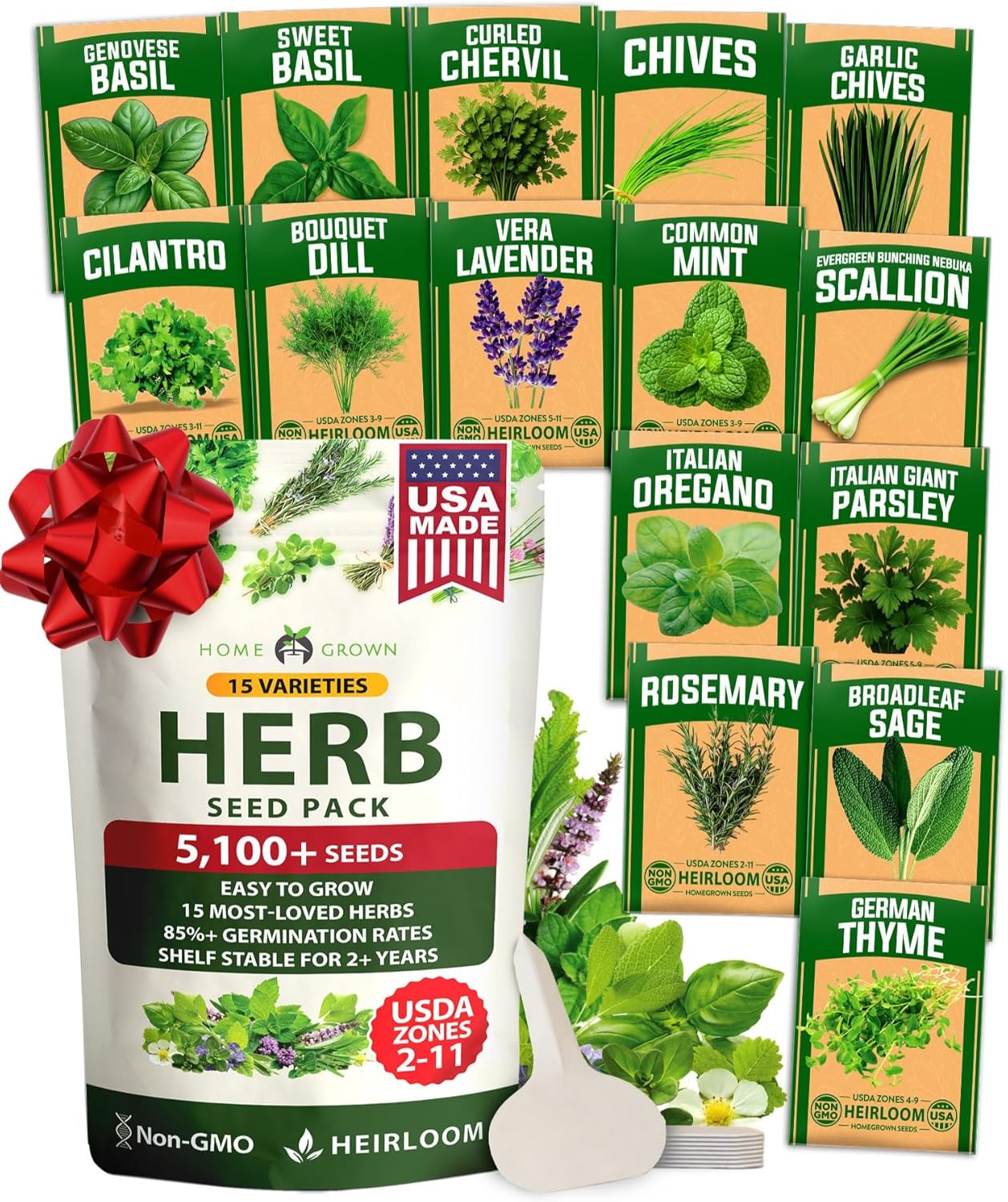
What is the HOME GROWN 15 Herb Seeds Variety Pack? This is a comprehensive seed starter kit designed for anyone who wants to grow their own fresh herbs. It includes over 5,100 non-GMO, heirloom seeds from 15 different culinary herbs: Genovese Basil, Sweet Basil, Italian Oregano, Rosemary, Thyme, Cilantro, Dill, Mint, Sage, Lavender, Chives, Garlic Chives, Parsley, Chervil, and Scallions. The seeds come in individual, resealable packets inside a larger Mylar bag, making it a fantastic gift for garden enthusiasts and home chefs alike. Whether you have a sprawling backyard garden, a small balcony, or a hydroponic setup, these seeds can thrive.
Real-World Performance and Standout Features The seed variety is this kit's biggest win. You get everything from classic cooking herbs like basil and oregano to specialty options like chervil and garlic chives. Many users report excellent germination rates, with some seeds sprouting within 5 to 10 days. Thyme, Basil, Sage, Mint, and Oregano seem to be strong performers. The seeds are small but viable, making them suitable for both soil-based and hydroponic gardening (like AeroGardens or countertop systems). A standout benefit is the high seed count, which lets you experiment with different varieties without worrying about running out. The inclusion of a comprehensive online grow guide is a nice touch, especially for beginners who might need extra help with spacing, watering, and harvesting.
Build Quality and Design The packaging is practical and gift-ready: a sturdy, resealable mylar bag keeps seeds fresh and organized. Each herb packet is clearly labeled, making it easy to identify seeds when planting. The seeds themselves are USA-sourced and tested for quality. The kit includes a small planting tool (a seed depth measurer) and a pair of tweezers for precise seed placement, which is a thoughtful addition for tiny seeds like oregano or mint. The online guide is accessible but not overly detailed – it covers the basics well for most home gardeners.
Potential Drawbacks Not every seed variety will germinate equally. Several reviewers noted that rosemary and lavender seeds had lower success rates, a common challenge with these herbs. Soaking seeds overnight can help improve results. Also, individual packets are smaller than typical store-bought single herb packets, so if you plan to grow large quantities of just one herb, you might prefer buying a larger pack of that variety. Some users found the number of seeds per packet a bit inconsistent. Overall, though, these are minor issues relative to the value and variety offered.
Final Verdict The HOME GROWN 15 Herb Seeds Variety Pack is an excellent investment for anyone looking to start an herb garden or expand their seed library. It offers an unbeatable price per seed, a diverse range of culinary herbs, and solid germination performance for most varieties. Beginners will appreciate the convenience and the included resources, while experienced gardeners will enjoy the selection and the ability to grow multiple herbs at once. It's a practical, budget-friendly, and thoughtful gift for any plant lover. If you are realistic about the occasional finicky seed (especially rosemary and lavender), this kit delivers fantastic value.
Brand: HOME GROWN
Model: HG15H
Herb Count: 15 varieties
Total Seed Count: 5,100+
Seed Type: Non-GMO, Heirloom
Growing Options: Indoor, Outdoor, Hydroponic
Sunlight: Partial Sun
USDA Hardiness Zones: 4-10
Expected Plant Height: Up to 2 feet
Product Weight: 0.31 kg
Package Dimensions: 1 x 1 x 0.1 inches
Seeds Origin: USA
Germination Rate: Above 85%

Pros
- Provides dependable color in shaded spots where traditional flowering plants struggle
- Generous 130-seed count allows for multiple planting projects and container arrangements
- Low-maintenance foliage requires very little pruning or specialized care
- Adapts well as an indoor houseplant or an outdoor bedding annual
Cons
- Seed starting requires consistent moisture and patience compared to buying mature starter plants
- Foliage color intensity can wash out if exposed to harsh, direct afternoon sun
- Plants are sensitive to frost and must be brought indoors before cold weather hits
The BuggyBeds 130-piece Coleus Seed pack offers a dependable way to add steady, eye-catching color to indoor and outdoor spaces. Unlike traditional flowering annuals that go through sporadic bloom cycles, coleus is grown entirely for its brilliant, multi-hued foliage. This mix is well-suited for home gardeners wanting fast-growing accents for porch planters, shaded borders, or bright indoor windowsills without dealing with finicky plant care.
The standout quality of this seed mix is the sheer variety of leaf patterns it can yield, spanning deep wine reds, vivid pinks, lime greens, and warm golds. Once established, these plants branch out rapidly to form dense, bushy mounds of textured leaves. Because coleus performs exceptionally well in partial shade, it solves the common challenge of brightening dim garden corners where sun-loving flowers fail to thrive.
Starting from seed is straightforward, and having 130 seeds in a single pack gives you room to experiment across different containers and garden zones. Coleus prefers evenly moist, well-draining soil and filtered light. While the plants can handle morning sun, excessive afternoon heat can scorch the leaves and mute their colors, making dappled sunlight the sweet spot for the best visual display.
As tender plants, coleus will not survive freezing temperatures outdoors. Gardeners in cooler climates will need to treat them as annuals or bring their favorite pots indoors before autumn frosts arrive. For anyone looking to create lush, colorful garden arrangements without waiting on short-lived flowers, this seed collection is a practical and rewarding option.
Sow seeds indoors 8 to 10 weeks before the last expected spring frost. Coleus seeds require light to germinate, so gently press them onto the surface of a moist, well-draining seed starting mix rather than burying them beneath the soil.
Keep the soil temperature around 70 to 75 degrees Fahrenheit and mist lightly to maintain humidity. Once seedlings develop a few sets of true leaves, pinch the top tips back to encourage fuller, bushier growth before transplanting outdoors.

Pros
- High germination rate reported by users when soaked in hot water before planting
- Unique touch-responsive leaves make it a standout educational tool for kids and adults
- Large seed quantity at an affordable price gives you plenty of seeds to experiment with
- Clear, illustrated seed packets include full sowing and care instructions
Cons
- Seeds need consistent warmth (65-70°F) and humidity for germination, which may require a heat mat or indoor starter
- Plants are sensitive to overwatering and can develop yellow leaves if soil stays too damp
- Can become invasive in frost-free climates if allowed to self-seed outdoors
Seed Needs Sensitive Plant Seeds offer a delightful way to grow Mimosa pudica, the legendary touch-me-not plant. This heirloom variety is famous for its leaves that fold inward when touched, a rapid movement called thigmonasty. Whether you're a curious gardener, a teacher looking for a hands-on biology lesson, or a parent wanting to spark a child's interest in nature, these seeds deliver an engaging experience that goes beyond typical flowers.
The standout feature is, of course, the plant's interactive leaves. Brush a leaf and it closes within seconds, reopening after a few minutes. This reaction is not just a novelty; it's a natural defense mechanism that makes the plant endlessly fascinating. Beyond the movement, the plant produces fluffy pink blooms about half an inch across during summer, adding a soft, delicate beauty to its fern-like foliage. Growers in USDA zones 3-10 can enjoy it as an annual, reaching 18-24 inches tall.
Germination is straightforward when you follow the recommended method: soak seeds in hot (not boiling) water overnight to soften the hard seed coat. Users report high success rates this way, with sprouts appearing in 21-28 days. The seeds come in two packets with over 100 seeds each, giving you plenty to share or experiment with. Each packet features attractive artwork on the front and detailed growing instructions on the back, plus a QR code for easy reordering.
While the plants are rewarding, they do have some quirks. They prefer warm, humid conditions and consistent moisture, but too much water can cause leaf yellowing. Young seedlings need protection from intense direct sun until they mature. In frost-free areas, mimosas can self-seed aggressively, so you may want to grow them in containers to control spread. Also, the touch response can be triggered by wind or rain, which might be a minor annoyance for some.
Overall, these seeds represent excellent value for the price. They're fresh, non-GMO, and true to the advertised variety. If you're looking for a plant that doubles as a conversation starter and an educational tool, the Sensitive Plant is a solid choice. With a bit of patience and the right conditions, you'll be rewarded with a living marvel that never gets old.

Pros
- Interactive and mesmerizing for all ages, from kids to adults.
- Seeds are guaranteed to grow, with many successful germinations reported.
- Compact and easy to grow indoors with minimal care (partial shade, moderate water).
- Great educational tool for teaching plant biology and sensitivity.
- Pack includes two packets, offering good value for the price.
Cons
- Some seeds may not germinate or survive past the first leaves, requiring careful attention to instructions.
- Plants stay relatively small and may need repotting to grow larger.
- Over-tickling can stress the plant, so it's best to limit handling.
The TickleMe Plant Seed Pack from TickleMePlantandZOMBIEPLANTProducts is a delightful and educational indoor gardening kit that brings a touch of magic to any home. This 2-pack of Mimosa Pudica seeds lets you grow a plant that physically reacts when you tickle it, closing its leaves and sometimes lowering its branches. It's a fantastic way to introduce kids and adults to the wonders of nature without any screens or batteries.
In real-world use, the seeds generally germinate well when following the included instructions, though some users report mixed success with certain seeds not sprouting or dying early. The standout feature is the plant's sensitive response: a gentle touch causes the leaves to fold up, then reopen in minutes. This interactive quality makes it a hit for classrooms, family activities, or as a unique gift. The plants grow indoors year-round, even in winter, and stay compact, making them easy to manage on a windowsill with partial shade and moderate watering.
Design-wise, the seeds come in two packets with clear instructions and 10 fun activity ideas. The packaging is lightweight and simple, perfect for mailing. However, the plants may remain small unless repotted into a larger container, and some users note that over-tickling can stress the plant. Build quality is standard for seed packets, but the guarantee on seed germination adds confidence. A few customers have reported issues with seeds not growing or dying after sprouting, which may be due to specific care needs or seed quality variation.
Overall, the TickleMe Plant offers a unique, memorable experience that's both fun and educational. While it requires some patience and care, especially for germination, the reward is a living, moving plant that never fails to amaze. It's ideal for families, teachers, or anyone looking for a screen-free interactive hobby. For the price, it's a worthwhile investment in curiosity and wonder.

Pros
- High germination rate backed by company guarantee
- Large seed count for the price
- Eye-catching color range that adds texture to shady areas
- Easy to grow with clear instructions included
- Sustainably produced and safe for the environment
Cons
- No customer reviews yet to confirm real-world performance
- Seeds are small and require careful handling during planting
- Full color development may need outdoor sunlight as plants mature
The Sow Right Seeds Coleus Rainbow Mix is a straightforward way to add bold, colorful foliage to your garden or indoor space. This packet contains about 800 non-GMO heirloom seeds that grow into a diverse mix of leaf colors, ranging from bright yellow and green to deep pink and maroon. If you've struggled with flowering plants in shady spots, coleus is a fantastic alternative because it thrives in partial sun where many bloomers fade.
What stands out is the sheer variety of colors packed into one packet. The leaves have a unique, velvety texture and ruffled edges that create visual interest even before they mature. Germination is reliable, especially if you keep soil temperatures between 70 and 75°F. Seeds usually sprout within 10 to 14 days, and the plants reach about 18 to 30 inches tall with a spread of 8 to 12 inches. They need consistent moisture and well-drained loam soil but don't demand constant attention.
Design-wise, the packet itself is standard size with basic instructions printed on the back. The seeds are small, so you'll want to sow them shallowly. One downside is the lack of customer reviews, which means you're relying on the brand's reputation and the detailed product description. However, Sow Right Seeds has a solid track record and even offers a germination guarantee, which reduces risk.
Another thing to note: while the leaves are colorful, the intensity of the hues might increase as the plants get more sunlight. If you grow them indoors, make sure they get enough bright, indirect light to keep the colors vivid. Otherwise, they might look a bit washed out compared to outdoor-grown coleus.
Overall, this coleus mix is a great value for gardeners who want reliable, shade-tolerant foliage without spending a lot. The heirloom seeds are sustainably produced and non-GMO, which adds peace of mind. If you're looking to fill a shady border with vibrant leaves or just want a fun indoor plant, this seed packet is a solid choice.

Pros
- High germination rate ensures reliable seedling emergence
- Non-GMO heirloom seeds are pure and sustainable
- Can be grown indoors or outdoors, giving year-round flexibility
- Great for making herbal tea, adding fresh flavor to recipes
- Large packet offers excellent value for the price
Cons
- Mint spreads vigorously and may require container planting to keep it contained
- Germination requires consistent soil temperatures (70-80°F) which might need a heat mat indoors
- No customer reviews yet, so long-term performance is unverified
Sow Right Seeds Mint Seeds offer a straightforward way to start your own herb garden, whether you have a sunny windowsill or a backyard plot. This non-GMO heirloom variety is ideal for beginners and seasoned growers alike, delivering a perennial plant that keeps producing cool, flavorful leaves year after year. The packet holds about 100mg (roughly 1250 seeds) of Mentha spicata, commonly known as spearmint, which is one of the most popular mints for culinary use.
The standout feature here is the high germination rate, with seeds sprouting in 5-10 days when soil temperatures are kept between 70-80°F. This reliable start gives you a head start on harvesting, and the plant matures in 60-90 days. You can grow mint in containers to control its vigorous spread, or let it fill a garden bed where it will come back each spring in USDA zones 3-8. The leaves are perfect for brewing hot or iced tea, adding to lemonade, or mixing into salads and desserts.
Design and build quality are straightforward: a simple paper packet with clear instructions printed on the back. The seeds themselves are sold under Sow Right Seeds' Safe Seed Pledge, ensuring they are free from GMOs and sustainably sourced (their operation runs on solar power). That commitment adds a layer of trust for environmentally conscious gardeners.
One potential drawback is that mint is an aggressive spreader. If you don't contain it in a pot, it can quickly overtake a garden bed. Also, the winter blooming period listed in the specs seems unusual for mint (which typically flowers in summer), so you may want to focus on leaf harvest rather than expecting winter blooms. But overall, the seeds are easy to handle and the instructions are beginner-friendly.
Verdict: Sow Right Seeds Mint Seeds are a dependable choice for anyone wanting fresh mint without the hassle of buying transplants. The high germination rate, non-GMO credentials, and generous seed count make this a solid value. Just be prepared to manage its spreading habit by using containers or dedicated garden areas.
Brand: Sow Right Seeds
Item Weight: 0.317 ounces
Package Dimensions: 5.5 x 3.5 x 0.16 inches
Indoor/Outdoor Usage: Indoor, Outdoor
Material Feature: GMO Free, Heirloom
Color: Green
Special Feature: High Germination Rate
Expected Blooming Period: Winter
Sunlight Exposure: Full Sun
Unit Count: 1 Count
Expected Plant Height: 24 Inches
Moisture Needs: Regular Watering
Number of Pieces: 1
ASIN: B07VXS9QR9

Pros
- Fast germination for some users: Several buyers report seeds sprouting within a week, offering quick gratification.
- Stunning color variety: The mixed rainbow blend can produce leaves in shades of pink, purple, red, green, and yellow.
- Adaptable to indoor life: Perfect for apartments or homes with limited sunlight; grown under diffused light without issues.
- Great for beginners: Coleus is fairly forgiving and doesn't demand precise soil or fertilizer conditions.
- Affordable price: For the number of seeds, it's a cost-effective way to fill a large area with color.
Cons
- Inconsistent germination: Many reviews note that only a small fraction of seeds sprout, with some reporting as few as 5-7 plants out of 150.
- No printed instructions: The packet lacks detailed growing guidance, which may frustrate new gardeners who need step-by-step help.
- Mixed quality control: Some batches appear to have low viability, leading to disappointing results despite proper care.
The 150+ Mix Rainbow Coleus Seeds from Generic promise a vibrant splash of color for any garden or indoor space. Coleus is prized for its richly patterned leaves rather than its flowers, and this mix aims to deliver a rainbow of hues from pink and purple to green and yellow. It's a great pick for gardeners who want shade-tolerant plants that don't need blazing sun to look good.
When it comes to performance, the feedback is a mixed bag. Some buyers report quick sprouting within days and healthy growth, while others struggled with poor germination rates. One reviewer noted only 9 out of 150 seeds grew, and several others echoed low success. On the positive side, the plants that do take off are described as beautiful and varied. The seeds are non-GMO and heirloom, which appeals to organic gardeners and those who like to save seeds.
Design and build are straightforward: you get a small packet of tiny seeds. The product's real value lies in the potential for a colorful display, especially in shaded areas where other flowers might struggle. Coleus also attracts pollinators like bees and butterflies, adding ecological benefits to its charm. However, the lack of printed planting instructions is a notable downside for beginners.
Drawbacks center on reliability. The germination inconsistency is a genuine concern, and some customers felt the product didn't deliver on its promise. But for the price, many are willing to take a chance, especially if they have experience with coleus or are prepared to seed heavily. The company offers refunds through Amazon, which provides some peace of mind.
Overall, this seed mix is a good bet for patient gardeners who enjoy experimenting with colorful foliage. If you're a novice, you might want to pair it with a basic coleus care guide. For the cost and potential payoff, it's worth trying as long as you're not relying on a perfect germination rate.
To get the best results with your coleus seeds, sow them in spring or summer when temperatures are warm. Use well-draining soil and scatter the seeds evenly on the surface, then cover with a very thin layer of fine soil. Keep the soil consistently moist but not waterlogged, as coleus seeds need humidity to germinate.
Once seedlings appear, provide bright, indirect light. Coleus thrives in warm, humid conditions, but avoid overwatering. Pinch back the tips of young plants to encourage bushier growth and more colorful leaves. For indoor plants, place them on a windowsill with diffused light or under a grow light to maintain vibrant foliage year-round.
Coleus is low-maintenance but does best when you water regularly and fertilize lightly every few weeks during the growing season. Remove any flower spikes that form to keep the plant focused on leaf production. With proper care, your rainbow coleus will be a standout in any garden or home.
A Complete Guide to Indoor Seed Starting Timing
Determining when to plant seeds indoors centers on one critical benchmark: the average date of the last spring frost in your local area. Most garden vegetables, culinary herbs, and ornamental annuals require between four and ten weeks of indoor growth before outdoor temperatures become safe for transplanting. Sowing too early results in leggy, crowded seedlings that outgrow their containers, while starting too late wastes valuable growing weeks during the peak summer season. By calculating backwards from your spring frost date and categorizing your seeds by their natural growth rates, you can build a predictable schedule that keeps your indoor nursery orderly and productive.
Calculating Your Sowing Window Using Regional Frost Dates
Local climate records provide the foundation for any successful indoor planting schedule. Gardeners can look up their historical last spring frost date through regional agricultural extension offices or local weather data. This date represents the statistical average when freezing temperatures cease. Once you have this benchmark, you simply count backward by the recommended weeks of indoor growth to determine your sowing date.
Starting seeds too early remains a common pitfall for indoor growers. Seedlings that linger in starter cells for too long consume available nutrients and produce tangled, root-bound root balls that struggle outdoors. Stems also stretch toward indoor light sources, creating weak, spindly growth that easily snaps in garden winds. Waiting until the appropriate countdown window ensures that seedlings stay compact, sturdy, and ready to thrive.
Conversely, delaying your sowing date can significantly shorten your overall harvest and flowering windows. Slower botanical selections may take months to reach maturity, meaning late-started seedlings might only produce blooms or usable leaves right before autumn returns. Giving slow growers their full indoor head start allows them to establish substantial foliage and deep root networks before summer heat arrives. Balancing these timing factors creates a steady succession of healthy transplants without crowding your indoor space.
Indoor Sowing Timelines for Popular Culinary Herbs
Culinary herbs vary dramatically in how quickly they germinate and put on true leaves. Fast-growing annual herbs like sweet basil, cilantro, and dill typically need only four to six weeks of indoor development prior to your last spring frost. Seeds from culinary collections, such as the Seed Needs Herb Seeds Variety Pack Culinary Herb or the HOME GROWN Herb Seeds for Planting 15-Pack Massive, germinate in as few as seven to fourteen days under warm conditions. Starting these vigorous varieties too early often leads to overgrown pots that compete aggressively for shelf space.
Woody perennial herbs require a much longer preparation window before outdoor planting. Varieties like rosemary, English lavender, broadleaf sage, and winter thyme develop root structures slowly and benefit from eight to ten weeks of indoor care. Packets from collections such as the Sereniseed Certified Organic Herb Seeds (10-Pack) provide reliable germination when sown early in clean seed-starting containers. Giving these slower perennials extra time allows their stems to become partially woody and resilient prior to outdoor acclimatization.
Vigorous perennial species like spearmint and peppermint require their own unique scheduling approach. When starting Sow Right Seeds – Mint Seeds for Planting, germination often occurs rapidly in five to ten days under soil temperatures between seventy and eighty degrees Fahrenheit. Because mint spreads vigorously through creeping root runners, timing indoor sowing for roughly six to eight weeks before the frost clears allows you to pot up individual plants into dedicated containers. Keeping mint confined to individual pots prevents it from crowding neighboring plants in outdoor beds.
Timing Guidelines for Ornamental Foliage and Novelty Houseplants
Ornamental foliage plants like coleus bring rich color to shady beds and containers, but they require ample indoor time to develop vivid leaf patterns. Starting options like Sow Right Seeds – Coleus Rainbow Mix Seeds, 130 PCS Coleus Plant Seeds, or the 150+ Mix Rainbow Coleus Seeds for Planting requires an indoor head start of eight to ten weeks before your frost-free date. Coleus seeds germinate in ten to fourteen days when maintained at warm temperatures between seventy and seventy-five degrees. Because the seeds are tiny and need light to trigger germination, press them lightly onto moist soil without burying them.
Interactive novelty plants follow distinct schedules depending on whether they will remain indoors as houseplants or move to outdoor containers. Mimosa pudica, commonly known as the sensitive plant, folds its leaves inward rapidly in response to physical touch. Packets like Seed Needs Sensitive Plant Seeds for Planting and TickleMe Plant Seeds for Indoor Planting (2-Pack) can be sown indoors at any time of year when grown purely as an indoor botanical display. If you plan to move sensitive plants outside for summer patio enjoyment, sow them six to eight weeks before warm, frost-free weather settles permanently.
Seed quality and storage conditions also influence how closely your actual germination dates align with published packet timelines. Seed packets stored in cool, moisture-controlled environments maintain high embryo viability and germinate much closer to the minimum expected day count. Older seed stock or improperly stored packets often exhibit delayed or uneven sprouting, which can disrupt your carefully planned indoor schedule. Testing a small sample between damp paper towels or buying fresh, sealed packets ensures that your sowing calendar stays accurate.
Selecting the Right Soil Media for Timely Root Growth
The substrate you choose directly affects how quickly seeds sprout and develop functional root systems. Standard garden soil from outdoor beds is far too dense, compacts easily in small cells, and frequently carries fungal pathogens that cause damping off. Using a dedicated soilless medium, such as Miracle-Gro Seed Starting Potting Mix, gives tiny roots the light, porous structure they need to penetrate quickly and access moisture. Formulations blended specifically for seed germination hold water evenly without suffocating delicate emergent roots.
Seedlings rely primarily on internal food reserves stored within the seed endosperm during their initial days of growth. Once the first set of true leaves emerges, however, the young plants require a gentle supply of nutrients to sustain steady vegetative expansion. Mixes enriched with balanced plant food deliver mild nutrition without overwhelming delicate root tips with excessive mineral salts. Heavy doses of high-nitrogen outdoor fertilizers should always be avoided at this stage to prevent burning fragile seedling roots.
Good drainage within starter containers ensures that root systems receive adequate oxygen while remaining consistently moist. Trays without sufficient drainage holes trap standing water around root zones, leading to root rot and stalling overall plant development. Pre-moistening your seed starting mix with room-temperature water before filling cells prevents dry pockets and ensures uniform contact with the seed coat. This uniform moisture level encourages even germination across all cells, keeping your entire flat on the same developmental schedule.
Managing Temperature and Supplemental Light for Compact Growth
Soil temperature acts as the primary natural trigger that signals dormant seeds to germinate. While cool-season greens can sprout in relatively brisk soils, warm-season herbs, coleus, and sensitive plants require root-zone temperatures between seventy and eighty degrees Fahrenheit. Using a waterproof seed heat mat underneath starter flats provides bottom heat that accelerates sprouting by several days. Once seedlings emerge from the soil surface, bottom heat can be reduced to prevent stems from elongating too quickly.
Light intensity and day length dictate whether your seedlings grow stocky and strong or tall and frail. Late winter sunlight filtering through standard window glass is rarely intense enough or long enough to support compact seedling growth. Supplementing your trays with adjustable overhead grow lights for fourteen to sixteen hours daily ensures consistent, robust stem development. Keeping fixtures positioned just two to three inches above plant canopies prevents seedlings from stretching upward in search of brightness.
Air circulation around the seedling canopy is another vital factor that keeps indoor growth schedules on track. A gentle oscillating fan running on low speed strengthens stem tissue by simulating natural outdoor breezes while simultaneously reducing stagnant humidity around soil surfaces. Lowering ambient moisture across the soil surface helps deter common fungal diseases that can wipe out entire flats overnight. Sturdy stems developed under gentle airflow adapt far more rapidly when the time comes to transition outdoors.
Hardening Off and Outdoor Transition Windows
Hardening off represents the critical bridge between protected indoor growing environments and the harsh conditions of the outdoor garden. Seedlings grown under controlled indoor conditions develop thin leaf cuticles and tender stems that cannot immediately endure direct sun, shifting winds, and wide temperature swings. Roughly seven to ten days before your target transplanting date, begin moving your flats outdoors into a sheltered, shady location for two hours. Gradually increase their outdoor exposure each day to build wind resilience and thicken their protective leaf waxes.
Nighttime temperatures must guide your final decision to set transplants permanently into garden soil. Cool-season culinary herbs like chives, parsley, and cilantro can handle chilly spring evenings once acclimatized, whereas tender basil and coleus suffer damage if night temperatures drop below fifty degrees Fahrenheit. Checking extended ten-day weather forecasts prevents premature transplanting during sudden spring cold snaps. Keeping protective row covers on hand provides emergency insurance if unseasonable frost threatens your newly established plantings.
Once seedlings transition into outdoor garden beds or patio planters, their nutritional needs change substantially as rapid vegetative growth begins. Healthy root systems expand quickly into surrounding soil, especially when you have amended heavy soils beforehand or supplemented container plantings. For established outdoor plantings or perennial borders, using spike plant food options can supply measured, continuous nutrition that sustains vigorous foliage and blooms throughout the summer months. Monitoring soil moisture closely during the first two weeks outdoors ensures that young root systems settle without experiencing transplant shock.
Year-Round Sowing for Indoor Pots and Hydroponic Systems
Indoor gardening allows homeowners and apartment dwellers to disregard outdoor frost dates entirely when growing strictly inside. Culinary herb kits designed for windowsill containers, four-inch pots, and countertop hydroponic gardens can be started during any month of the calendar year. Because indoor ambient room temperatures generally remain steady between sixty-five and seventy-two degrees, herbs and ornamental foliage thrive without seasonal interruption. All that is required is a reliable light source, whether from a sunny southern window or an energy-efficient grow light fixture.
Staggering your seed starting dates, known as succession planting, guarantees a continuous supply of fresh kitchen herbs throughout the year. Instead of sowing an entire packet of basil, dill, or cilantro all at once, plant a few cells every two to three weeks. This rotation ensures that as older plants become woody or reach maturity, fresh young crops are constantly stepping up to take their place. Succession sowing maximizes counter space and eliminates the feast-or-famine cycle typical of single large plantings.
Maintaining perennial herbs in permanent indoor containers requires periodic maintenance to sustain long-term vitality. Plants like mint, oregano, and chives benefit from occasional trimming to encourage bushy growth and prevent them from becoming leggy. Refreshing the top inch of container media annually or repotting into slightly larger containers prevents root binding over extended periods. With consistent moisture, well-draining potting soil, and adequate lighting, an indoor herb garden provides abundant fresh flavor regardless of outdoor weather conditions.
Aligning your indoor seed starting schedule with natural seasonal cycles turns garden planning into a straightforward, rewarding routine. Tracking your local last frost date, categorizing plants by their weeks-to-transplant requirements, and providing quality seed starting soil establishes a reliable foundation for every flat you sow. Whether you are cultivating culinary herbs, colorful coleus foliage, or curious touch-sensitive novelties, proper timing ensures that every seedling enters the outdoor garden sturdy, vigorous, and primed for abundant growth.




Write Your Review
No reviews yet. Be the first to share your experience!