


Spider plants are one of the most forgiving houseplants, but even they have their quirks. If you’ve ever dealt with brown leaf tips, droopy leaves, or a plant that just won’t produce babies, you’re not alone. Learning how to best care for a spider plant comes down to understanding a few key habits – watering correctly, giving it the right light, and knowing when to repot. Whether you’re a beginner or have a whole indoor jungle, these tips will help your spider plant thrive.
Many gardeners struggle with overwatering or placing spider plants in direct sun, which scorches the leaves. The good news is that with a little knowledge, you can avoid these common pitfalls. In this guide, we’ve rounded up useful resources and products to support your spider plant care routine, including beginner-friendly books that explain everything from soil mixes to propagation techniques. Whether you’re looking for a quick reference or a deep dive, these picks cover the essentials.

Pros
- Covers everything a beginner needs to grow healthy spider plants
- Includes detailed propagation methods for multiplying your plants
- Glossary and troubleshooting list make it easy to find solutions fast
- Emphasizes pet-safe and air-purifying qualities for worry-free home use
- Well-organized chapters with clear, actionable advice
Cons
- No color photos or illustrations which may help visual learners
- Some experienced gardeners may find the basics too introductory
- Focuses exclusively on spider plants, not a general houseplant guide
Easy Spider Plant Care by Denny Permana is a no-nonsense guide designed for anyone who wants to grow and maintain spider plants with confidence. Whether you are a complete beginner or a seasoned plant lover looking to refine your skills, this book breaks down every step from selecting the right pot and soil to mastering propagation. The author clearly understands the common pitfalls many people face, and the structured chapters make it easy to find exactly what you need without wading through fluff.
What sets this guide apart is its practical focus on real-world results. It covers ideal growing conditions, watering schedules, and pest control in straightforward language. The troubleshooting list and care checklist are especially handy for quick reference. I also appreciate the emphasis on the health and environmental benefits spider plants offer, such as improving indoor air quality and being completely safe for pets. These details help you see spider plants as more than just decor they become a meaningful addition to your home.
The book is well-organized and written in a friendly, accessible tone. At 133 pages, it is concise enough to read in a weekend yet packed with enough depth to serve as a long-term reference. The print and layout are clean, though there are no photographs or illustrations. For some readers, especially visual learners, that might be a drawback. But the text-based guidance is clear and supplemented by checklists that make up for the lack of pictures.
My only honest criticism is that the guide is entirely devoted to spider plants. If you are looking for a broader houseplant resource, you will need another book. But for its target audience, it hits the mark. The advice on propagation and seasonal care is generous enough to keep even experienced growers engaged. While the author is a new name in plant publishing, the content feels thoroughly researched and practical.
Verdict: Easy Spider Plant Care is a reliable, well-structured guide that delivers exactly what it promises. It does not try to be flashy, but it provides the solid, actionable knowledge needed to grow beautiful spider plants. If you own or plan to own a spider plant, this book is a worthy investment that will save you time and frustration. Pair it with your spider plant purchase and you will be set up for success.
Publisher: Independently published
Publication Date: August 8, 2024
Language: English
Print Length: 133 pages
ISBN-13: 979-8335324168
Item Weight: 9.1 ounces
Dimensions: 6 x 0.3 x 9 inches
Reading Age: 10 - 18 years

Pros
- Concise and easy to read with simple language
- Perfect for first-time spider plant owners who prefer written instructions
- Covers propagation and health benefits in depth
- Lightweight and portable due to small size and weight
Cons
- No pictures or illustrations, which may disappoint visual learners
- Very thin book (80 pages) that some buyers consider overpriced
- Low customer rating reflects dissatisfaction with value for money
The Spider Plant Care For Beginners book is a compact, text-only guide from the brand All Things Plants. It is written for anyone who wants to care for a spider plant but doesn't have the time for thick, photo-heavy books. The author focuses on pure, actionable advice without any fluff or pretty pictures. This makes it best for absolute beginners who are comfortable learning from written instructions only.
Standout features include clear explanations of watering schedules, feeding routines, light requirements, and propagation techniques. The book also explains the mental and physical health benefits of having spider plants in your home. Since spider plants are known for being easygoing, the advice helps you avoid killing them with overcare. If you follow the steps, you can expect to see your plant produce offshoots (baby plants) in no time.
In terms of design, this is a very basic 80-page paperback with a standard cover and small dimensions (5.5 x 0.37 x 8.5 inches). There are no photos, diagrams, or color interiors. The font is plain, and the layout is functional. It feels more like a booklet or pamphlet than a substantial book. This simplicity may appeal to some, but others may find it underwhelming.
On the downside, the lack of pictures is a significant drawback for visual learners. The book is extremely thin, and many buyers have commented that it is not worth the price. With a low rating of 2.7 out of 5 stars from only 3 reviews, you can see that customer satisfaction is low. The content itself is solid, but the presentation is minimal.
Overall, if you want a no-nonsense, text-only guide for spider plant care and you don't mind a very brief read, this book delivers the basics. But if you prefer illustrated guides or expect a thicker, more comprehensive manual, you should look elsewhere. It is best suited for beginners on a tight budget who want only written advice.
ASIN: B0BW3HG3V8
Publisher: Independently published
Publication Date: February 26, 2023
Language: English
Print Length: 80 pages
ISBN-13: 979-8378760596
Item Weight: 5.4 ounces
Dimensions: 5.5 x 0.37 x 8.5 inches

Pros
- Concise and easy to follow, perfect for a quick read
- Focuses on the most practical care aspects without fluff
- Compatible with Kindle devices and apps for on-the-go reference
Cons
- Very short length may leave advanced growers wanting more detail
- Only one customer review so far, so overall feedback is limited
- No images or illustrations included in the sample description
The Chlorophytum Spider Plant Care guide from Montego Bay Publishing is a compact digital handbook aimed at anyone who wants to keep their spider plant looking its best. For just 35 pages, it covers lighting, watering, soil, and propagation basics without wasting space. It's part of the Ornamental Plants series, so you can expect consistent, reliable advice.
The standout feature is its straightforward approach to light needs. The description already notes that spider plants adapt to low light but thrive in indirect or filtered brightness. The guide expands on this, helping you avoid scorching leaves and find the perfect spot in your home. For beginners, this alone can save a plant or two.
Reading through the sample content shows clear, no-nonsense language. It's written for readers 12 and up, but even seasoned indoor gardeners might find quick reminders useful. The digital format allows page flip and enhanced typesetting, making it easy to reference on a phone or tablet while you work with your plants.
However, experienced growers may find the book too basic. There's no mention of pests, diseases, or advanced propagation techniques beyond basic offsets. The single customer review gives it full marks, but more in-depth feedback would help establish its credibility. Also, from the sample, there are no diagrams or photos, which could help visual learners.
Overall, this is a solid, affordable quick reference for spider plant care. It does exactly what it promises: give you the essential facts in under an hour. If you're new to indoor gardening or just want a compact manual to keep on your Kindle, it's worth the download. Advanced hobbyists might want to pair it with a more detailed houseplant encyclopedia.

Pros
- Clear, beginner-friendly advice on essential houseplant care
- Covers a broad range of topics from watering to pest control
- Compact and affordable, great for quick reference
- Positive reviews from new plant owners who found it helpful
- Includes practical tips like vacation care for plants
Cons
- Not a comprehensive encyclopedia of every plant species
- Some experienced gardeners may find the content too basic
- Limited to 129 pages, so depth is sacrificed for brevity
If you are new to houseplants or have struggled to keep them alive, Growing Healthy Houseplants by Ellen Zachos is a practical starting point. This Storey BASICS guide strips away the fluff and gets straight to what you need to know: choosing the right plant for your space, watering it correctly, and dealing with pests. It is written for beginners who want clear, actionable advice without getting lost in botanical jargon.
The book covers the fundamentals: light requirements, watering frequency, fertilizing, repotting, and pruning. It also includes a helpful section on identifying and controlling common indoor pests like fungus gnats and spider mites. What sets this guide apart is its focus on the most common mistakes new plant owners make, like overwatering. The advice is practical and based on real-world experience, not just theory.
At 129 pages, it is a quick read that you can finish in an afternoon. The compact size makes it easy to keep near your plants for reference. While it does not cover every exotic species, it gives you a solid foundation that applies to most popular houseplants like pothos, snake plants, and peace lilies. The writing is friendly and accessible, with no unnecessary technical terms.
One limitation is that experienced plant parents may find the content too basic. If you already know the difference between direct and indirect light, this might not add much to your knowledge. Also, the book is fairly short, so it does not dive deep into advanced topics like propagation or soil mixes. But for its price and purpose, it delivers exactly what it promises.
Overall, Growing Healthy Houseplants is a reliable, no-nonsense guide for anyone starting their indoor garden. It fills the gaps in your knowledge and gives you the confidence to care for your plants. If you have a friend who just bought their first houseplant or someone who keeps killing their succulents, this book makes a thoughtful and useful gift.

Pros
- Easy to use with pump applicator
- Gentle enough for frequent use without burning plants
- Works on a wide variety of indoor plants
- Results visible within weeks
- Good value with two bottles included
Cons
- Some bottles may leak during delivery
- Not all plants respond the same; test on a small area first
- Requires consistent weekly application for optimal results
Miracle-Gro Indoor Plant Food is a liquid fertilizer designed to nourish indoor plants, including snake plants, peace lilies, croton, herbs, vegetables, and flowers. It's specifically formulated to provide a quick boost of nutrients, making it a go-to choice for houseplant owners who want to maintain vibrant foliage and steady growth. The product comes in a convenient two-pack, each bottle holding 8 fluid ounces, so you'll have a steady supply for regular feeding.
What sets this plant food apart is its ease of use. You can apply it directly to the soil using the pump spout: one pump for small pots and two for larger pots (over 6 inches in diameter). Alternatively, you can mix four pumps per quart of water and water as usual. Users consistently report noticeable improvements in leaf color and new growth within a few weeks, even during low-light winter months. The liquid formula is gentle enough for weekly application without the risk of burning roots, as long as you follow the instructions.
Build quality is solid; the bottles are sturdy and the pump mechanism works reliably. However, a handful of reviews mention that bottles sometimes leak during shipping, likely due to the pump not being fully locked. This is a minor inconvenience that doesn't affect the product's effectiveness once you get it. The mild, neutral scent makes it suitable for indoor use without overwhelming your living space.
On the downside, not every plant may react identically. A few customers noted that some species, like rubber plants, thrived while others showed minor leaf damage. It's wise to test the fertilizer on a single plant before committing. Also, the product requires weekly application for best results, which might feel like extra effort for those with large collections.
Overall, Miracle-Gro Indoor Plant Food delivers on its promise. It's a reliable, user-friendly fertilizer that has earned high marks from thousands of plant parents. If you're looking for an affordable and effective way to keep your indoor garden lush and healthy, this two-pack is a solid investment.

Pros
- Very approachable for complete beginners with no prior plant knowledge
- Well-organized with a clear section on general care followed by plant profiles
- High-quality photos and illustrations that help with plant identification
- Covers a wide variety of common houseplants from fiddle-leaf figs to moth orchids
- Includes practical advice on pests and diseases that can save your plants
Cons
- Not as in-depth as some other plant care books for more experienced growers
- Does not cover every possible houseplant variety, only the top 50
- Some readers may want more detail on advanced topics like propagation or soil mixes
How to Houseplant is a charming and practical guide for anyone who has ever killed a houseplant or is just starting their indoor garden. Written by gardening enthusiast Heather Rodino, this book focuses on the 50 most popular houseplants, from the ever-popular fiddle-leaf fig to the resilient snake plant. It is designed to be a friendly companion for new plant parents, offering clear, no-nonsense advice without overwhelming you with technical jargon.
The book is split into two main sections. The first part covers the basics: how to choose the right plant for your space, understanding light and water needs, selecting the right potting soil, and dealing with common pests and diseases. The second part is a directory of 50 plant profiles, each with a beautiful photo and specific care instructions for light, water, temperature, and humidity. This structure makes it easy to find exactly what you need, whether you are troubleshooting a problem or looking for a new plant to add to your collection.
What really sets this book apart is its approachable tone and gorgeous design. The photos are crisp and inspiring, and the layout is clean and easy to follow. Readers consistently praise how it simplifies complex topics like watering schedules and pest control. One reviewer noted that it helped them identify a mealybug infestation and learn how to treat it, saving their plants. Another said it answered all their basic questions and gave them the confidence to start their collection.
That said, this book is not a comprehensive encyclopedia. If you are an experienced plant collector looking for advanced propagation techniques or rare species, you might find it a bit basic. A few readers mentioned that they wished it covered more varieties or went deeper into topics like soil amendments. But for its intended audience, beginners and casual plant lovers, it hits the mark perfectly.
Overall, How to Houseplant is a solid investment for anyone who wants to keep their indoor plants happy and healthy. It is well-researched, beautifully presented, and genuinely helpful. If you are new to houseplants or have struggled to keep them alive, this book will give you the knowledge and confidence to become a successful plant parent.
Pros
- Covers all essential topics in a single, organized guide.
- Includes practical checklists and troubleshooting for real-world use.
- Suitable for a wide age range (8-18 years), making it accessible to young gardeners too.
- Glossary helps build plant care vocabulary for long-term learning.
- Focuses on actionable steps rather than theory.
Cons
- Limited to snake plants only; not a general houseplant guide.
- No reviews yet, so it's hard to gauge reader satisfaction.
- At 114 pages, it may feel too brief for advanced gardeners seeking deeper detail.
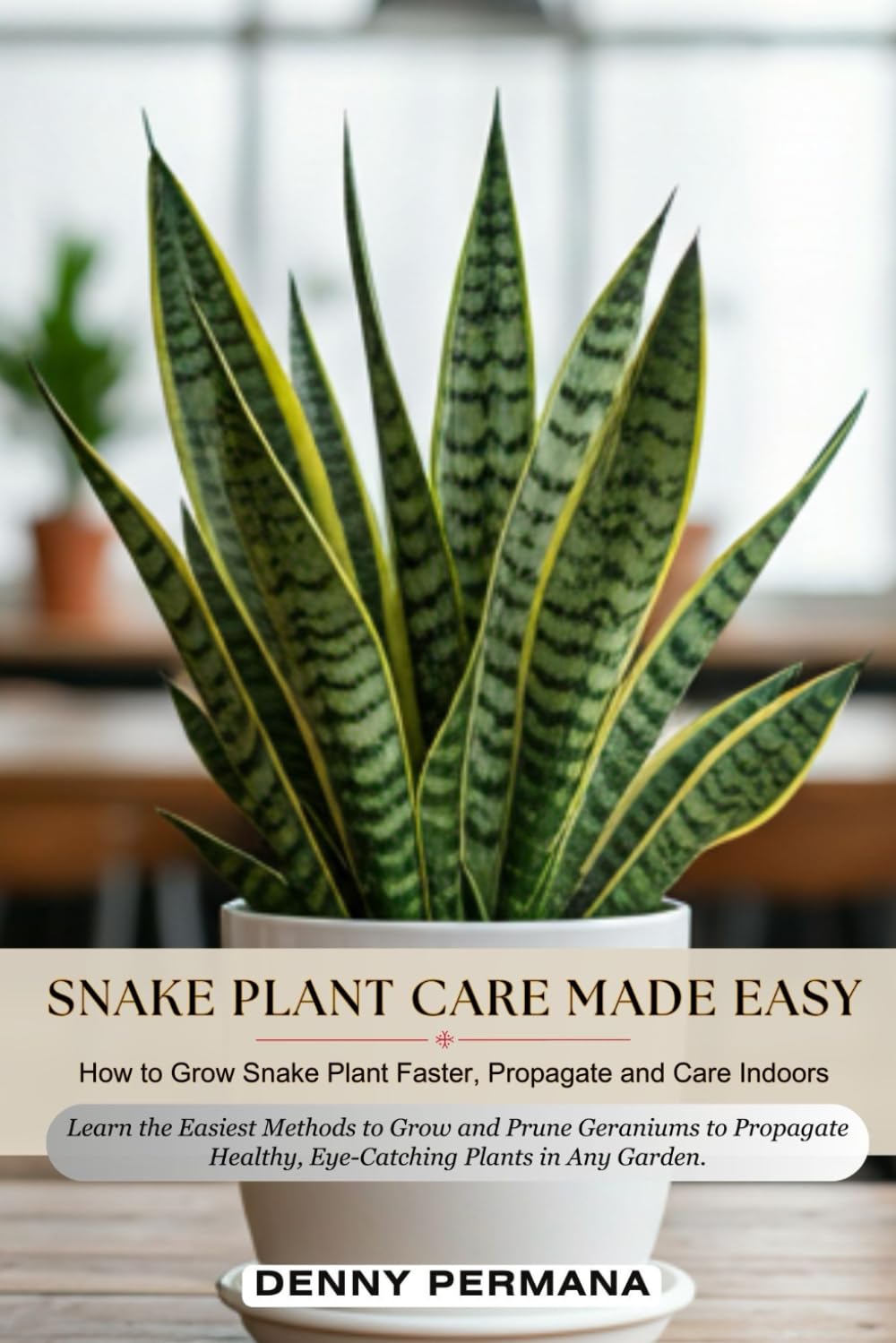
Snake Plant Care Made Easy is a compact, no-fuss guide written by Denny Permana for anyone who wants to keep their snake plants thriving. Whether you're a total beginner or you've already killed a few plants, this book aims to give you the clear steps you need to water, light, and soil your snake plants correctly. The book is self-published and clocks in at 114 pages, making it a quick read that you can actually use as a reference without getting bogged down in fluff.
The standout feature here is the structured approach. Each chapter builds from the basics - like understanding different snake plant varieties and setting up the right environment - to more advanced topics like propagation and seasonal care. I especially appreciate the inclusion of a care checklist and a troubleshooting list. These are the kinds of tools that make a guide useful in the real world, not just on the shelf. The glossary of gardening terms is a nice touch for building your vocabulary, which is something many guides overlook.
Design-wise, the book is straightforward. It's a standard 6 x 9 inch paperback with a weight of 7.8 ounces, so it's lightweight enough to toss in a bag or keep by your plants. The print is clear and the layout is easy to scan. The reading age is listed as 8 to 18 years, which suggests the language is accessible and not overly technical. That said, it doesn't include photos or diagrams (based on the description), so if you're a visual learner, you might want to supplement with online images for propagation steps.
On the downside, there are no customer reviews yet, which makes it tough to gauge how well the advice actually works in practice. Also, the book is solely focused on snake plants, so if you're looking for a general houseplant guide, this won't cover your other greens. Some experienced gardeners might find the content a bit basic, but the advanced care techniques chapter could still offer a few new tricks.
Overall, Snake Plant Care Made Easy delivers exactly what it promises: a clear, actionable guide to growing healthier snake plants faster. It's a solid choice for beginners and a handy reference for anyone who wants to up their snake plant game without wading through a 300-page tome. If you're serious about your Sansevieria, this book earns a spot on your shelf.
Publisher: Independently published
Publication Date: August 9, 2024
Language: English
Print Length: 114 pages
ISBN-13: 979-8335417822
Item Weight: 7.8 ounces
Reading Age: 8 - 18 years
Dimensions: 6 x 0.26 x 9 inches
Best Sellers Rank: #1,297,761 in Books; #488 in House Plant Gardening

Pros
- Science-backed principles explained in plain language
- Covers all four essential care areas: watering, light, repotting, propagation
- Practical and actionable advice without overwhelming detail
- Affordable price point for a comprehensive guide
- Suitable for both beginners and more experienced plant owners
Cons
- At 119 pages, some topics may feel brief for advanced readers
- Independently published, so editing and layout may not match larger publishers
- As a new release, lacks reader reviews to gauge real-world feedback
How to Care for Your Houseplants by The Plant Scientist is a no-nonsense guide that focuses on the four fundamentals of keeping indoor plants healthy: watering, light, repotting, and propagation. Designed for both beginners and seasoned plant enthusiasts, the book emphasizes understanding how plants actually work rather than following rigid rules. It is a short but focused read at 119 pages, making it easy to digest in an afternoon.
The standout quality of this guide is its practical, science-backed approach. Each chapter breaks down why certain care mistakes happen and how to correct them. For example, the watering section explains how to read soil moisture and plant signals, which helps prevent overwatering - the number one killer of houseplants. The light chapter uses simple categories to help you match plants to the best spots in your home. Real-world tips like choosing the right container and soil mix add genuine value for anyone looking to grow a thriving indoor garden.
On the design side, the book is a standard 6 x 9 inch paperback with a flexible cover. The layout is clean and the text is easy to follow, though it lacks color photos or illustrations - something that might help visual learners. For a book focused on plant care, a few diagrams could have been useful, but the written instructions are clear enough. The publication date is February 2026, so it is a brand new release with no existing customer reviews yet.
Potential drawbacks include the relatively short length - advanced plant owners may find some topics like pest control or specific species care too brief. Also, as an independently published title, the editing and production quality may not match that of major publishers, though in this case the content feels well-organized and jargon-free. The price point of $15.99 is fair for a practical handbook, but some might wish for more depth per dollar.
Overall, How to Care for Your Houseplants is a solid investment for anyone who wants to move past guesswork and build confidence in caring for houseplants. If you are a beginner or someone who has struggled to keep plants alive, this book gives you the tools to understand and meet their needs. Experienced plant lovers will still find useful reminders, especially on propagation and routine building. It earns a recommendation as a clear, focused guide that delivers on its promise.
Frequently Asked Questions About Spider Plant Care
Here are answers to the most common questions about keeping spider plants healthy and happy.
How often should I water my spider plant?
Spider plants prefer to dry out a bit between waterings. Aim to water when the top inch of soil feels dry – usually once a week in summer and every 10-14 days in winter. Overwatering is the fastest way to cause root rot, so it’s better to underwater than overdo it. For more watering tips, check out our Plant Care Guides.
What kind of light does a spider plant need?
Spider plants do best in bright, indirect light. A spot near an east- or north-facing window works well. Direct sun can scorch the leaves, while very low light will slow growth and reduce the production of spiderettes. If your plant isn’t putting out babies, try moving it to a brighter location.
Why are my spider plant leaves turning brown at the tips?
Brown tips are usually caused by fluoride or chlorine in tap water, low humidity, or inconsistent watering. Switching to filtered or distilled water and misting the leaves occasionally can help. Trimming the brown tips with clean scissors won’t hurt the plant and improves appearance.
How do I propagate spider plant babies?
Spider plant offsets, or spiderettes, can be rooted in water or moist soil. Simply snip off a baby, place the base in water, and wait for roots to grow. Once roots are an inch or two long, pot in a small container with well-draining soil. For best results, use a balanced liquid fertilizer like the Miracle-Gro Indoor Plant Food included in our list. For more details, see our article on best plant food for water propagation.
Should I repot my spider plant every year?
Spider plants actually like being slightly root-bound, so you only need to repot every 1-2 years or when roots start pushing out of the drainage holes. When you do repot, choose a pot only 1-2 inches wider and use a well-draining potting mix. Adding a slow-release fertilizer can give your plant a gentle boost. For more on soil choices, browse our Fertilizer and Soil Guide.








Write Your Review
No reviews yet. Be the first to share your experience!