


Indoor cultivators relying on artificial illumination often wonder about the invisible spectral output emitted from their fixtures. When managing sensitive plant canopies or indoor workstations, the question of whether do fluorescent lights emit uv frequently surfaces among growers aiming to balance photosynthetic photon delivery with photobiological stress. While conventional fluorescent tubes rely on an internal electric discharge through mercury vapor to generate light, the internal phosphor coating and outer glass envelope absorb almost all energetic ultraviolet wavelengths. Gardeners who manage seedlings under linear T5 HO grow lights notice that tender foliage thrives without showing symptoms of radiation stress or leaf bleaching.
Understanding this emission profile helps indoor gardeners distinguish everyday horticultural lighting from specialized ultraviolet tubes engineered for sanitization or insect attraction. Trace amounts of long-wave radiation can escape standard consumer tubes, but these tiny leakage levels differ substantially from unfiltered commercial blacklights or germicidal lamps. By examining how fluorescent technology functions compared to modern solid-state diodes, growers can make informed decisions regarding seedling vigor, secondary metabolite production, and living space safety.





Understanding Ultraviolet Radiation and Fluorescent Lighting Systems
Fluorescent lighting tubes fundamentally produce substantial ultraviolet radiation inside the tube envelope, but standard illumination models release only trace amounts into the environment. An electric arc excites low-pressure mercury vapor to generate shortwave ultraviolet energy, primarily at the 254-nanometer resonance line. In standard domestic and horticultural fluorescent tubes, the interior glass wall is coated with a blended phosphor powder that absorbs this energetic radiation and re-emits it as visible light. The soda-lime or borosilicate glass tube further acts as a physical barrier that filters out virtually all remaining shortwave and medium-wave energy, leaving only negligible trace levels of long-wave ultraviolet radiation.
The Physical Mechanism of Mercury Arc Discharges
Every linear fluorescent tube operates by passing an electric current between two tungsten electrodes seated at opposite ends of a sealed glass envelope. The chamber contains an inert noble gas, usually argon or krypton, mixed with a tiny quantity of vaporized elemental mercury. When the ballast strikes the initial arc, energetic electrons collide with free mercury atoms, driving them into an unstable excited state. As these mercury electrons return to their ground state, they release photons predominantly in the ultraviolet spectrum rather than visible illumination.
The interior wall of a standard fluorescent bulb is coated with an inorganic phosphor blend specifically formulated for visible color rendering. These chemical compounds absorb incoming ultraviolet photons and undergo luminescence, re-emitting light across the broader 400 to 700 nanometer photosynthetic range. High quality modern tubes utilize tri-phosphor compositions that maximize lumen output and color balance while absorbing ultraviolet excitation efficiently. Standard glass compositions provide a secondary filtration barrier that blocks wavelengths below roughly 300 nanometers, ensuring minimal ultraviolet radiation escapes into open spaces.
Standard Illumination Tubes Versus Specialized Ultraviolet Lamps
Specialized fluorescent fixtures behave very differently because manufacturers deliberately modify the phosphor formula and glass material to emit specific wavelengths. For example, bug zapper replacement tubes, such as the Qualirey T8 lamps, use specific actinic phosphors designed to peak around 365 nanometers in the long-wave UVA band. These fixtures attract nocturnal insects by capitalizing on their visual sensitivity to ultraviolet frequencies without producing significant visible room glare. The glass envelope used in these blacklight tubes transmits UVA while continuing to filter dangerous shortwave radiation, proving that fluorescent tubes can emit targeted ultraviolet energy when engineered for that exact purpose.
At the extreme end of the spectral continuum are germicidal ultraviolet fixtures, including the COOSPIDER T5 replacement bulbs and specialized aquarium clarifier lamps. These specialized lamps omit the internal phosphor coating entirely and utilize transparent fused quartz glass instead of standard soda-lime glass. Quartz glass allows harsh shortwave UVC photons at 254 nanometers to pass directly through the tube envelope into air or water. Cultivators must recognize that these unfiltered sterilizing tubes pose severe risks to plant tissue and human skin, making complete light-tight containment essential.
Ultraviolet Spectrum Wavelengths: UVA, UVB, and UVC Explained
Ultraviolet radiation spans the electromagnetic band between 100 and 400 nanometers, and each sub-band interacts with living organisms in distinct ways. Ultraviolet A occupies the longest wavelengths between 315 and 400 nanometers, bordering visible violet light in the natural solar spectrum. Natural sunlight delivers significant UVA to outdoor plants, and this wavelength penetrates standard clear glass far more easily than shorter bands. In ordinary fluorescent tubes, the tiny fraction of radiation that manages to escape the phosphor layer consists almost entirely of mild UVA energy.
Ultraviolet B ranges from 280 to 315 nanometers and carries substantially more photochemical energy than UVA radiation. Standard fluorescent bulbs allow practically zero UVB transmission because soda-lime glass naturally absorbs photon wavelengths below 300 nanometers. Specialized reptile lighting and niche horticultural supplementation tubes require unique borosilicate blends to permit small, calibrated amounts of UVB to pass through. Indoors, standard fluorescent grow lights fail to supply meaningful UVB levels unless specialized, purpose-built specialty tubes are chosen.
Ultraviolet C represents the most energetic classification, running between 100 and 280 nanometers, with 254 nanometers serving as the classic mercury emission spike. Earth’s atmospheric ozone layer blocks all natural solar UVC before it reaches the ground, meaning living organisms possess no biological tolerance for it. In standard fluorescent bulbs, the combination of complete phosphor absorption and dense glass walls prevents any UVC from reaching the exterior environment. Only specialized sterilizing lamps with clear quartz jackets emit this destructive waveband, which can scorch plant foliage within minutes.
Plant Photobiology and Botanical Responses to Ultraviolet Wavelengths
Plants possess specialized photoreceptors, most notably the UVR8 protein, which actively detect and respond to subtle ultraviolet wavelengths in their environment. When plants encounter moderate levels of ambient UVA or mild UVB, the UVR8 photoreceptor initiates systemic defense pathways. This photomorphogenic response encourages thicker leaf cuticles, sturdier cell walls, and reduced internodal stretching across growing stems. Cultivators often study horticultural light spectrums to understand how subtle shifts in non-visible light stimulate these natural structural defenses.
Beyond structural morphology, targeted ultraviolet radiation prompts plants to produce higher concentrations of secondary metabolites, such as flavonoids, anthocyanins, and protective terpenes. These biochemical compounds act as internal sunscreens, protecting photosynthetic reaction centers from excessive solar radiation and oxidative cellular damage. In crops like brassicas, peppers, and culinary herbs, mild ultraviolet exposure can enhance natural aromas, intensify pigment colors, and sharpen flavors. Because standard T5 or T8 tubes deliver virtually zero usable UVB and minimal UVA, growers cannot rely on conventional fluorescent shop fixtures to trigger these terpene-boosting adaptations.
Seedling development under standard fluorescent tubes remains remarkably safe precisely because of the absence of harsh ultraviolet radiation. Young seedlings and tender microgreens feature fragile epidermal layers that can suffer severe photoinhibition or tissue scorch when exposed to unfiltered radiation. The gentle, broad-spectrum white output of standard T5 HO fixtures provides ideal conditions for root establishment and initial cotyledon expansion. Cultivators utilizing indoor vertical grow systems often rely on this gentle profile to keep multi-tier vegetative setups stable and uniform.
Phosphor Degradation and Aging Effects in Fluorescent Fixtures
As fluorescent tubes accumulate operational hours, the internal phosphor coating gradually degrades due to continuous thermal stress and chemical interaction with mercury. Mercury atoms slowly penetrate into the glass substrate and form amalgam coatings that discolor the ends of the tube. This aging process causes lumen depreciation, shifting the light output away from its original color rendering and reducing overall photosynthetic efficiency. Fortunately, even as the phosphors lose luminescence efficiency, the physical glass envelope retains its optical filtration properties.
Even when an aging fluorescent bulb begins to flicker or exhibit dark rings near the end caps, the glass wall still prevents shortwave UVC transmission. The gradual thinning or micro-cracking of phosphors can permit slightly higher trace amounts of long-wave UVA leakage, but the volume remains biologically negligible. The practical concern for indoor cultivators is not sudden ultraviolet toxicity, but rather the steep loss of usable photosynthetic photons. Replacing linear tubes according to manufacturer maintenance intervals ensures consistent canopy development without light starvation.
Fluorescent Systems Compared to Modern Ultraviolet LED Hardware
The horticultural lighting landscape has shifted dramatically from legacy gas-discharge tubes to efficient solid-state light-emitting diodes. Unlike fluorescent tubes that generate ultraviolet energy inadvertently through mercury arcs, standard white LEDs generate no internal ultraviolet photons at all. Most full-spectrum white LEDs use a blue gallium nitride semiconductor chip coated with a yellow cerium-doped garnet phosphor to create visible white light. This architecture completely eliminates ultraviolet emissions from standard white panels, making them naturally free of UV radiation.
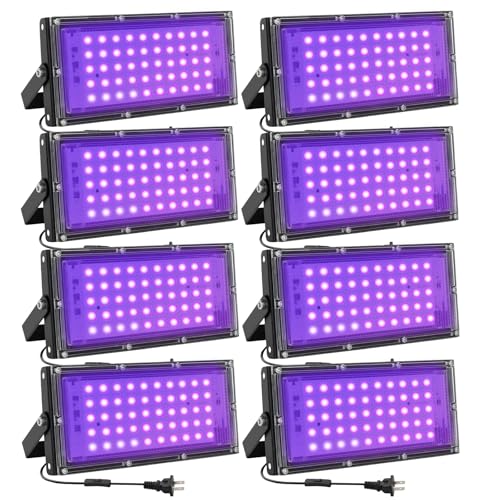
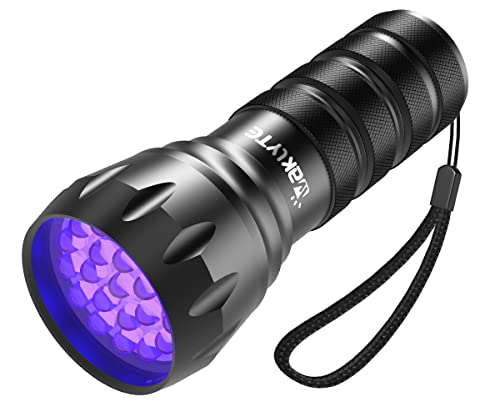
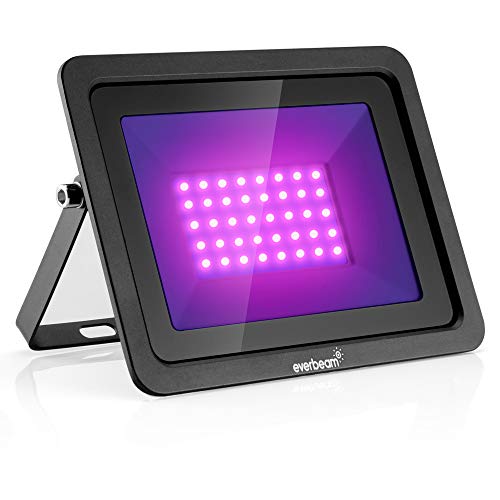
Dedicated ultraviolet LED fixtures, such as compact 365nm or 395nm blacklights like the Everbeam or DARKBEAM models, offer precise control over spectral delivery. Fluorescent blacklights emit a broader band of wavelengths that often includes unwanted visible purple light and higher operating temperatures. In contrast, narrow-band UV LEDs deliver concentrated target frequencies with higher electrical efficiency and minimal radiant heat transfer toward the plant canopy. Furthermore, solid-state diodes eliminate the environmental risks associated with elemental mercury and fragile glass tubes.
Fixture Safety, Enclosure Containment, and Human Health Considerations
Operating standard fluorescent lighting in residential spaces or hobby grow rooms presents zero meaningful health risks related to ultraviolet exposure. Decades of independent photometric analysis indicate that sitting under standard office or shop fluorescent fixtures imparts less ultraviolet exposure than spending several minutes in midday outdoor sunlight. The stray UVA emissions detected within inches of the glass fall well below accepted occupational safety thresholds. Growers can comfortably inspect seedling trays and adjust hanging heights under standard T5 arrays without protective eyewear.
Severe safety protocols must be observed whenever cultivators introduce unfiltered, specialized germicidal fluorescent tubes into their setups. Fixtures equipped with shortwave UVC quartz tubes, such as the COOSPIDER sanitizing lamps or inline pond clarifiers, can cause acute corneal burns and painful skin erythema within seconds of direct exposure. These specialized sterilizers must operate inside completely light-tight enclosures, sealed ducting, or submerged filter chambers. Always disconnect electrical power before opening sterilizer housings or handling replacement bulbs to avoid accidental exposure.
How to Differentiate Bulb Types and Prevent Costly Grow Room Mistakes
Accidental installation of the wrong fluorescent tube can devastate an indoor garden within a single photoperiod. Growers should carefully inspect the printed markings stamped near the base of any replacement tube before mounting it into a fixture. Standard horticultural lamps carry codes such as F54T5/HO/865, indicating a high-output 6500K daylight phosphor formulation designed purely for visible illumination. Conversely, germicidal lamps are designated with markings like G6T5 or UV-C, indicating an unfiltered sterilizing lamp with transparent quartz glass that must never illuminate plants.
Blacklight fluorescent tubes are easily identified by their deep violet or opaque Wood’s glass exterior, labeled with designations like BLB or 365nm. These tubes produce visible purple glow and energetic UVA designed for fluorescence analysis, bug capture, or novelty display applications. While occasional low-intensity UVA exposure is harmless to mature foliage, these fixtures provide almost zero photosynthetic active radiation for vegetative development. Installing insect trap bulbs or blacklight tubes over seedlings will result in rapid stem etiolation and nutrient starvation due to a lack of photosynthetic photons.
Practical Guidance for Managing Ultraviolet in Cultivation Spaces
Determining whether a fluorescent lighting setup emits ultraviolet radiation allows indoor gardeners to balance crop vigor against human safety. Standard commercial and horticultural fluorescent tubes contain internal phosphors that absorb nearly all mercury-generated ultraviolet rays, leaving only harmless, fractional traces of UVA. Growers seeking specific physiological adaptations, like boosted secondary metabolites or sturdier cuticle growth, should look toward supplemental narrow-band UV LEDs or purpose-built actinic lamps rather than standard household tubes. Always confirm product markings and maintain calibrated canopy clearances to foster an efficient growing environment.
Regular monitoring of fixture envelopes and electrical connections further ensures stable environmental control throughout each cultivation phase. Check socket contacts for heat discoloration and wipe away accumulated dust from the glass tubes during scheduled cleaning cycles. When transitioning seedlings from gentle fluorescent racks to high-intensity flowering enclosures, gradual acclimation prevents sudden light shock. Understanding the distinct properties of fluorescent and solid-state lighting empowers growers to optimize canopy health with complete confidence.



Write Your Review
No reviews yet. Be the first to share your experience!