


Setting out sweet potato slips requires balancing vigorous vegetative growth above ground with proper root swelling below the surface. Gardeners often wonder how far apart to plant sweet potato slips to avoid overcrowded beds or tangled mounds that produce slender, unmarketable tubers. Giving each slip the correct spacing allows the root system to expand into plump, nutrient-dense sweet potatoes without competing fiercely for moisture and soil nutrients. Proper spacing also makes weeding and late-season digging far less frustrating when harvest time arrives.
Soil conditions heavily influence how these trailing vines spread and establish across the garden bed. When working with heavier ground that restricts root development, reviewing strategies for fertilizing and preparing clay soil can help you create the loose, aerated structure these tubers need. In most home garden settings, setting slips roughly 12 to 18 inches apart in rows spaced three to four feet apart delivers an optimal balance of tuber size and overall harvest volume. Understanding these layout fundamentals ensures that your starter plants develop healthy root crowns and robust foliage throughout the warm growing season.

Pros
- Saves weeks of indoor preparation compared to starting from raw tubers
- Reliable variety with excellent table quality and smooth texture
- Tolerates hot, sunny summer weather exceptionally well
- Rapidly establishes root networks once planted in warm soil
Cons
- Slips may arrive without visible roots, requiring prompt planting and consistent moisture
- Extremely frost-sensitive and cannot be set outdoors until soil is thoroughly warm
- Vines spread widely and demand significant garden space
CZ Grain provides a practical head start on the growing season with this five-pack of live Red Garnet sweet potato slips. Red Garnet remains one of the most popular market varieties for good reason: its dark reddish-purple skin shields a rich, moist orange interior that caramelizes beautifully when baked. Designed for home gardeners, allotment growers, and raised-bed enthusiasts, these live slips bypass the slow, sometimes finicky process of sprouting root cuttings indoors.
Unlike seed potatoes that are planted as tuber chunks, sweet potatoes reproduce via vegetative green shoots called slips. Because these arrive live, their appearance can vary based on transit conditions. Some slips show early root nubs while others arrive unrooted, which is entirely normal for this plant type. Once tucked into warm, well-aerated soil and given steady moisture, they establish fibrous roots within days and push vigorous green vines across the bed.
To get the best yield, sweet potatoes demand specific conditions. They thrive in sustained heat, plenty of direct sunlight, and light, well-draining soil that lets the tubers swell without restriction. Gardeners in northern regions with short summers may need to preheat their soil using dark mulch or opt for containers, as cold snaps or soggy, heavy clay will quickly stall growth or lead to rot.
For backyard growers with warm summers and adequate space, these five slips offer a direct path to an abundant autumn harvest. They take the guesswork out of propagation and deliver a time-tested variety that performs reliably in warm garden beds.
Wait to plant your slips until late spring when daytime temperatures consistently hover above 70 degrees Fahrenheit and all danger of frost is gone. Sweet potatoes are tropical in origin and will stall in cold soil.
Prepare a raised mound or loose garden bed enriched with compost, keeping the soil light and well-draining. Bury each slip deep enough to cover several leaf nodes, leaving the top leaves exposed. Water thoroughly right after planting to settle the soil around the stems.
Keep the soil consistently moist for the first two weeks while new roots take hold. Once established, sweet potato vines become relatively drought-tolerant, requiring moderate watering until roughly two to three weeks before harvest.




Pros
- Three popular varieties offer diverse flavors, textures, and colors in one pack.
- Easy for beginners: slips are pre-grown and only need warm soil and sunlight to take off.
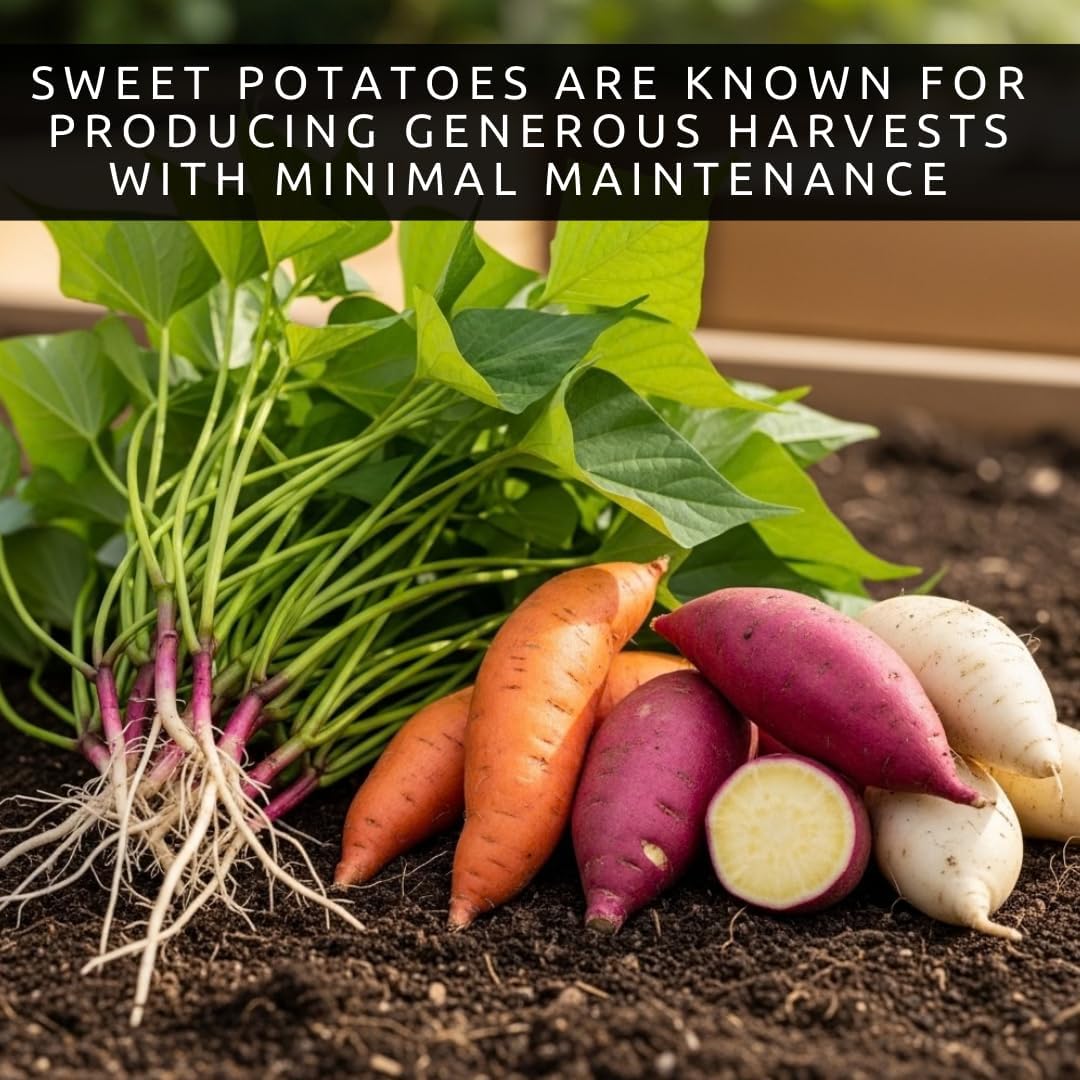
- Productive crop with minimal maintenance once established in proper conditions.
- Works well in containers and raised beds, making it accessible for patios and small yards.
- Nutrient-dense sweet potatoes are a healthy addition to homegrown meals.
Cons
- No customer reviews yet, so real-world performance and slip quality are unverified.
- Price of $34.99 is higher than buying slips individually from a local nursery.
- Slips are perishable and must be planted promptly after arrival; they also require consistently warm soil to thrive.
The CZGrain Garden Mix Sweet Potato Slips bundle is a straightforward way to start a colorful sweet potato patch at home. It includes three slips each of Beauregard (orange-fleshed), Japanese Purple (purple skin and flesh), and White sweet potatoes, totaling nine plants. This mix is aimed at home gardeners who want variety without the hassle of sourcing multiple packs. The slips are pre-cut and ready to be placed in warm soil, making them accessible even if you are new to growing root vegetables.
The standout feature here is the diversity. Each variety brings its own taste and texture: Beauregard is classic and sweet, Japanese Purple is earthy with a chestnut flavor, and White is mild and creamy. The slips come with healthy root systems and visible growth points, which helps them establish fast. Sweet potatoes are known for being low-maintenance once planted, and this pack delivers on that promise. They thrive in loose, well-drained soil and can handle partial sun, though full sun yields more tubers. The vines spread nicely, doubling as ground cover or a decorative element in raised beds.
Build quality is what you would expect from a reputable seed company: the slips appear fresh and have been handled with care. There are no signs of wilting or damage, but because they are live plants, timing of delivery and weather conditions matter. If you plant them in cold or waterlogged soil, they will struggle. The packaging is simple but functional, with the slips wrapped to retain moisture.
A drawback is the lack of customer reviews. With a 3.5-star rating and zero reviews, it is hard to gauge how true the descriptions are. Also, the price point is a bit steep compared to buying slips individually from a local garden center, though the convenience of a curated mix may justify it for some. Additionally, sweet potatoes require a long, warm growing season, so gardeners in cooler climates may need to start them indoors or use a greenhouse.
Overall, the CZGrain Garden Mix is a solid pick if you want to try three different sweet potatoes in one go. It is easy to plant, productive, and the nutritional benefits are a bonus. The only real gamble is the lack of user feedback, but based on the product details and brand reputation, it is a reasonable risk for gardeners ready to grow their own sweet potatoes from slips.

Pros
- Affordable way to start a purple sweet potato crop without buying mature plants
- Cold tolerant variety allows for earlier spring planting and later fall harvests
- Some customers report healthy slips that produce a good yield of delicious potatoes
- Organic and natural material feature appeals to clean gardening enthusiasts
Cons
- Inconsistent quality: many slips arrive small, weak, or with limited roots
- Some slips fail to grow or rot before transplanting, requiring extra patience and care
- Packaging in a paper envelope can damage the delicate slips during shipping
The CZ Grain Purple Japanese Sweet Potato Slips offer a budget-friendly option for home gardeners who want to grow their own specialty potatoes. These three plant slips are designed for outdoor cultivation in full sun, with a cold tolerance that can extend your growing season. However, based on customer experiences, the quality of the slips can be hit or miss.
On the positive side, some users report that after soaking the slips in water for a few weeks, they develop strong roots and leaves, eventually yielding a satisfying crop of purple sweet potatoes. Those who succeeded noted that the potatoes were delicious and a good value compared to store prices. The organic and natural material feature is a plus for clean gardening.
However, a significant number of buyers received slips that were little more than bare twigs with minimal or no roots. Several slips rotted, failed to sprout, or produced no tubers even after months of growth. The packaging in a thin paper envelope offers little protection, and the slips can arrive damaged. To improve your chances, plan to give these slips extra attention: place them in water immediately upon arrival, change the water daily, and wait until several leaves appear before transplanting.
Design and build quality are clearly inconsistent. While the slips are true to the described variety, the lack of uniform vigor means that not every slip will survive or thrive. If you are an experienced gardener who enjoys the challenge of nursing plants from a delicate state, this product might work for you. For beginners or those expecting ready-to-plant slips, the high failure rate may be disappointing.
Overall, the CZ Grain Purple Japanese Sweet Potato Slips can yield a tasty harvest, but they require patience and careful handling. The price is low enough to take a risk, but consider ordering extra to account for losses. With proper care and favorable conditions, you might enjoy homegrown purple sweet potatoes from soil to table.
Brand: CZ Grain
ASIN: B0BXFKGYTV
Item Type Name: Lemon (as listed by manufacturer)
Plant or Animal Product Type: Japanese Sweet Potato
Indoor/Outdoor Usage: Outdoor
Sunlight Exposure: Full Sun
Expected Blooming Period: Summer
Special Feature: Cold Tolerant
Material Feature: Natural, Organic
Product Care Instructions: Water
Unit Count: 1.0 Count (3 plant slips)
Color: 3 Plant Slips
Best Sellers Rank: #19,001 in Patio, Lawn & Garden
Essential Guidelines for Sweet Potato Slip Spacing and Bed Layout
The standard baseline for planting sweet potato slips is 12 to 18 inches apart within the planting row, accompanied by 36 to 48 inches of space between adjacent rows. This layout provides individual root systems with sufficient soil volume to form well-shaped storage roots while allowing trailing vines to cover the ground into a weed-suppressing canopy. Spacing decisions directly dictate whether your harvest yields slender fingerlings, medium table-ready potatoes, or giant jumbo tubers. Fine-tuning these measurements based on your specific garden beds, soil texture, and chosen cultivars ensures an abundant and manageable harvest.
The Core Spacing Formula: In-Row and Row Spacing Dynamics
In-row spacing dictates the physical footprint allocated to each individual root crown beneath the surface. Setting slips 12 inches apart concentrates root development, prompting the plant to yield a higher quantity of uniform, medium-sized sweet potatoes that roast evenly. Expanding that interval to 15 or 18 inches grants each plant more access to soil moisture and nutrients, which encourages larger individual tubers. Gardeners who allow 18 inches or more frequently harvest hefty baker-sized potatoes, though setting plants wider than 18 inches can occasionally lead to rough, irregular shapes.
Row-to-row spacing requires an equally deliberate approach because sweet potato vines spread aggressively across the garden floor. Leaving 36 to 48 inches between rows might feel excessive when transplanting delicate green slips in late spring. But those vigorous vines quickly send out runners that stretch six to ten feet in every direction by midsummer. Maintaining wide pathways between rows ensures you can walk through the garden patch for irrigation checks and pest monitoring without trampling delicate vine tips.
Spacing Adjustments for Raised Beds and Containers
Raised garden beds feature loose, uncompacted soil blends that allow for slightly tighter planting patterns than traditional in-ground plots. In a raised bed, gardeners can plant sweet potato slips on an offset grid pattern spaced roughly 12 to 15 inches apart in all directions. This hexagonal or staggered layout maximizes planting density while maintaining adequate root volume for tuber swelling. The trailing foliage will naturally spill over the raised bed edges, which keeps the interior foliage airy and frees up vertical canopy space.
Container cultivation requires careful volume calculations to prevent rootbound, stunted tubers. A standard 10-gallon or 15-gallon fabric grow bag can successfully support one or two slips if provided with adequate moisture and drainage. Larger containers, such as 20-gallon pots or half-whiskey barrels, can accommodate two to three slips spaced at least 10 to 12 inches apart. Ensure any container offers a minimum soil depth of 12 to 16 inches so the tubers have vertical room to swell without hitting rigid container bottoms.
Varietal Growth Habits and Foliage Density
Different sweet potato cultivars exhibit distinct vine habits and root-setting profiles that influence how closely you should space them. Classic orange-fleshed varieties like Beauregard are renowned for dependable yields and vigorous vine growth, performing exceptionally well at standard 12-inch to 15-inch intervals. Red Garnet slips, recognizable by their dark reddish-purple skins and moist orange interiors, produce lush foliage that thrives with 14 to 18 inches of breathing room. Giving these heavy-yielding agricultural selections ample room prevents the crown from becoming overcrowded during the hottest summer months.
Specialty varieties such as Purple Japanese and Purple Majesty present firmer flesh and often demand a slightly longer growing window to mature completely. These purple-skinned heirloom types benefit from a steady 14-inch to 16-inch spacing, which ensures consistent soil temperature and moisture distribution throughout their development cycle. In contrast, ornamental edible types like Ace of Spades feature deep dark foliage and compact trailing forms that adapt beautifully to tighter ornamental arrangements or the perimeters of mixed vegetable planters. Matching your layout to the vigor of each specific cultivar prevents aggressive runners from completely swamping slower-growing selections.
Soil Ridges and Mound Dimensions for Optimal Tuber Shape
Creating raised mounds or long continuous ridges is the preferred horticultural practice for growing sweet potato slips in the ground. Constructing ridges roughly 8 to 12 inches high and approximately 18 to 24 inches wide creates an elevated bed of loose, aerated topsoil. These mounds warm up significantly faster in early summer, accelerating root initiation and initial vegetative growth after transplanting. Raised soil also sheds excessive seasonal rainfall rapidly, protecting the developing tubers from waterlogging and rot.
Soil texture directly dictates the physical symmetry and final grade of your sweet potato harvest. In light, sandy loam soil, roots expand easily without meeting physical resistance, resulting in smooth skins and symmetrical cylindrical shapes. Heavier soils require organic matter incorporation to prevent dense compaction from squeezing developing roots into stunted, misshapen forms. Establishing consistent mounds before planting also marks your rows clearly, helping you place each slip right along the crest at precise 12-inch to 18-inch intervals.
Planting Depth and Node Placement Fundamentals
Correct slip spacing must be paired with proper planting depth to ensure strong vegetative establishment. Sweet potato slips do not produce tubers from a central seed piece; instead, storage roots originate from the underground stem nodes. When inserting each slip into the soil, bury two to three lower nodes roughly four to six inches deep while keeping the top foliage clusters upright above the soil line. Stripping the lower leaves before planting allows the bare nodes to come into direct contact with moist earth, triggering rapid adventitious root emergence.
Gardeners can plant slips vertically into deep holes or lay them along a shallow horizontal trench with the leafy tip angled upward. Horizontal or angled trench planting is particularly advantageous for long, leggy slips because it distributes multiple root-forming nodes across a consistent depth zone. In cooler growing zones, keeping nodes in the top four inches of warm soil promotes faster root bulking than burying them deeply into colder subsoil layers. Firm the soil gently around each transplanted slip to eliminate underground air pockets that could dry out delicate young rootlets.
Vine Management and Ground Canopy Considerations
As the summer progresses, sweet potato foliage forms a dense vegetative carpet that shades the soil surface completely. This living mulch serves as natural weed prevention and reduces soil moisture evaporation during scorching midsummer dry spells. While wide row spacing might initially look sparse, this canopy typically knits together within four to six weeks of transplanting. Weed thoroughly during the first month before the vines intertwine, after which the thick canopy will suppress most competing opportunistic weeds on its own.
Many novice growers wonder whether sprawling sweet potato vines should be pruned back to fit neatly between garden rows. Trimming healthy green vines is generally discouraged because lush foliage acts as the photosynthetic engine driving carbohydrate storage into the roots below. Pruning foliage reduces the plant’s overall energy reserves, frequently resulting in smaller yields and delayed root maturity. If vines begin invading adjacent vegetable rows, gently redirect the runners back toward their own planting mound rather than cutting them off.
Irrigation, Nutrition, and Early Bed Care
Newly planted sweet potato slips are vulnerable to transplant shock and require consistent moisture during their initial establishment phase. Water the planting ridge thoroughly immediately after setting out your slips to settle the soil and hydrate emerging root tissues. Maintaining evenly moist, but not saturated, soil for the first seven to ten days encourages rapid root rooting even if slips show temporary wilting. Once established, sweet potatoes exhibit respectable drought tolerance, though regular irrigation during midsummer tuber enlargement produces superior yields.
Fertility management around your spaced slips requires a delicate touch to avoid producing massive foliage at the expense of root development. Excessive nitrogen fertilization encourages runaway vine growth while starving underground tubers of the carbohydrates needed for swelling. Supplementing with potassium and phosphorus supports cell division and starches within the storage roots throughout the warmest months. For larger plantings, using a hose-end sprayer for garden feeding can help you deliver mild, balanced liquid nutrients evenly across sprawling beds without disturbing the extensive root network.
Correcting Common Spacing Errors and Yield Expectations
Planting slips too close together is one of the most frequent mistakes made by ambitious backyard gardeners. Crowding plants closer than 10 inches creates intense competition for moisture, light, and available soil minerals. As a consequence, the root crowns produce numerous slender, pencil-thin roots that lack the bulk required for baking or roasting. While you may pull dozens of individual tubers from an overcrowded bed, the total usable kitchen yield will generally be disappointing.
Conversely, spacing slips wider than 20 to 24 inches allows individual plants to monopolize vast amounts of subterranean space. In rich, well-watered soil, this extra room can cause storage roots to balloon into massive, irregularly shaped tubers. These oversized sweet potatoes often develop deep growth cracks and can prove difficult to bake evenly or slice cleanly in the kitchen. Sticking to the proven 12-inch to 18-inch in-row standard delivers balanced yields of medium, culinary-grade sweet potatoes that store reliably through the winter.
Timing Transplants Around Soil Temperatures and Frost Dates
Spacing your garden layout is only half the battle; planting at the correct seasonal moment is essential for slip survival. Sweet potatoes are warm-season vegetables native to tropical regions and cannot tolerate freezing temperatures or cold garden soil. Wait at least two to three weeks after your region’s last expected spring frost before setting live slips into the ground. The soil temperature at a four-inch depth should consistently register at least 60 to 65 degrees Fahrenheit before you transplant.
Planting into cold, damp soil stalls root emergence and leaves vulnerable slips prone to fungal root rot pathogens. If your mail-order slips arrive before outdoor garden soil has adequately warmed, place their stems in a shallow container of clean water near a sunny window. This temporary holding technique keeps the slips hydrated and often encourages early white rootlets to emerge while you wait for seasonal warmth. Once warm conditions arrive, transplant your rooted starts directly into their pre-spaced mounds during a mild, overcast afternoon to minimize initial transplant shock.
Planning your sweet potato patch around proper in-row and row-to-row spacing sets the stage for an uncomplicated and highly productive growing season. Dedicating 12 to 18 inches between slips on elevated ridges gives vigorous cultivars the subterranean room they require to produce smooth, uniform tubers. At the same time, maintaining three to four feet between rows ensures adequate sunlight penetration, manageable garden maintenance, and easy harvest access. Measure your beds accurately before transplanting, keep the newly set slips evenly watered, and enjoy watching your sweet potato vines thrive throughout the warm summer months.






Write Your Review
No reviews yet. Be the first to share your experience!