


Figuring out the best time of year to plant russian sage often feels like chasing a moving target. One week the soil is still cold and soggy, and the next a heat wave arrives before the roots have any chance to stretch. That mismatch between calendar dates and real garden conditions is what causes so many russian sage plants to look sluggish instead of lively. The trick is to stop guessing and start reading the soil, the sunlight, and the local weather patterns instead.
Early spring usually gives the most forgiving window for planting russian sage in cooler climates. The ground has warmed enough for roots to begin exploring, but the sun has not yet turned harsh enough to stress tender new growth. In warmer regions, fall quietly becomes the smarter choice. Cooler air lets the plant focus on root establishment while the soil still holds enough warmth to support steady growth below the surface. Either way, getting the timing right means less fussing later and more of those airy purple blooms that make russian sage such a standout.
This guide covers 7 practical product options — from starter plants to dormant roots — that help you start russian sage at the right moment. Whether you are planting in garden beds, raised borders, or large containers, the key is matching the product to your season, your climate, and your soil setup. A little planning now saves a lot of frustration when summer heat or unexpected frost arrives.

Pros
- Award-winning perennial with proven reliability and beauty
- Deer-resistant and low maintenance once established
- Attracts butterflies, bees, and other beneficial pollinators
- Heat and drought tolerant, perfect for sunny, dry spots
- Long blooming season adds color from midsummer through fall
Cons
- Not available for shipment to AK, AZ, CA, CO, ID, MT, NV, OR, UT, WA, and HI due to USDA restrictions
- May arrive dormant if ordered between November and March; requires patience for new growth
- Needs full sun and well-drained soil; not suitable for shady or heavy clay gardens
Russian Sage (Perovskia atriplicifolia) from Perennial Farm Marketplace is a time-tested garden classic that earned the 1995 Perennial Plant of the Year award. It's easy to see why this tough, adaptable plant remains a favorite among gardeners looking for reliable color and texture from midsummer through early fall. If you have a sunny, well-drained spot in zones 5-9, this is a no-fuss choice that delivers big rewards.
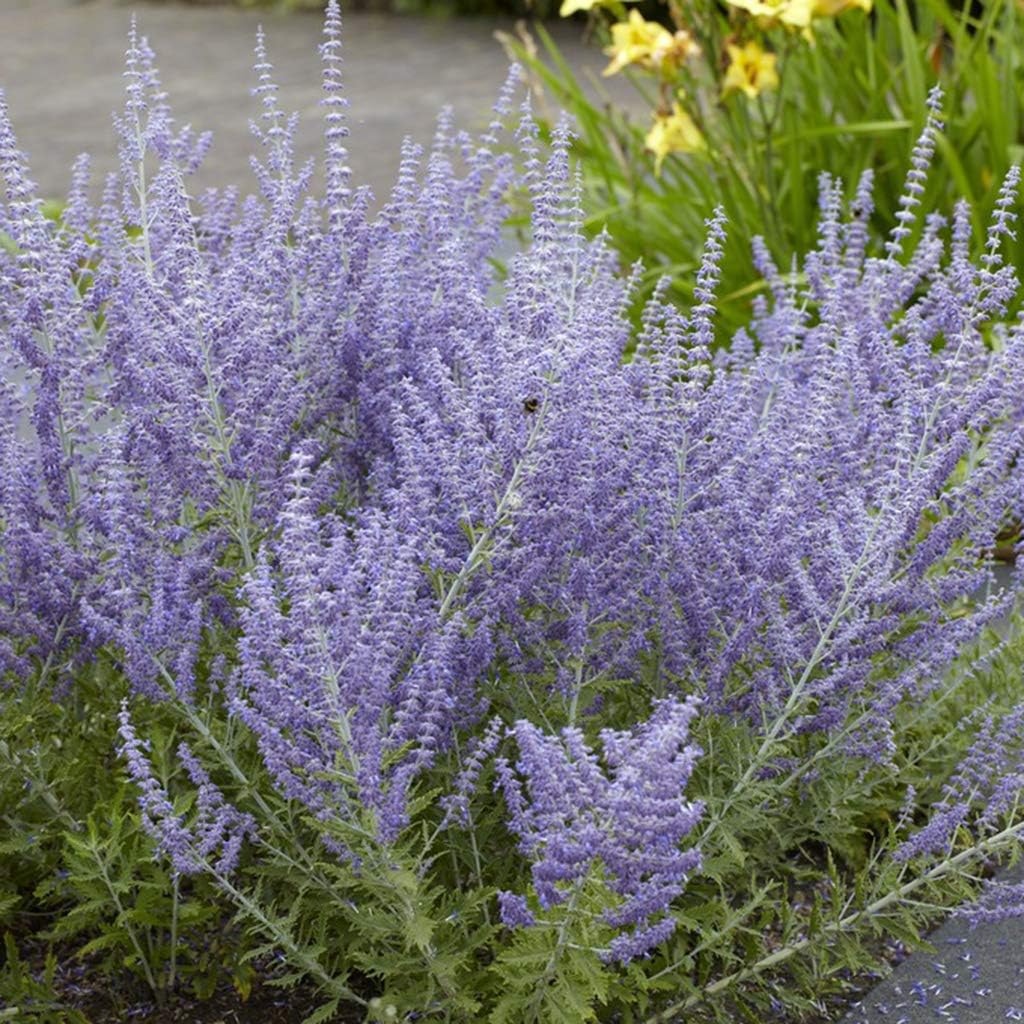
The standout feature is the cloud of blue-violet flower spikes that appear from July to September, rising up to 4 feet on gray-white stems. The foliage is finely textured and aromatic, adding a silvery backdrop that works beautifully in nearly any garden setting. It loves heat and good drainage, making it an excellent candidate for xeriscaping or dry, sunny borders. Pollinators are drawn to the long-lasting blooms, so you'll see plenty of butterflies and bees visiting.
Each plant arrives in a #1 container, fully rooted and ready for immediate planting. Perennial Farm Marketplace ships in seasonal condition, which means if you order between November and March, the plant may be dormant and trimmed back. That's normal – just plant it and wait for spring growth. The plant is deer-resistant (labeled as "Deer-Leerious") and low maintenance once established, requiring only moderate watering and minimal care.
The main drawback is the restricted shipping to several western states (AK, AZ, CA, CO, ID, MT, NV, OR, UT, WA, and HI) due to USDA regulations. Also, this perennial demands full sun and well-drained soil – it won't thrive in shade or heavy clay. During its winter dormancy, the plant looks like a bare stem or trimmed crown, which might worry new gardeners, but rest assured it will return each spring.
Overall, if you live in a suitable zone and have a sunny, well-drained spot, Russian Sage from Perennial Farm Marketplace is a wise investment. It offers months of color, fragrance, and pollinator activity with very little work. For a low-maintenance perennial that punches above its weight, this is a top pick.
Pros
- Extremely low maintenance and heat tolerant, even in dry conditions
- Showy, fragrant blooms that attract pollinators like bees and butterflies
- Versatile for xeriscaping, sandy soils, and coastal gardens
- Packaged well with clear planting instructions for success
- Can grow tall and create a stunning backdrop for shorter plants
Cons
- Some roots may fail to sprout, as noted in a few customer reviews
- Requires patience because growth can be slow in the first few weeks
- Needs full sun and well-draining soil to prevent root rot
The Van Zyverden Russian Sage set gives you three bare-root plants of Perovskia atriplicifolia, a herbaceous perennial from the Himalayas and western China. It is a top pick for gardeners who want a tough, drought-tolerant plant that still puts on a show. The lavender-blue flowers are fragrant and appear from summer into fall, attracting pollinators and adding a soft, airy look to any sunny spot. This plant is deer and rabbit resistant, so it works well in areas where wildlife is a problem.
In terms of real-world performance, the Russian sage lives up to its reputation as a low-care perennial. It thrives in poor, sandy soils and full sun, needing little water once established. Many customers report that the roots arrived in good condition with buds already showing, and after planting, they grew into tall, colorful plants. However, a few reviewers noted that one or two roots did not sprout, which is a risk with bare-root plants. The overall germination rate seems decent, but it is not 100% guaranteed.
Design and build quality are straightforward. The roots are packaged with bubble wrap and clear instructions. They are dormant when shipped, so you plant them in spring after the last frost. The plant itself can reach 3 to 5 feet tall and 2 to 4 feet wide, making it a great choice for the back of a border or as a mass planting. The silvery-green foliage and blue flowers provide long-lasting interest even in hot, dry conditions.
Drawbacks include the possibility of some roots not growing, which can be disappointing if you are expecting a full set. Also, the plant can be slow to establish, so patience is key. It does not perform well in shade or heavy clay soil. If you want instant impact, consider buying more established plants, but for the price, these bare roots are a good value.
Overall, the Van Zyverden Russian Sage set is a solid choice for anyone in USDA zones 5-9 who needs a tough, beautiful perennial. It delivers on its promise of drought tolerance, deer resistance, and long-lasting blooms. Just be prepared for a few possible misses and give them time to grow. For the money, it is a worthwhile addition to a sunny, low-water garden.

Pros
- Plants arrive healthy and well-packaged, as confirmed by many positive reviews
- Attracts beneficial pollinators while deterring mosquitoes naturally
- Long blooming season with vibrant color and pleasant fragrance
- Grown in the Midwest with 10x root development for stronger establishment
- Versatile and can thrive in various US zones with full sun
Cons
- Some customers reported receiving very small plants that struggled to survive transplanting
- May require extra care and potting up if roots are underdeveloped, as noted in a few reviews
- Not an edible sage, so it's only for ornamental use
Clovers Garden Russian Sage Plants offer a straightforward way to add long-lasting color and natural pest control to your garden. This set includes two live perennials, each in a 4-inch pot, standing 4 to 8 inches tall. Ideal for gardeners in zones 4 and warmer, these plants are non-GMO and neonicotinoid-free, making them a safe choice for pollinator-friendly landscapes.
The standout feature here is the plant's ability to produce silvery-green foliage and blue-purple blossoms from mid-summer through the first frost. Beyond its visual appeal, Russian Sage naturally repels mosquitoes while attracting bees and butterflies. Real-world performance has been mostly positive, with many reviewers noting healthy growth and rapid development. However, a few customers mentioned receiving very small plants with fragile root systems, which required extra care or repotting to survive.
Build quality is decent, with plants grown in the Midwest using a 10x root development method for stronger establishment. Packaging is a highlight: Clovers Garden uses a custom, eco-friendly box that cradles the plants during shipping, and most reviews confirm they arrived in good condition. The included Quick Start Guide is a helpful touch for new gardeners.
On the downside, some buyers felt the plants were too small for the price, and a couple reported that the plants didn't survive transplanting, especially in poor soil. These plants are not edible, so don't confuse them with culinary sage. Also, they can spread quite a bit, growing up to 4 feet wide and tall, so plan your garden space accordingly.
Overall, Clovers Garden Russian Sage is a reliable option for anyone wanting a hardy, fragrant perennial that supports local pollinators and keeps mosquitoes at bay. If you're willing to give them a little TLC during the first few weeks, they'll reward you with season-long blooms and a vibrant garden presence.

Pros
- Excellent shipping with plants arriving healthy and well-packaged
- Thrives in hot, dry conditions with minimal watering needed
- Fragrant flowers and foliage provide sensory appeal
- Compact growth habit prevents the plant from flopping over
- Long blooming season provides color for months
Cons
- Some customers report receiving small or inconsistent plant sizes
- Plants may arrive looking stressed or drop leaves initially
- Requires well-drained soil and can suffer in overly moist conditions
The Greenwood Nursery Russian Sage 'Little Spire' is a compact perennial designed for gardeners who want the beauty of lavender but need something hardier for challenging conditions. This plant targets those with sunny, dry garden spots, container gardeners looking for structure and fragrance, and anyone wanting to attract pollinators without constant maintenance. If you've struggled with lavender in colder zones or simply want a reliable performer that won't demand daily attention, this Russian sage deserves your consideration.
What sets this plant apart is its real-world performance in tough conditions. While many perennials wilt in summer heat, 'Little Spire' actually thrives in hot, dry spots where other plants might struggle. The dwarf growth habit keeps it tidy and upright, unlike some Russian sage varieties that tend to flop. Gardeners report the silvery-gray foliage creating beautiful textural contrast even before the flowers appear, and once blooming begins in late summer, the lavender-blue spires last for nearly two months, providing late-season color when many gardens are fading.
Greenwood Nursery's shipping approach receives consistent praise in reviews, with multiple customers noting how well-protected their plants arrived. The company uses careful packaging methods including hydrating gel, moist paper wrapping, and secure boxing to minimize transit stress. This attention to shipping detail matters because live plants face significant challenges during delivery. The compact size mentioned in some reviews means you're getting a young plant that will establish and grow quickly rather than a mature specimen, which explains both the manageable price point and the need for some patience as it establishes.
Potential buyers should note a few considerations. Some customers have reported receiving plants that looked stressed upon arrival, though many of these recovered with proper care. The plant's dislike of 'wet feet' means it requires well-drained soil, making it unsuitable for consistently damp areas. While most reviews praise plant health, there's occasional inconsistency in size and condition, though Greenwood Nursery's 14-day guarantee provides recourse for any serious issues.
For gardeners seeking a resilient, fragrant perennial that delivers season-long interest with minimal fuss, the Russian Sage 'Little Spire' represents solid value. Its combination of drought tolerance, deer resistance, pollinator attraction, and cold hardiness makes it a versatile choice for various garden situations. While initial plant size might vary, its fast growth rate means it won't stay small for long. If you can provide the full sun and good drainage it requires, this plant will reward you with years of easy beauty and garden activity.
Plant Type: Deciduous perennial herb
Mature Height: 1-2 feet
Growth Rate: Fast-growing
Light Requirements: Full sun to partial sun
Soil Type: Sandy, well-drained soil
Moisture Needs: Little to no watering once established
Bloom Season: Summer through fall
Bloom Color: Lavender-blue
USDA Hardiness Zones: 4, 5, 6, 7, 8, 9
Special Features: Drought tolerant, attracts pollinators, deer resistant, fragrant
Best Uses: Butterfly gardens, container plantings, mass plantings, border edges, cut flower arrangements
Plant your Russian Sage 'Little Spire' in a location that receives at least 6 hours of direct sunlight daily. This plant performs best in full sun but tolerates partial sun in hotter climates. Choose a spot with excellent drainage, as Russian sage dislikes wet soil conditions. If planting in containers, ensure pots have adequate drainage holes.
Prepare the planting area by loosening the soil to about 12 inches deep. Mix in some compost or gritty sand if your soil tends to retain moisture. Plant at the same depth it was growing in its nursery pot, spacing multiple plants about 18-24 inches apart to allow for their mature spread. Water thoroughly after planting to settle the soil around the roots.
During the first growing season, water regularly to help establish a strong root system, but always allow the soil to dry between waterings. Once established, this plant becomes remarkably drought tolerant. Avoid overwatering, as this is the most common cause of problems with Russian sage. No regular fertilization is needed, and in fact, rich soil can cause excessive, weak growth.
In late winter or early spring, cut the plant back to about 6-12 inches from the ground to encourage fresh, compact growth. This pruning helps maintain the plant's shape and promotes better flowering. Russian sage rarely suffers from pest or disease problems when grown in appropriate conditions, making it truly low maintenance once established in the right spot.
Pros
- Plants are shipped with meticulous, protective packaging to ensure they arrive alive and healthy
- Virtually maintenance-free once established, needing little to no watering
- Adaptable to full sun or partial sun conditions across a wide range of zones (4-9)
- Based on reviews, many customers receive plants in pristine, thriving condition
Cons
- Some customers report receiving plants that appear small, sickly, or inconsistent in health
- Requires careful initial planting to avoid overly moist soil, as it dislikes 'wet feet'
Greenwood Nursery's Russian Sage 'Little Spire' offers a practical and beautiful solution for gardeners seeking a resilient, flowering perennial. This product includes two potted plants of the improved dwarf Perovskia atriplicifolia, a variety specifically bred to stay compact and avoid the sprawling habit of some sages. It's perfect for anyone in USDA zones 4 through 9 looking to fill sunny borders, create butterfly gardens, or add structure to container displays without constant fuss.
The standout quality of 'Little Spire' is its remarkable adaptability. It delivers the aesthetic appeal of lavender with soft, grayish-green foliage and tubular lavender-blue flowers, but it possesses a tougher constitution for colder regions. Its performance is geared for real-world ease, flowering reliably for almost two months from late summer into fall. It's built for survival in challenging spots, being both drought tolerant and deer proof, which means it can thrive where other plants might struggle.
Regarding the build quality, or in this case, plant quality and shipping, the data presents a mixed picture. Greenwood Nursery employs a detailed packing protocol using hydrating gel, moist paper, and secure boxing to minimize transit damage. Many reviews praise the healthy, robust plants that arrive and quickly establish. However, a notable portion of feedback mentions receiving smaller, less vigorous specimens or plants with inconsistent health, suggesting variability in the individual units shipped.
The main drawback to consider is this potential inconsistency in the initial condition of the plants upon arrival. While the company offers a 14-day guarantee to address issues, the experience can depend on your specific shipment. Also, gardeners must heed the planting instructions, as this sage requires well-drained soil and can suffer if planted in a location that stays too moist.
The final verdict is that Greenwood Nursery's 'Little Spire' Russian Sage is a genuinely excellent plant choice for low-maintenance, pollinator-friendly landscaping. Its compact form, long bloom time, and hardiness are significant benefits. The buying experience seems largely positive, with many customers thrilled with their healthy plants, but you should be aware that there is a chance you'll need to utilize the customer service guarantee if your plants don't meet expectations. For gardeners willing to accept that slight variability, it's a strong value for creating a durable and attractive garden feature.
Plant Type: Deciduous Perennial
Light Requirement: Full Sun, Partial Sun
Soil Condition: Dry, Well Drained (Sandy Soil preferred)
Bloom Season & Color: Summer to Autumn, Purple (lavender-blue)
Mature Height: 1 - 2 feet (24 Inches)
Growth Rate: Fast-Growing
USDA Hardiness Zone: 4, 5, 6, 7, 8, 9
Moisture Needs: Little To No Watering (Drought Tolerant)
Special Features: Attracts Pollinators, Deer Proof
Indoor/Outdoor Usage: Outdoor
Unit Count: 2 Potted Plants
Before purchasing, confirm your garden falls within USDA Hardiness Zones 4-9 for best results. Ensure you have a planting location with full to partial sun and well-drained, preferably sandy, soil. Avoid areas that collect water or stay constantly moist.
Upon receipt, inspect your plants immediately within the 14-day Greenwood Guarantee window. Contact the seller directly with photos if any issues are found. Plant according to the care information provided with your order, typically in the summer.
Remember that these are perennial plants. They may arrive as smaller, starter-size plants (as noted in some reviews) but are fast-growing. Provide appropriate spacing (about 2-3 feet apart) if planting both in a garden bed for mass effect. They are excellent for xeriscaping, butterfly gardens, and as aromatic border plants.

Pros
- Excellent packaging that keeps plants secure and moist during transit.
- Plants are several weeks old, so you can start harvesting much faster than from seed.
- Versatile for both outdoor gardens and container growing, with a long spring-to-fall bloom period.
- Velvety textured foliage adds ornamental value with pretty blue blooms.
- Non-GMO and perennial in zones 5-8, providing years of flavorful harvests.
Cons
- Some plants can arrive with stress or nutrient burn, and a small percentage may not survive shipping.
- The plastic clamshell packaging, while protective, is not environmentally ideal despite being recyclable.
- Sage is a woody perennial that requires occasional pruning, which new gardeners might not expect.
The Bonnie Plants Garden Sage Live Herb Plants 4-Pack offers home cooks and gardeners a fast track to fresh, aromatic sage. Instead of waiting weeks for seeds to sprout, you get young plants that are already several weeks old, ready to go into the ground or a container. This set is especially valuable for anyone who loves making poultry seasoning, turkey stuffing, or sausage at home, since common garden sage is the key herb in those dishes.
What really sets these plants apart is the thoughtful packaging. Each plant comes in a sturdy clamshell container that keeps the soil moist and the leaves from getting crushed. The outer box is clearly labeled with handling instructions (keep above 32 degrees, arrows pointing up), and many buyers report that their plants arrived looking fresh and perky. The plants are inspected by the Alabama Department of Agriculture, reassuring you of proper pest treatment. Once you give them a day or two to rest in sunlight with a little water, they bounce back beautifully.
In terms of growth, these sage plants are no-fuss perennials that thrive in full sun with well-drained sandy soil. They are non-GMO and perform best in zones 5 through 8. The velvety gray-green foliage is attractive, and in spring to fall you will see pretty blue blooms. You can grow them in containers on a patio or in a raised bed alongside vegetables. Harvesting is simple: cut stems cleanly and use fresh or dry them for later. Many gardeners appreciate that Bonnie Plants focuses on strong root systems, so the plants establish quickly.
Of course, no product is perfect. A few customers have received plants that looked stressed or showed nutrient burn on the new shoots. In rare cases, a plant arrived dead on arrival. The plastic clamshells, while effective, are not ideal from an environmental standpoint, though they are made from 100 percent recycled plastic and can be recycled again. Also, sage is a woody perennial that needs pruning now and then, which may surprise beginners who expect it to be as low-maintenance as mint or basil.
Overall, the Bonnie Plants Garden Sage Live Herb Plants deliver consistent quality for the price. If you want fresh sage without the hassle of starting from seed, and you appreciate a company that takes care in shipping live plants, this 4-pack is a solid choice. Just be prepared to nurse any stressed leaves for a day or two, and you will be rewarded with a bountiful harvest of this classic culinary herb.

Pros
- Exceptional drought tolerance once established, requiring very little supplemental watering.
- Long summer bloom period from midsummer into fall, providing extended seasonal color.
- Attracts pollinators like bees and butterflies, supporting local ecosystems.
- Silver-gray foliage offers beautiful contrast and visual interest even when not in bloom.
- Very low maintenance; rarely needs dividing and has few pest or disease problems.
Cons
- Growth is limited to USDA Hardiness Zones 5-8; it won't survive winters in colder or more tropical climates.
- Can have a somewhat leggy or open growth habit that might require strategic companion planting for the densest look.
- Prefers sandy, very well-drained soil and may struggle or rot in heavy, consistently wet clay soils.
Perovskia atriplicifolia, commonly known as Russian Sage, is a top-tier perennial for gardeners who value beauty, fragrance, and resilience. This plant is perfect for anyone creating a sunny border, a cottage garden, or a low-water landscape. Its airy structure and long bloom time make it a versatile choice for adding height and a soft, billowing texture to your outdoor space.
Its standout feature is undoubtedly the performance that earned it the Perennial Plant Association's 1995 Plant of the Year award. From midsummer into fall, it sends up countless 12-inch wands of tiny, lavender-blue flowers that seem to float above the finely-cut, silver-white foliage. The real-world performance is impressive: it thrives on neglect, bouncing back beautifully each spring and filling out to a substantial 4-foot by 3-foot clump. The aromatic foliage releases a clean, sage-like fragrance when brushed, which is a delightful bonus.
In terms of design and build quality, think of this plant as a hardy, well-established starter. Delivered in a standard #1 size container, it's fully rooted and ready for immediate planting. The silvery stems and leaves are sturdy and adapted to withstand heat and wind. While the growth habit is naturally somewhat open and casual rather than tightly compact, this contributes to its charming, relaxed aesthetic that pairs wonderfully with ornamental grasses, coneflowers, and sedums.
It's important to consider a couple of drawbacks to ensure it's the right fit for your garden. Its hardiness is confined to USDA zones 5 through 8, so it's not suitable for regions with extreme winter cold or high humidity. It also demands excellent drainage. If planted in heavy, moisture-retentive soil, the crown can rot, especially over wet winters. For best results, it absolutely needs a spot with full sun.
The final verdict is that Green Promise Farms' Russian Sage is an excellent investment for the right garden. If you have a sunny, well-drained spot within its hardiness range, you'll be rewarded with months of effortless color, delightful fragrance, and a magnet for pollinators. It's a proven, award-winning perennial that delivers on its promises of beauty and durability with very little required in return.
Product Specifications:
Brand: Green Promise Farms
Style/Variety: Atriplicifolia (Russian Sage)
Container Size: #1 (Fully rooted and ready to plant)
Mature Height: 3-4 Feet
Mature Width: 2-3 Feet
Flower Color: Lavender-Blue / Purple
USDA Hardiness Zones: 5-8
Soil Preference: Sandy, Well-Drained Soil
Item Type: Live Perennial Plant
Simple Planting Guide:
1. Choose a location with full sun (at least 6-8 hours of direct light daily).
2. Ensure the soil is well-drained. Amend heavy clay soil with compost or sand.
3. Dig a hole twice as wide as the root ball and the same depth.
4. Place the plant in the hole, backfill with soil, and water thoroughly.
5. Water regularly during the first growing season to establish a deep root system. Once established, it is very drought tolerant.
6. In late winter or early spring, cut the previous year's stems back to about 6-12 inches from the ground to encourage fresh, vigorous growth.
Frequently Asked Questions About Planting Russian Sage
Real gardeners run into the same timing problems every season. Here are the most common questions about best time of year to plant russian sage and how to handle them without second-guessing.
Can I plant russian sage in summer?
Summer planting is possible but requires extra attention. The heat dries out the root ball quickly, and young plants cannot yet pull moisture from a wide area. If you must plant in summer, choose a cooler morning, water deeply right after planting, and provide light shade for the first week. Even then, spring or fall planting usually produces stronger results with less effort.
What happens if I plant russian sage too early in spring?
Planting into cold, soggy soil can stall root growth and invite rot. The plant may sit there without showing much progress, then struggle once warmer weather arrives. Wait until the soil is workable and crumbly, not sticky or waterlogged. A simple squeeze test — if the soil forms a muddy ball, hold off — gives you a reliable signal.
Is fall planting better than spring for russian sage?
It depends on your climate. In hot, dry regions, fall planting often wins because the plant can focus on root development without fighting intense sun. In cold northern zones, spring is safer because the plant has a full growing season to establish before winter. Both seasons work well if you match the timing to your local frost dates and soil warmth.
How do I know when the soil is warm enough for russian sage?
Soil temperature should be consistently above 60°F (about 15°C) at a depth of 4 inches. You can use a simple soil thermometer, but a practical clue is when nearby perennials start showing new growth. If the ground still feels chilly to the touch and stays wet after rain, it is better to wait a little longer.
Can I plant russian sage in a container instead of the ground?
Absolutely. Container-grown russian sage needs the same timing principles — spring or fall — but requires sharper attention to drainage and watering. Use a light, gritty potting mix and a pot with generous drainage holes. Containers dry out faster than garden beds, so check moisture regularly during the first few weeks. For more container gardening tips, check out our guide on best plants for plant pots.
Choosing the Right Product for Your Planting Season
Different product types work better for different planting windows. Live starter plants (like the Bonnie Plants Garden Sage) are ideal for spring planting because they come already rooted and ready to settle into warm soil. Dormant bare roots (such as Van Zyverden Russian Sage roots) are perfect for early spring or fall planting since they can be stored briefly until conditions are right. Potted perennials (like Greenwood Nursery Little Spire) give you flexibility — you can plant them in spring or fall as long as the soil is workable.
No matter which product you choose, the timing advice stays the same: aim for mild weather, well-draining soil, and full sun exposure. For gardeners who are also growing edibles indoors, the principles of good lighting apply across the board — take a look at best light for growing tomatoes indoors for ideas on how light quality affects plant strength.
Remember that russian sage is a tough perennial once established, but it needs a fair start. Give it the right season, a sunny spot with sharp drainage, and consistent early watering. The payoff is months of soft purple color and silvery foliage that moves gracefully in the breeze.








Write Your Review
No reviews yet. Be the first to share your experience!