


Understanding when is the best time to plant rye grass seed can make the difference between a patchy, disappointing lawn and a dense, vibrant carpet of green. Rye grass is known for its quick germination and ability to establish rapidly, but it demands the right conditions to perform at its best. Many homeowners struggle with thin growth or weeds because they sow too early or too late in the season. By aligning your planting with the optimal window, you give your grass a strong start that reduces maintenance and increases resilience. This guide covers the ideal timing, soil preparation tips, and product recommendations to help you achieve a lush lawn.
The best time to plant rye grass seed is during early fall or early spring, depending on your region. Cool-season grasses like rye thrive when soil temperatures are between 50°F and 65°F, and air temperatures are moderate. Fall planting is especially popular because it allows the grass to establish roots before winter, then take off in spring. Spring planting works well too, but you must avoid frost and give seedlings enough time to mature before summer heat arrives. Pairing proper timing with quality seed and good care routines leads to a lawn that looks great with less effort. Below, you’ll find a selection of rye grass seed products that many gardeners rely on for reliable results.
Whether you are overseeding a warm-season lawn for winter color or starting a new cool-season lawn, choosing the right product matters. The following list includes options for various needs, from large areas to small patches. Each product has its strengths, so consider your lawn size, sunlight, and maintenance preferences. For additional planting guidance, check out our guide on what is best time to plant grass seed for a broader perspective on cool-season grasses.

Pros
- Fast germination and quick green-up within a week
- Disease-resistant and durable under moderate foot traffic
- Works for both northern and southern climates with proper timing
- Covers a large area for the price; good value for temporary lawns
- Guaranteed to grow by a trusted seed brand
Cons
- Annual grass that must be replanted each season; not a permanent solution
- Requires 6-8 hours of full sun per day to thrive; not ideal for shady spots
- Thin lawn support only; not meant for heavy-use areas or permanent turf
Pennington Annual Ryegrass Grass Seed is a go-to solution for anyone needing a fast, temporary green lawn. Whether you're a homeowner in the South looking to keep your yard green through winter or a northern gardener fixing bare spots in early spring, this seed delivers results in under a week. The 10-pound bag covers up to 2,000 square feet when used for thin lawn support, making it a practical choice for larger areas.
The standout feature here is speed. You'll see germination within 3 to 7 days, which is impressive for a cool-season grass. It's also disease-resistant and tough enough to handle moderate foot traffic from family and pets. That means you can overseed a play area or a lawn that gets regular use and still get good results. Pennington's direct relationship with growers adds confidence in seed quality and consistency.
In terms of design, this is straightforward bagged seed with clear instructions for different applications. It works best in full sun (6-8 hours) and needs consistent moisture to establish. One thing to keep in mind: this is an annual grass, so it will die back after its growing cycle. It's not meant to replace a permanent lawn, but rather to provide quick color while your warm-season grass is dormant or to fill gaps temporarily.
There are few drawbacks, but they're worth noting. If you have heavy shade, this seed won't do well. And while it's durable, it's not built for constant heavy use like a sports field. For bare spot repair in a sunny, high-traffic area, it's a solid temporary fix. Also, because it's annual, you'll need to reseed each season if you want sustained coverage.
Overall, Pennington Annual Ryegrass is a reliable, affordable option for winter overseeding or quick fixes. It does exactly what it promises: fast green color, easy establishment, and decent durability. If you need a temporary lawn solution and have sunny conditions, this bag is a smart buy.

Pros
- Fast germination and establishment for quick lawn coverage
- Drought-tolerant with up to 30% less water needed
- Disease-resistant and durable under foot traffic
- Versatile for both new lawns and overseeding
- Comes back year after year in suitable climates
Cons
- Requires 4 to 6 hours of sun daily, not ideal for heavily shaded areas
- May die out in warm-season lawns when hot weather returns
- Only 3 lb bag; larger areas may need multiple bags
If you're looking to establish a lush, green lawn quickly, Pennington Smart Seed Perennial Ryegrass is a strong contender. This 3-pound bag is designed for both permanent cool-season lawns in Northern zones and temporary overseeding in warm-season areas. With a germination time of 8 to 14 days, it's one of the fastest options out there, making it perfect for patching bare spots or starting fresh. The seed is also drought-tolerant, requiring up to 30% less water than ordinary grass seed, which is a big plus for eco-conscious homeowners or those in drier regions.
The standout feature here is the Smart Seed technology, which includes a fertilizer-enhanced seed coat that speeds up establishment and promotes greener grass. This means less waiting and more results. The grass forms a dense, fine-bladed lawn that holds up well under foot traffic and resists disease, so it's a good pick for families with kids or pets. It also maintains its color well into winter, giving you a longer season of green.
In terms of coverage, this bag covers up to 750 square feet for overseeding an existing lawn or 250 square feet for starting from scratch. That's a decent amount for smaller yards or targeted areas. The seed is best for spots getting 4 to 6 hours of sun daily, so it won't thrive in deep shade. One honest drawback: if you're using it to overseed a warm-season lawn, the ryegrass will die off when hot weather returns, which is expected but worth noting.
Overall, Pennington's direct relationship with seed growers adds a layer of trust, and the guaranteed growth promise gives peace of mind. For anyone wanting a fast, durable, and water-wise lawn, this is a reliable choice that delivers on its promises.

Pros
- Fast germination and quick establishment of dense green cover
- Excellent cold tolerance for winter lawn replacement in cool-season regions
- Durable and trampling resistant, ideal for parks and high-traffic lawns
- Improves soil health by adding organic matter and suppressing weeds
- Affordable option for covering large bare areas with minimal effort
Cons
- Some seeds may not germinate, requiring overseeding for full coverage
- Annual variety that must be replanted each year for continuous cover
- Mixed user experiences with germination consistency in certain conditions
Groundio Winter Rye Seeds offer a practical solution for anyone needing quick, cold-tolerant ground cover. This 3-pound bag of non-GMO annual rye grass is designed for winter lawn replacement, cover cropping, or even animal feed. It's especially suited for gardeners and homeowners in USDA zones 3-9 who want to protect bare soil during cold months or establish a temporary lawn that can handle foot traffic.
The standout feature is its rapid germination. Most users see sprouts within 3-7 days, and the grass forms a dense mat quickly. It's also highly cold-resistant and trampling tolerant, meaning it can survive winter conditions and recover from wear. Beyond just looking green, it improves soil structure by fixing nitrogen and suppressing weeds, making it a smart choice for preparing garden beds for spring planting.
Build quality is solid. The seeds are sourced from trusted US farms, and the 3-pound size covers up to 1,000 square feet. However, some customers report that not all seeds are viable, so overseeding is recommended for best results. A few reviewers had poor germination, while many praised its fast growth and value. The annual nature means you'll need to replant each year, which is typical for this type of crop.
Overall, Groundio Winter Rye Seeds deliver on their promises of fast growth and cold hardiness, with a few caveats about germination consistency. If you're looking for an affordable, low-maintenance cover crop or winter lawn alternative, this is a reliable choice. Just plan to overseed and manage expectations for even coverage.

Pros
- Germinates quickly with minimal preparation
- Large seeds spread easily, even by hand
- Adds nitrogen to soil for future crops
- Effective for erosion control on slopes
- GMO-free and safe for organic gardens
Cons
- Not heat-tolerant; dies off in hot climates like Texas
- Some users reported no germination, possibly due to bad batch or insufficient watering
- Requires consistent watering in the first week for best results
Old Cobblers Farm Winter Rye Grass Seed is a cool-season annual grass mix designed for fall planting. It is primarily used as a cover crop, green manure, or for overseeding warm-season lawns that go dormant in winter. Gardeners and homeowners looking to prevent soil erosion, fix nitrogen naturally, or keep a green lawn through the cold months will find this product useful. It is also a popular choice for food plots and no-till gardening.
The standout feature of this seed is its quick germination. Many users reported seeing sprouts within a week, especially when the seed is lightly raked into bare soil and kept moist. The large seed size makes it easy to spread evenly, whether using a hand spreader or broadcasting by hand. It can be planted in partial sun and adapts to sandy soil conditions)Skip. However, performance depends heavily on climate. In very hot regions like Texas, the grass died quickly when summer heat arrived, so it is best suited for cooler climates or as a temporary winter cover.
Build quality is straightforward: it is a pure rye grass seed, GMO-free, and packaged in a sturdy bag. The 5-pound size is manageable for small to medium lawns or garden patches. A few users experienced no germination, which may be due to insufficient watering or a rare bad batch, but the majority of reviews are positive. For best results, water consistently during the first week and avoid planting in extreme heat.
One honest drawback is that this is not a permanent lawn solution. It is a winter annual that will die back in spring or summer, especially in warmer zones. It also requires more watering than some other cool-season grasses to establish. If you live in a region with mild winters, this seed can provide temporary green cover but will not survive a hot summer.
Overall, Old Cobblers Farm Winter Rye Grass Seed is a reliable and affordable option for winter overseeding, cover cropping, or erosion control. It germinates quickly, enriches soil, and is easy to use. Just be sure to plant it at the right time for your region and keep it watered. It is a solid choice for gardeners who want a low-maintenance winter grass that also benefits the soil.

Pros
- Germinates quickly, showing visible results in under a week.
- Uncoated pure seed with no fillers means better value and coverage.
- Great for high-traffic areas: stands up to children and pets.
- Deep green color with fine texture for a beautiful lawn.
- Works well for both new lawns and overseeding existing grass.
Cons
- Some users report slower growth in full sun compared to shade.
- Coverage may be less than expected for very large bare spots without proper preparation.
- Requires consistent watering during germination to achieve best results.
GreenView Pure Grass Seed Perennial Ryegrass Blend is designed for homeowners who want a quick, lush lawn without the hassle of fillers or coatings. This 3-pound bag covers up to 1,500 square feet when overseeding, making it a practical choice for patching bare spots or giving an existing lawn a winter boost. It's especially suited for yards with kids and pets, as the blend is bred to handle heavy foot traffic.
The standout feature is the seed itself: uncoated and 99.9% weed-free. That means you're paying for pure grass seed, not filler. Germination can start as early as 3-5 days under ideal conditions, and many reviewers saw visible sprouts within a week. The blend resists heat, drought, insects, and disease once established, and it adapts to both sunny and partially shaded areas as well as various soil types.
In real-world use, the seed performs well for overseeding warm-season lawns during cooler months and for filling in bare spots quickly. Reviews highlight a dark green color and fine texture that looks great. Some users noted that it may need extra care in full sun, and a few found the coverage area optimistic for large bare patches, so preparing the soil and watering consistently is key.
Overall, GreenView Perennial Ryegrass Blend is a reliable, high-quality option for DIY lawn care. It delivers fast results, stands up to activity, and gives you a dense, weed-free lawn without extra chemicals or coatings. Just follow the seeding instructions and keep the soil moist, and you'll likely be very satisfied with the outcome.

Pros
- Fast germination and quick coverage for bare spots
- Large 50 lb bag covers up to 10,000 sq ft
- Oregon grown seed known for quality
- Works well in a wide range of hardiness zones (1-7)
- Natural composition with no synthetic chemicals
Cons
- Annual variety means it will die off after one season, requiring reseeding
- No customer reviews yet to gauge real-world performance
- Best suited for full sun; may struggle in heavy shade
If you're looking to patch up bare spots or give your lawn a quick seasonal boost, the Gulf Annual Rye Grass Seed from Oregon Grown is a solid choice. This 50-pound bag is designed for fast growth and wide blades, making it ideal for temporary use in areas that need immediate greening. It's perfect for homeowners in USDA hardiness zones 1 through 7 who want a no-fuss solution for problem areas or overseeding during cooler months.
The standout feature here is speed. This annual rye grass germinates quickly, so you won't be waiting weeks to see results. It covers up to 10,000 square feet, which is generous for the price. The wide blade grass creates a dense, attractive turf that blends nicely with existing lawns. Oregon grown seed is known for its reliability, and this bag lives up to that reputation with consistent quality.
In terms of design, the seed is natural and free of synthetic additives, which is a plus for eco-friendly gardeners. It requires full sun and moderate watering, so it's not high maintenance. However, keep in mind that this is an annual variety. It will provide lush growth for one season but will die off, meaning you'll need to reseed if you want to maintain coverage. That's a trade-off for its fast establishment.
One potential drawback is the lack of customer reviews. While the product specs suggest good performance, real-world feedback is limited. Also, it's not ideal for shady areas, so make sure your trouble spots get plenty of sunlight. For those who need a temporary fix or seasonal color, this seed is a practical and affordable option.
Overall, the Gulf Annual Rye Grass Seed is a dependable choice for quick, seasonal lawn repair. It's straightforward to use, covers a lot of ground, and delivers on its promise of fast growth. If you're okay with its annual nature and have sunny spots to fill, this bag is a great value.
Pros
- Excellent drought tolerance once established
- Quick germination with proper soil contact and watering
- Affordable price point for the coverage area
- Handles hot summers and heavy rain without disease issues
- Soft, attractive grass that blends with existing lawns
Cons
- Requires meticulous soil prep and frequent watering for best results; simply scattering on bare soil may fail
- Not suitable for full shade areas; needs at least 4 hours of sun daily
- Some users reported inconsistent germination on large bare patches without top dressing or straw cover
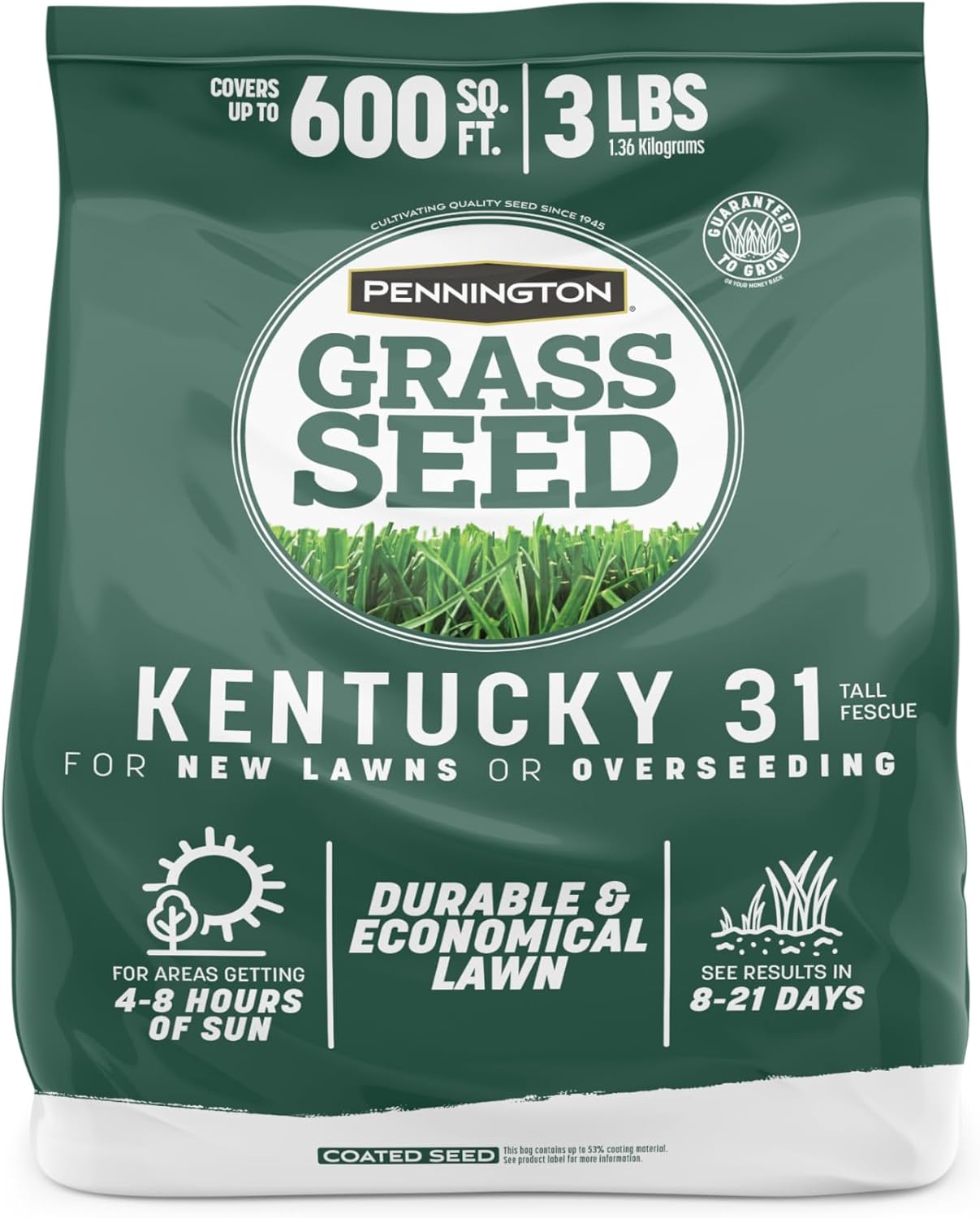
Pennington’s Kentucky 31 Tall Fescue has been a staple in the grass seed industry for decades, and this 3-pound bag brings that heritage to your lawn at an affordable price. It’s designed for homeowners who want a tough, low-maintenance turf that can handle hot summers, heavy rain, and a bit of foot traffic. The Penkoted coating on each seed helps protect it during handling and gives germination a boost, which is a nice touch for DIY lawn care.
Real-world performance from users backs up the claims. Many report seeing green shoots within 8 to 21 days, especially when the seeds are gently worked into the soil and kept consistently moist. One reviewer in North Carolina had great results patching bare spots in clay soil during fall, noting the grass came up soft, green, and wanted. Another in Florida used it to overseed their existing lawn and loved how quickly it filled in, though they cautioned that full-sun summer days might require supplemental watering. The seed seems to perform best in small areas with good soil contact; larger bare patches may need a light top dressing or straw cover to keep the seeds moist.
Build quality is solid for a grass seed. Pennington works directly with growers, so you’re getting fresh seed with a germination rate that’s typically around 80% or higher. The 3-pound bag covers up to 600 square feet for overseeding or about 415 for a new lawn, which is decent for small to medium projects. The only real design downside is that the bag doesn’t include a spreader, but that’s standard for this type of product.
Drawbacks? The biggest one is that this grass demands proper soil prep and watering. If you just toss it on dirt without raking it in or covering it, you’ll likely be disappointed. Also, it’s a cool-season grass, so it won’t thrive in full shade or extreme southern climates without extra care. A few reviews mentioned that large bare spots didn’t fill in as quickly as hoped, but that’s more about technique than the seed itself. One reviewer flagged a label issue (test date typo) but Pennington’s customer service quickly clarified it, which shows decent support.
Verdict: If you have a lawn that gets 4-8 hours of sun and you’re willing to water regularly and prep the soil, Pennington Kentucky 31 is a reliable, economical choice. It’s not a miracle seed, but it delivers on its promises for a durable, drought-resistant lawn. Skip it if you’re looking for a no-water, toss-and-go solution.
Brand: Pennington
Product Name: 100% Kentucky 31 Tall Fescue Penkoted Grass Seed
Weight: 3 lb (48 oz)
Coverage: Up to 600 sq ft for overseeding; approximately 415 sq ft for new lawn
Sunlight: 4-8 hours of sun (full sun to medium shade)
Expected Blooming Period: Spring to Summer
Best Planting Time: Early spring or early fall
Germination Time: 8-21 days
Soil Type: Clay soil
Special Feature: Penkoted coating for improved germination
ASIN: B0B5M11GL5

Pros
- Very fast germination compared to many other grass seed blends
- Produces a uniform, dark green lawn that looks great
- Excellent for overseeding to maintain green lawn through winter in warmer areas
- Good value coverage for overseeding large areas
- Easy to apply with standard spreaders
Cons
- Requires consistent watering 2-3 times daily for the first four weeks
- Not as drought or heat tolerant as tall fescue blends, limiting use in hotter regions
- May need annual reseeding in high traffic areas as ryegrass is less persistent
The Jonathan Green Touch-Up TRI-RYE Perennial Ryegrass Grass Seed is a dedicated cool season blend built for speed and visual appeal. This 7 lb bag contains three quick-germinating turf-type ryegrass varieties, making it a go-to choice for homeowners who need to patch bare spots or overseed a warm season lawn before winter. It performs best in the northern half of the United States where temperatures stay moderate, and it requires 4 to 8 hours of sunlight daily to thrive.
What sets this product apart is its fast germination of 7 to 10 days. That means you see results quickly, which is particularly satisfying when you're dealing with thin or damaged areas. The blend produces a dense, dark green turf that matches well with most existing cool season lawns. It's also ideal for overseeding warm season grasses like Bermuda in the fall, providing a green carpet throughout winter until the warm season grass wakes up in spring.
Coverage is solid: a single 7 lb bag seeds up to 1,750 square feet for a new lawn or up to 3,500 square feet for overseeding. The application process is straightforward. Vigorously rake the area to remove thatch and debris, spread the seed evenly with a hand or rotary spreader, and then water for five minutes two to three times a day for the first four weeks. This consistent moisture is key to getting those seedlings established.
One honest drawback is that ryegrass is not as drought or heat tolerant as tall fescue varieties, so it can struggle if you live in a hotter southern region or experience extended dry spells without irrigation. It also asks for a solid watering commitment during establishment, which may not suit everyone. Additionally, in high traffic lawns, you might need to reseed annually to keep it thick.
Overall, if you need fast results for a cool season lawn or want to overseed a warm season lawn for winter color, Jonathan Green Touch-Up TRI-RYE delivers. Its quick germination, attractive dark color, and ease of use make it a reliable pick for the right climate. Just be ready to water diligently and pick your season wisely.
Frequently Asked Questions About When to Plant Rye Grass Seed
Here are answers to common questions gardeners have about timing, germination, and care for rye grass seed.
When is the best time to plant rye grass seed in the fall?
Early fall, typically from mid-August to mid-October, is ideal for most regions. The soil is still warm enough for germination, but the cooler air reduces stress on seedlings. Aim for at least 6 to 8 weeks before the first hard frost to allow roots to establish. This window gives your lawn a head start for spring growth.
Can I plant rye grass seed in the spring?
Yes, spring planting works if you sow after the last frost and before temperatures consistently exceed 75°F. Early spring (March to April) is preferable, but be prepared for potential weed competition. Rye grass may struggle in hot summers, so spring is better for temporary lawns or overseeding. For more tips, see our best grass seed to plant article.
How long does rye grass seed take to germinate?
Rye grass germinates quickly, usually within 7 to 14 days under ideal conditions. Annual rye can sprout even faster, in 3 to 7 days. Factors like soil moisture, temperature, and seed-to-soil contact affect speed. Keep the soil consistently damp but not waterlogged during this period.
What soil temperature is best for planting rye grass seed?
The optimal soil temperature range is 50°F to 65°F. Use a soil thermometer to check at seed depth. If the soil is too cold (below 40°F), germination slows dramatically; too warm (above 75°F) can cause stress. Timing your planting when soil temperatures fall within this range ensures faster, more uniform growth.
Should I fertilize when planting rye grass seed?
A starter fertilizer with higher phosphorus (the middle number) helps promote strong root development. Apply it at seeding time, following package rates. Avoid high-nitrogen fertilizers until the grass is established, as they can burn young seedlings. For more on soil preparation, refer to our Seed category page for related guides.




Write Your Review
No reviews yet. Be the first to share your experience!