


Growing squash in containers is a great way to enjoy fresh summer vegetables even if you have limited garden space. Whether you have a small patio, balcony, or just a sunny corner, planting squash in pots can be surprisingly productive. The key is choosing the right container, soil, and seeds. Many gardeners worry about squash vines taking over, but compact bush varieties like zucchini and yellow squash thrive in containers when given proper care. This guide covers how to plant squash in containers successfully, including product recommendations for seeds, pots, and grow bags that make the process easier. By October 2026, we have reviewed 8 options to help you get started.
Common challenges when growing squash in containers include adequate drainage, pollination, and consistent watering. Squash plants are heavy feeders and need rich, well-draining soil. Containers dry out faster than ground beds, so a good watering schedule and quality pots matter. The products featured here range from seeds like SowRightSeeds Black Beauty Zucchini to durable fabric grow bags from Cavisoo and LandGuard. Whether you are a beginner or an experienced container gardener, these picks can support healthy squash growth. For more general container gardening tips, check out our best choice products planter box guide.
Pros
- Comprehensive and beginner-friendly with clear explanations and visuals.
- Practical advice on soil, watering, and fertilizing that eliminates guesswork.
- Covers a wide range of vegetables, herbs, and fruits with specific care tips.
- Encourages organic and sustainable methods that are easy to follow.
- Includes troubleshooting for common container gardening mistakes.
Cons
- Strong focus on self-watering containers, which may require extra cost or effort.
- Author prefers larger pots, which may not suit very small balconies or tight spaces.
- Primarily written for a US audience, so some variety and climate advice may vary elsewhere.
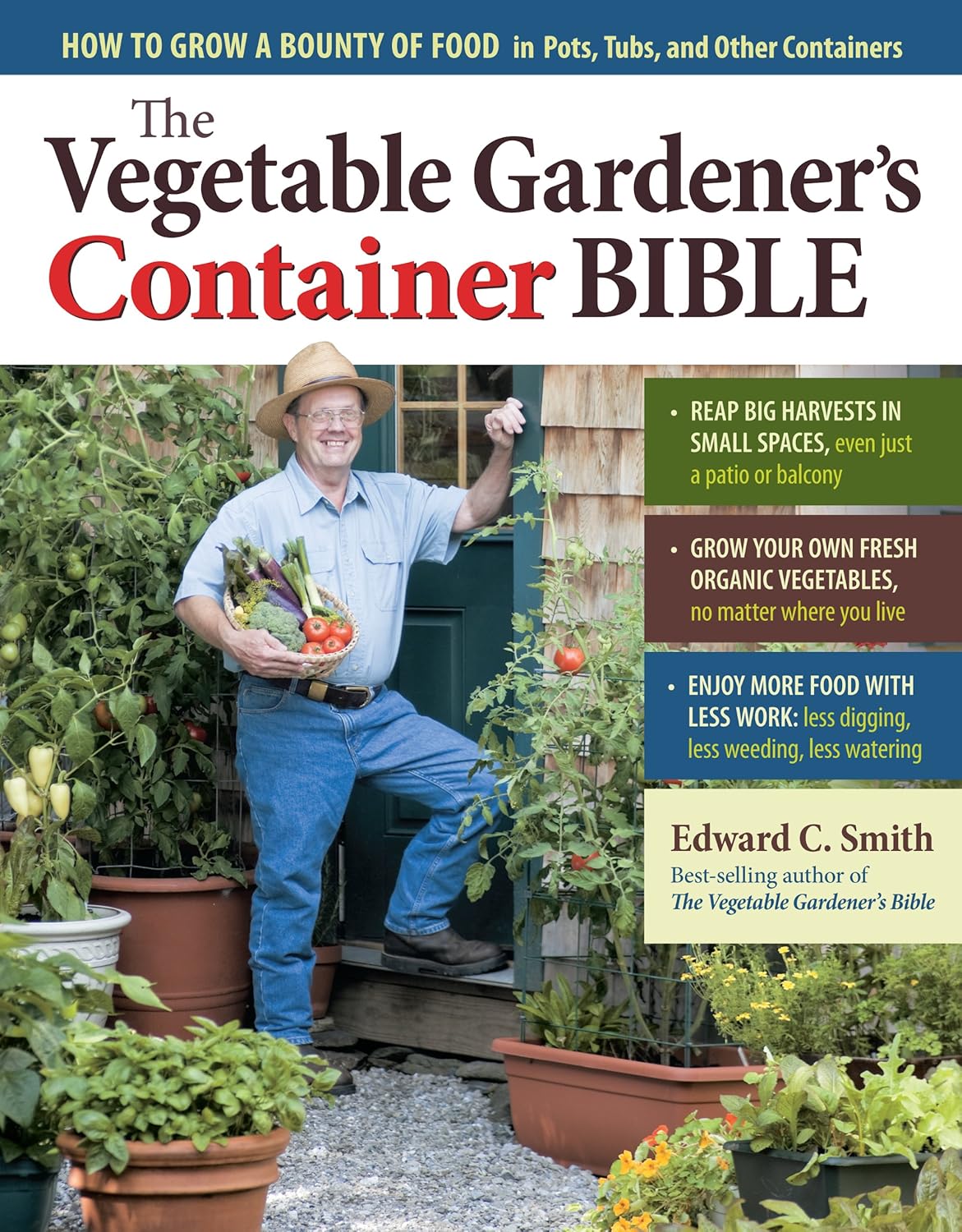
The Vegetable Gardener's Container Bible is a comprehensive resource for anyone who wants to grow fresh food in limited space. Written by Ed Smith, author of the best-selling Vegetable Gardener's Bible, this book zeroes in on container cultivation. It covers everything from selecting the right pots and soil to watering, fertilizing, and pest control. Whether you have a small balcony, a patio, or just a sunny windowsill, Smith shows you how to turn it into a productive vegetable garden.
What really stands out are the detailed photographs and the author's straightforward, experience-based advice. Smith explains how to create your own potting mix and build self-watering containers. He also shares his personal favorite vegetable varieties that consistently perform well in pots. The book includes growing guides for dozens of crops, from tomatoes and peppers to lettuce, herbs, and even pumpkins. Real-world user reviews highlight how this book helped beginners successfully grow their first patio garden and gave seasoned gardeners new techniques to try.
The physical book itself is well-bound on quality paper with vivid images. At 264 pages, it's substantial but not overwhelming. The layout uses clear headings and bullet lists, making it easy to find information quickly. However, some readers note that the author heavily recommends self-watering containers, which can involve extra cost or DIY effort. Also, the guidance is tailored to North American climates and seasons, so gardeners in other regions may need to adjust timing.
Overall, this is a trusted, practical resource that delivers on its promise. It earns a high rating from over a thousand reviewers for a reason. If you're committed to growing your own food in containers and want a single book that covers everything from start to finish, this is an excellent choice.

Pros
- Beginner-friendly with clear, step-by-step instructions.
- Quick harvest time (21 days) for fast results.
- Comprehensive coverage of container gardening essentials.
- Emphasizes organic and sustainable practices.
- Part of a series, so you can continue learning.
Cons
- No customer reviews yet to verify real-world experience.
- Reading age listed as 2-12 years, which may be inaccurate for the content.
- Limited to container gardening; not for those with traditional garden space.
How to Grow Vegetables in Pots and Containers is a practical guide for anyone who wants to grow their own organic food but lacks the space for a traditional garden. Written by Luke Potter, an experienced gardener and author of The Urban Farmer Series, this book targets absolute beginners. It promises to take you from zero to harvest in just 21 days, using nine straightforward steps.
The standout feature is its focus on speed and simplicity. The 9-step process covers container selection, soil preparation, planting, watering, fertilizing, and natural pest control. The promise of harvesting in 21 days is realistic for fast-growing crops like microgreens or radishes, and the book provides clear timelines. It also emphasizes organic methods, with non-toxic pest solutions and tips for supporting pollinators. The inclusion of food preservation and seed saving adds long-term value.
As a paperback, the book is well-structured with 204 pages. It's compact (5.5 x 8.5 inches) and lightweight, making it easy to keep near your gardening area. The writing is conversational and encouraging, fitting for a beginner audience. However, the listed reading age of 2-12 years seems odd; the content is clearly for adults or older children. This might be a listing error.
One drawback is the lack of customer reviews, so it's hard to gauge real-world success. Also, the book is strictly about container gardening; if you have a yard for in-ground beds, you'll need a different resource. The price is reasonable for a specialized guide, and it's available in multiple formats.
Overall, this is a solid starting point for aspiring container gardeners who want quick, organic results. It's not a comprehensive reference, but it delivers on its promise of a simple, fast path to homegrown vegetables. Recommended for beginners with limited space who value organic practices.
| ASIN | B094PDC1Y7 |
| Publisher | Independently published |
| Publication Date | May 11, 2021 |
| Language | English |
| Print Length | 204 pages |
| ISBN-13 | 979-8502364621 |
| Item Weight | 8.6 ounces |
| Reading Age | 2 - 12 years |
| Dimensions | 5.5 x 0.46 x 8.5 inches |
| Book 1 of 5 | The Urban Farmer Series |
| Best Sellers Rank | #1,052,882 in Books (See Top 100 in Books) #47 in Weed & Pest Control #68 in Container Gardening (Books) #194 in Vegetable Gardening |

Pros
- Affordable price for a 4-pack of 5-gallon bags
- Lightweight and easy to move even when filled with soil
- Promotes healthy root structure and prevents waterlogging
- Sturdy handles and fabric hold up well over time
- Great for small spaces like balconies and patios
Cons
- Some users report the 5-gallon size runs small (closer to 2.5 gallons)
- Fabric is lighter weight than premium bags, which may affect longevity
- Can be difficult to re-saturate dry soil due to fast drainage
The Land Guard 4-Pack Fabric Grow Bags are a solid entry in the grow bag market, offering a 5-gallon capacity at a budget-friendly price. These bags are designed for gardeners who want the benefits of air pruning and excellent drainage without the cost of rigid containers. They work well for vegetables, herbs, flowers, and root crops like potatoes.
The standout feature is the nonwoven fabric, which lets roots breathe and water drain freely. This prevents the common overwatering issues that plague plastic pots. Handles are reinforced and can handle a full bag of damp soil, making it easy to rearrange your garden layout. Users report healthy growth and happy plants after switching to these bags.
Build quality is decent for the price. The fabric is thicker than the cheapest options but still on the lighter side. Most reviewers say they hold up for at least one season, and some report two or more years with careful handling. The bags are lightweight when empty and don't take up much storage space.
One consistent drawback is size accuracy. Several customers mention the 5-gallon bag appears smaller, closer to 2.5 or 3 gallons. This might not matter if you're using them for smaller plants, but if you need the full 5-gallon volume for large tomatoes or potatoes, you may be disappointed. Another trade-off: the fast drainage can make it tricky to fully saturate dry soil, a trait common to many fabric pots.
Overall, the Land Guard grow bags offer great value for their price. They deliver the core advantages of fabric containers: aeration, drainage, and portability. If you're a budget-conscious gardener or just starting out with grow bags, this 4-pack is a smart buy. Just keep the size discrepancy in mind when planning your garden.
Pros
- Thick, durable fabric withstands multiple seasons of use.
- Excellent airflow and drainage reduce risk of root rot.
- Reinforced handles can support heavy loads without tearing.
- Visualization window helps you monitor harvest readiness.
- Affordable 5-pack provides great value for the price.
Cons
- Fabric may fade or show wear after prolonged sun exposure.
- Visualization window could be larger for easier inspection.
- Some users may prefer a sturdier base for very heavy plants.
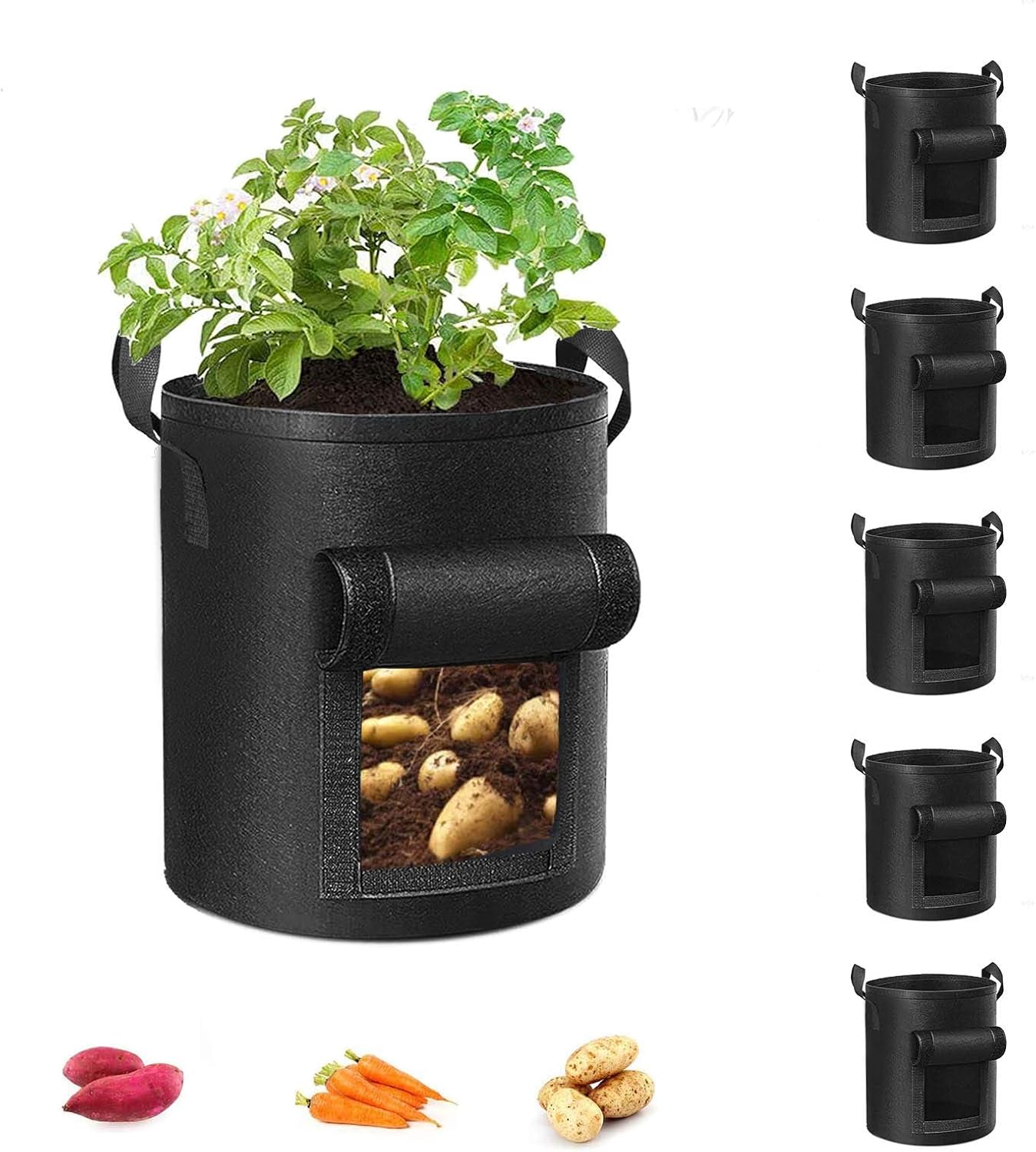
The Cavisoo 10 Gallon Potato Grow Bags are a practical and affordable solution for gardeners who want to grow vegetables in limited space. This 5-pack of black fabric pots is designed for potatoes, tomatoes, peppers, and other crops that need room to spread their roots. The bags are made from 300g thick nonwoven fabric, which is noticeably heavier and more durable than many budget options. Cavisoo claims these bags can last over three years, and based on the material quality, that seems realistic for most home gardeners.
The standout feature here is the breathability. The fabric allows air to reach the root zone, which encourages healthy root development and prevents the dreaded root circling that can stunt growth in plastic pots. Drainage is also excellent: water flows through freely, so you don't have to worry about soggy soil. The reinforced handles are a thoughtful touch. They are made from strong polypropylene webbing and stitched in an X-pattern to distribute weight evenly. Even when the bag is full of damp soil and growing plants, you can lift and move it without the handles pulling away.
Cavisoo also includes a visualization window on each bag. It is a small flap that you can open to peek at the roots or developing potatoes without disturbing the plant. It is a handy feature, though the window is on the smaller side and can be a bit tricky to use when the bag is full. The bags are lightweight and fold flat for storage, which is a nice bonus for those with limited shed or garage space.
One potential drawback is that the fabric can fade if left in direct sunlight all season. While this doesn't affect performance, it might bother those who prefer a pristine look. Also, the bags are flexible, so they can bulge a bit when fully loaded. A slightly sturdier base would help them stand more upright, but this is a minor issue for most users.
Overall, the Cavisoo 10 Gallon Grow Bags offer a great balance of durability, functionality, and value. The 5-pack is especially appealing for gardeners looking to start a container garden without breaking the bank. If you are growing potatoes, tomatoes, or other root vegetables and want a reusable, breathable container that makes harvest easy, these bags are a solid choice. They are not perfect, but they deliver on their promises and should serve you well for several seasons.


Pros
- High germination rate and prolific yield, as noted in many customer reviews
- Compact size makes it suitable for container gardening and small spaces
- Non-GMO heirloom seeds from a reputable brand with a satisfaction guarantee
- Versatile culinary uses from fresh eating to baking and cooking
- Clear planting instructions included, even for beginners
Cons
- Some plants may require hand pollination if natural pollinators are scarce
- Packet contains about 30 seeds, which may be small for large gardens
- A few customers reported plants that grew well but produced no fruit
The Sow Right Seeds Black Beauty Zucchini seeds are a fantastic option for anyone looking to grow their own summer squash at home. This heirloom, non-GMO variety is an AAS Winner, known for its compact growth habit and high yields. It's especially well-suited for gardeners with limited space, as the plant stays manageable at 1-2 feet tall while still producing plenty of glossy, dark green fruit. Whether you're a seasoned grower or a first-timer, these seeds offer a straightforward path to fresh, homegrown zucchini.
Standout features include a high germination rate and rapid growth: seeds sprout in 10-14 days with proper soil warmth, and you can start harvesting in just 50-60 days. Customer reviews consistently praise the prolific nature of the plants, with many reporting dozens of zucchinis per plant. The compact size also means they thrive in large containers on a patio or balcony, making them accessible to apartment dwellers. The seeds come in a full-color packet with clear planting instructions, and the company backs them with a germination guarantee and responsive customer support.
In terms of real-world performance, the majority of users have had excellent results. Reviews highlight fast growth, healthy plants, and abundant harvests. The zucchini themselves are described as tasty and versatile, perfect for sautéing, baking into breads, or adding to stir-fries. However, a small number of reviewers noted that their plants produced beautiful foliage but no fruit, likely due to pollination issues. If you're in an area with few bees, hand pollination may be necessary. Also, the packet contains about 30 seeds, which is generous for a home garden but may be a bit small if you're planning a large planting.
Overall, the Sow Right Seeds Black Beauty Zucchini seeds deliver on their promises: easy to grow, high yielding, and delicious. The company's commitment to sustainability and customer satisfaction adds to the value. While there's a slight risk of pollination problems, that's common with many squash varieties. For the price, you get a reliable, well-supported product that's perfect for container gardening and small spaces. We recommend these seeds for anyone wanting a steady supply of fresh zucchini from their own backyard or balcony.

Frequently Asked Questions About Planting Squash in Containers
Here are answers to common questions gardeners have about how to plant squash in containers.
What size container do I need for squash?
Bush squash varieties like zucchini need at least a 5-gallon container per plant, but a 10-gallon pot or grow bag gives better root space. Larger containers hold moisture longer, reducing watering frequency. Fabric grow bags like the Cavisoo 10-gallon bags are breathable and help prevent overwatering. For more pot options, see our pot category page.
Can I grow squash in a 5-gallon bucket?
Yes, a 5-gallon bucket can work for compact squash if you drill drainage holes in the bottom. However, plants may need more frequent watering and fertilizer. Many gardeners prefer larger containers or fabric grow bags for better root health. For compact varieties like Black Beauty Zucchini, a 5-gallon pot is feasible with careful maintenance.
What kind of soil is best for container squash?
Squash needs rich, well-draining soil with plenty of organic matter. A mix of potting soil and compost works well. Avoid heavy garden soil that compacts in pots. Adding a slow-release fertilizer at planting time helps sustain growth. For more on soil amendments, see our guide on best plant food for water propagation.
How often should I water squash in containers?
Container squash often needs daily watering during hot weather, sometimes twice a day. Check the top inch of soil – if it feels dry, water deeply until it drains from the bottom. Mulching the top of the pot helps retain moisture. Fabric grow bags dry out faster but also prevent root rot.
Do squash plants need pollination in containers?
Yes, squash flowers need pollination to produce fruit. If bees are scarce, you can hand-pollinate using a small brush. Planting flowers nearby attracts pollinators. Some compact varieties are more self-fertile, but hand pollination improves yield. For more tips, read our best plant food for mums article for companion planting ideas.
Have questions about our recommendations? Check out our homepage for more plant care resources.


Write Your Review
No reviews yet. Be the first to share your experience!