


Spring is the perfect time to tackle bare patches and thin spots in your lawn. Knowing how to plant grass seed in spring can make the difference between a patchy yard and a thick, green carpet. The key is timing, proper soil prep, and choosing the right products for your specific conditions. Whether you’re starting from scratch or overseeding an existing lawn, the right approach helps your grass establish strong roots before summer heat arrives.
Many gardeners struggle with seed washing away during spring rains or birds eating the seed before it germinates. Using a seed starting mat or a biodegradable mulch blanket can protect the seed and keep the soil moist. This guide covers 8 practical products that support successful spring seeding, from starter fertilizers to erosion control blankets. For more on nurturing young plants, check out our guide on best plant food for water propagation 2026 growth secrets.

Pros
- Versatile sun and shade performance adapts to different lawn areas
- Built-in fertilizer and soil improver saves time and effort
- Large overseeding coverage (2,240 sq ft) stretches your budget
- Root-Building Nutrition promotes stronger turf from the ground up
- Suitable for both new lawn establishment and overseeding
Cons
- New lawn coverage of only 745 sq ft may require multiple bags for bigger yards
- Needs consistent watering until seedlings reach 2 inches tall
- Medium drought resistance might not be ideal for very dry climates
Scotts Turf Builder Grass Seed Sun & Shade Mix is a versatile lawn solution designed for homeowners who want a thick, green lawn without the hassle of juggling separate products. This 5.6-pound bag combines grass seed, fertilizer, and soil improver into one all-in-one mix. It's intended for use in both full sun and dense shade, making it a good fit for yards with varying light conditions. Whether you're starting a new lawn from scratch or overseeding an existing one to fill in bare spots, this mix promises to help you achieve a better lawn with less guesswork.
The standout feature here is the Root-Building Nutrition formula. Scotts has engineered it to encourage deep root growth, which translates to a stronger, more resilient turf. Real-world performance depends on proper application: the bag recommends planting when soil temperatures are consistently between 55F and 70F, or air temperatures between 60F and 80F in spring or fall. You'll need to water daily to keep the soil surface moist until the grass reaches at least two inches tall. For the best results, using a Scotts spreader is recommended to ensure even coverage. The mix has medium drought resistance and medium to high durability, meaning it can handle moderate stress but may need extra care in severe conditions.
In terms of coverage, the numbers are solid. For a new lawn, one bag covers 745 square feet, and for overseeding, it covers up to 2,240 square feet. That's a generous amount for overseeding, which is where this product really shines. The design is straightforward: it's a granular mix that you spread and then lightly rake into the soil. No pre-mixing or complicated steps needed. The bag itself is standard, with clear instructions on the label for spreader settings and planting tips. Overall build quality of the product itself is typical for Scotts, reliable and consistent.
One honest drawback is the new lawn coverage. At 745 square feet, larger lawns will require multiple bags, which can add up in cost. Also, the mix demands regular watering during establishment, so if you're in a drought-prone area or have watering restrictions, this could be a challenge. The medium drought resistance means it's not the best choice for arid regions unless you're willing to water more frequently. Another point: the product has no customer reviews yet, so long-term performance feedback is limited, but Scotts as a brand has a strong track record.
Overall, this is a practical, no-fuss option for DIY lawn care. If you want an all-in-one mix that works in sun and shade and comes from a trusted brand, Scotts Turf Builder Grass Seed Sun & Shade Mix delivers. It's especially good for overseeding larger existing lawns. Just plan your watering schedule and measure your lawn beforehand to ensure you buy enough bags. For most moderate climates and typical lawn needs, it's a solid buy.
Pros
- Comprehensive step-by-step system covers every stage from soil prep to ongoing care.
- Jargon-free language makes complex topics accessible to beginners.
- Includes practical templates like a site-audit sheet, watering log, and 14-day launch plan.
- Addresses real-world challenges like slopes, shade, and drought that most guides ignore.
- Focuses on why each step matters, not just how to do it.
Cons
- No customer reviews yet, so real-world feedback is limited.
- The book is fairly short at 222 pages, may feel too superficial for some advanced gardeners.
- Some readers might find the level of detail overwhelming for a small patch of lawn.
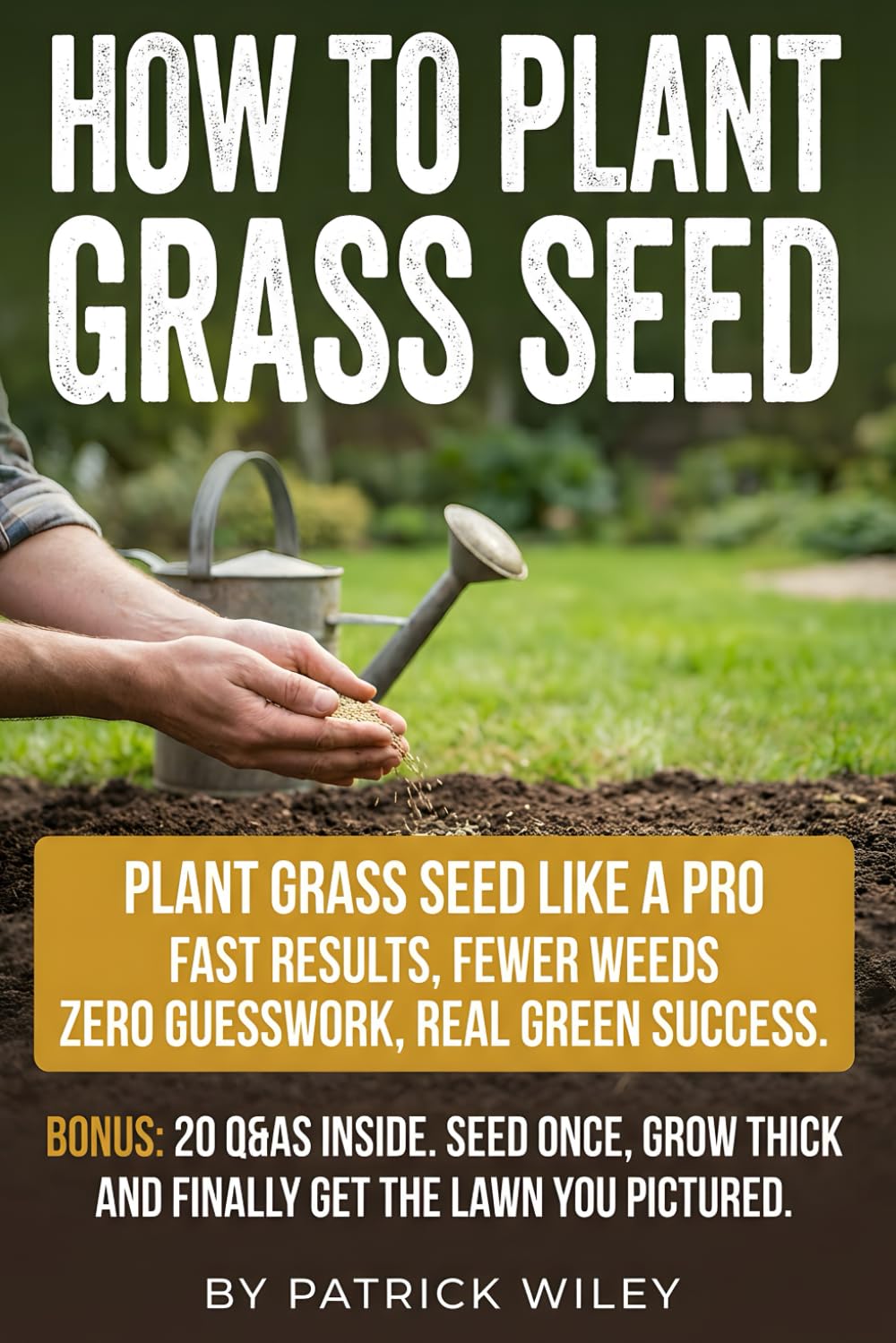
If you have ever stared at bare dirt or thin patches in your lawn and felt confused by conflicting advice, this book is for you. Patrick Wiley walks you through a straightforward, step-by-step system that starts with reading your yard like a pro and ends with a lawn you are proud to walk on. It is designed for homeowners who want to seed with confidence, whether you are starting from scratch or thickening an existing lawn.
The standout feature is the depth of practical guidance. You will learn how to run soil tests, choose the right seed for your region, and time your seeding for success. The book covers everything from weed reset and seedbed preparation to watering schedules that adapt to your soil type. It also tackles real-world issues like shade under trees, heavy foot traffic, and watering restrictions that most guides skip. The included templates like the site-audit sheet and 14-day launch plan make it easy to apply the advice.
The book is well organized with clear headings and checklists, making it quick to reference when you need it. At 222 pages, it is concise enough to read in a weekend but packed with actionable details. The language is natural and avoids jargon, so even a complete beginner can follow along.
One potential drawback is that there are no customer reviews yet, so we do not have long-term reader feedback. Also, if you only need to overseed a small patch, some sections may feel overly detailed. But for someone tackling a larger lawn or dealing with persistent problems, this depth is a strength.
Overall, this book delivers exactly what it promises: a clear, no-nonsense plan to plant grass seed and grow a healthy lawn. It earns a solid recommendation for any homeowner who wants to stop guessing and start seeing results.

Pros
- Convenient roll-out design eliminates guesswork of seeding and fertilizing separately.
- Biodegradable material is eco-friendly and disappears as grass grows.
- Effective on slopes and semi-shade, thanks to the fabric holding seed in place.
- Can be used year-round in most climates as long as temperatures stay above 50°F.
- Safe for pets once grass reaches 3 inches tall, with no harmful chemicals.
Cons
- Very vulnerable to wind; mats can blow away if not staked or covered with a thin layer of soil.
- Results vary significantly: some users report uneven growth or weeds instead of grass, possibly due to poor soil prep or watering.
- Requires diligent watering three times daily for best results, which may be hard to maintain for busy homeowners.
The Growtrax Biodegradable Grass Seed Mat is designed to take the hassle out of growing grass. It combines premium seed, fertilizer, and mulch in a single roll that you simply lay down, water, and watch grow. This product is ideal for homeowners who need a quick fix for bare spots, dog patches, or shady areas where traditional seeding fails. It is not fake turf; it is real grass grown from quality Oregon seed.
The standout feature is its convenience. The biodegradable fabric holds seeds perfectly spaced and prevents erosion on slopes. In real-world use, many customers have seen good results when following the instructions carefully: preparing bare soil, watering three times a day, and avoiding windy days. Users in shaded spots have reported success where grass never grew before. However, results can be uneven. Some reviews mention that after weeks, the grass is patchy or looks more like weeds. This often comes down to poor soil prep or inconsistent watering.
Design and build quality are decent for the price. Each 50-square-foot roll is lightweight and easy to cut with scissors. The fabric is meant to degrade naturally as the grass establishes. But several users have complained that the mat blows away in moderate wind, even when staked. A common workaround is covering the mat with a thin layer of topsoil to weigh it down and improve seed-to-soil contact. This adds a bit of effort but seems to boost success rates.
The main drawbacks are wind sensitivity and the need for diligent watering. If you cannot commit to watering three times daily or live in a breezy area, the product may frustrate you. Also, it will not work over existing grass or weeds; the mat must contact bare soil directly. For large areas, some customers found sod faster and more reliable.
Verdict: The Growtrax mat is a solid option for small patches or tricky spots, especially if you are willing to follow the care routine. It is not a magic bullet but a helpful tool for the patient gardener. For windy regions or those seeking perfect uniformity, consider adding soil on top or choosing sod instead.
Pros
- Proven to deliver measurable thickness and speed of growth based on thousands of positive reviews
- Simple application instructions that reduce the risk of over or under fertilizing
- Versatile enough for new lawns, overseeding, and even sod or grass plugs
- Trusted brand that has been a staple in lawn care for decades
Cons
- Does not include any weed preventer, so you'll need a separate product if weeds are an issue
- Requires consistent daily watering after application, which can be demanding during dry spells
- Some users might prefer a formula with extra iron for deeper greening, though this one focuses on root growth
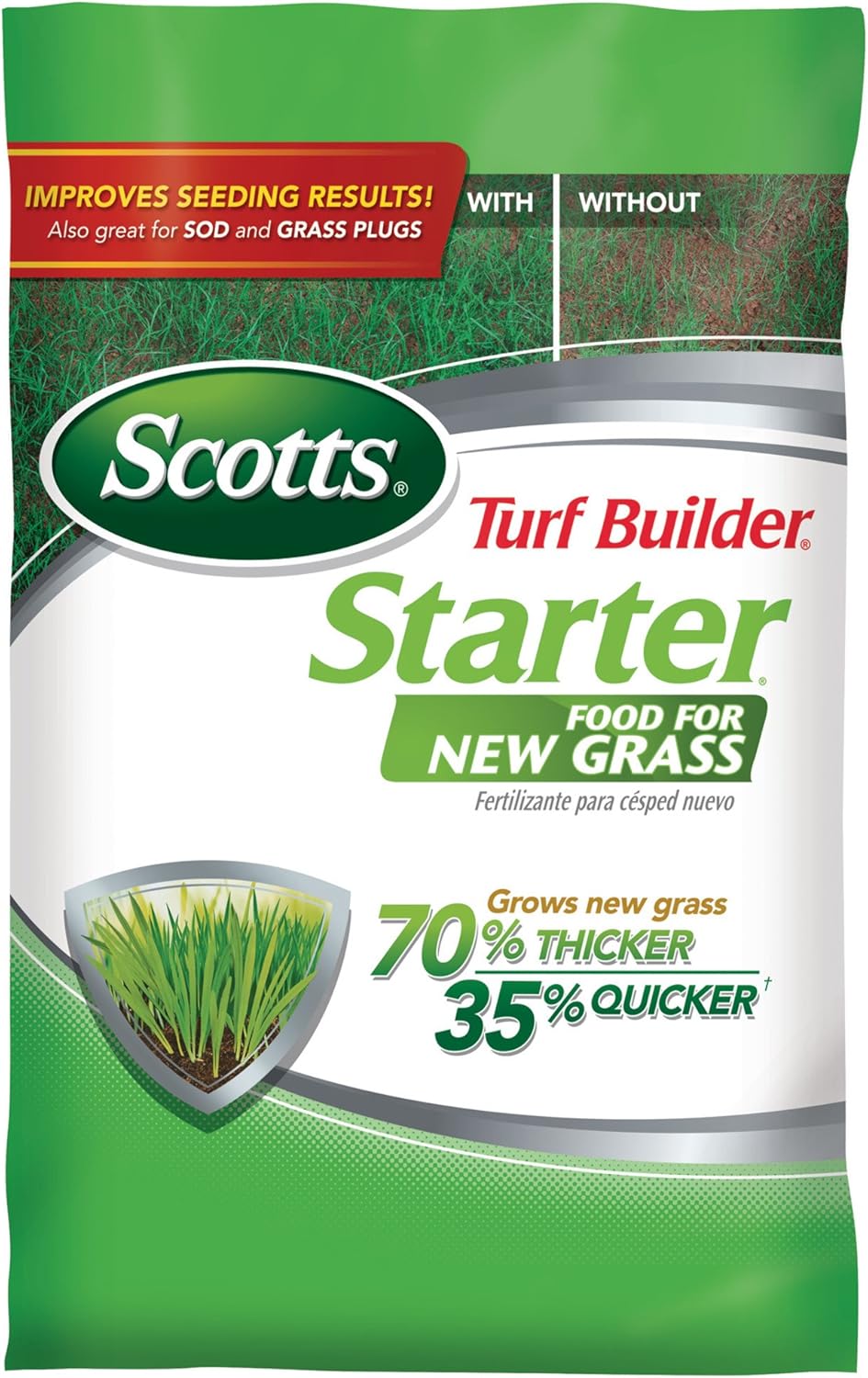
Scotts Turf Builder Starter Food for New Grass is a specially formulated fertilizer designed to give your lawn the best possible start. It targets the critical early stages of grass growth, whether you're planting seed in a bare patch, installing sod, or using grass plugs to fill in thin areas. The 24-25-4 nitrogen-phosphorus-potassium ratio is tailored to encourage deep roots and vigorous top growth, which is exactly what young grass needs to compete with weeds and withstand foot traffic.
In real-world use, this product lives up to its claims. Based on numerous customer reviews, it reliably produces a thicker, greener lawn within weeks. Many users report seeing noticeable improvement after the first few waterings, especially when they follow the spreader settings and watering schedule. The fertilizer is easy to apply with a standard broadcast or drop spreader, and the bag clearly states the correct settings for Scotts models. This simplicity helps avoid common mistakes like applying too much or too little.
Build quality is typical of Scotts: a sturdy, resealable bag with clear instructions. The granular form spreads evenly and dissolves well with watering. One potential drawback is that it lacks weed control, so if your lawn has existing weeds you'll need to address them separately. Also, the need for daily watering until the grass reaches 2 inches tall can be a challenge for those with busy schedules or water restrictions. Some users also note that the greening effect isn't as dramatic as some all-in-one fertilizers, but that's by design because this product prioritizes root establishment.
Overall, Scotts Turf Builder Starter Food is a solid investment for anyone serious about growing a new lawn from scratch or repairing patches. Its high rating and volume of positive feedback confirm that it consistently delivers. For the best results, pair it with Scotts grass seed and follow the label's watering guidelines. You'll be rewarded with a lush, healthy lawn that stays green throughout the season.

Pros
- Effective at holding seed in place even during heavy rain and wind.
- Easy to apply by hand with minimal mess.
- Speeds up seed germination and reduces watering frequency.
- Safe for use around pets and children as it is all-natural.
- Compact bag stores easily and stays dry until use.
Cons
- Tackifier can choke plant stems if applied too close, so keep it away from plant bases.
- More expensive per square foot than traditional straw bales.
- Not recommended as general garden mulch due to tackifier affecting water penetration.
EZ Straw Seeding Mulch with Tack is a processed straw product designed specifically for protecting grass seed during lawn establishment or repair. It's ideal for homeowners who want a cleaner, more effective alternative to traditional hay or straw bales. The tackifier additive helps the straw bind together, preventing it from blowing away or washing off slopes.
What sets this product apart is its tackifier, a natural bonding agent that gives the straw a slight tackiness. This keeps it in place even in windy conditions or during heavy rain. The straw is also processed to be weed-free and cut into smaller pieces, making it easy to spread by hand. A single 1-cubic-foot bag covers up to 250 square feet, which is plenty for patching bare spots or seeding a small lawn.
In real-world use, customers report that it holds up well through storms and significantly reduces seed loss to birds and runoff. It also speeds up germination by keeping the soil moist and reducing the need for frequent watering. The lightweight material spreads quickly and disappears into the lawn as grass grows, leaving no unsightly residue.
However, this product has a few drawbacks. The tackifier can be too dense for garden use: it may block water from reaching plant roots and choke seedlings if applied too heavily around stems. It's also pricier than plain straw bales, though the convenience and performance often justify the cost for small projects. Some users noted that it is not ideal for mulching vegetable gardens or flower beds.
Overall, EZ Straw Seeding Mulch with Tack is a reliable, hassle-free solution for lawn seeding. It delivers on its promises of protection and faster germination, and the convenience of a sealed bag is hard to beat. If you're seeding a new lawn or fixing bare patches, this product is a smart choice that saves time and effort.
Indoor/Outdoor Usage: Outdoor
Material Features: Natural
Special Feature: Organic
Sunlight Exposure: Full Shade
Moisture Needs: Moderate Watering
Unit Count: 1.0 Count
Number of Items: 1
Product Care Instructions: Water
Color: Black

Pros
- Effectively prevents seed runoff on slopes and hills
- Natural and biodegradable materials
- Comes with stakes for secure installation
- Faster germination compared to bare seeding
- Easy to cut and customize for different areas
Cons
- Straw density can vary between rolls; some may be thin
- Netting may take longer to biodegrade than expected, complicating lawn care
- Additional heavy-duty staples may be needed for windy or steep spots
The EZ Straw Grass Seed Germination and Erosion Control Blanket is a natural, biodegradable mat designed to help grass seed take root on slopes and bare patches. Made from processed straw fibers held by a degradable netting, it covers 200 square feet (4 ft x 50 ft) and comes with 15 wooden stakes. It's a practical solution for homeowners and landscapers dealing with erosion-prone areas like hillsides, ditch banks, and stream banks.
In real-world use, this blanket delivers on its promise: it holds seed and soil in place during rain, speeding up germination. Many users report lush grass growth within a week to two. The netting does a solid job of preventing washout, and the straw itself feeds the soil as it breaks down. However, some users note that the netting can be slow to biodegrade, lingering long enough to snag on mowers or rakes. A few also mention uneven straw density between rolls, which can affect coverage consistency.
Installation is generally straightforward: unroll carefully, cut as needed, and stake down. The included stakes work for average conditions, but for windy slopes or steep grades, buying extra metal staples is wise. The blanket is easy to cut with scissors or a utility knife, allowing you to fit irregular areas. Two people make unrolling much simpler.
On the downside, quality control issues have been reported. While most rolls are well filled, a minority arrive with thin spots or missing straw. And as mentioned, the netting may not vanish as quickly as advertised, requiring manual removal in some cases. This product is also pricier than some hardware store alternatives, though the convenience and included stakes add value.
Overall, the EZ Straw blanket is a reliable tool for getting grass to grow on tricky terrain. If you're battling erosion on a slope or want to establish turf in a bare area, it works. Just be prepared to possibly supplement with extra stakes and keep an eye on the netting decomposition. With proper installation, it's a good investment for a greener, more stable lawn.

Pros
- Written by a renowned master groundskeeper with decades of experience
- Covers all aspects of lawn care from planting to pest control
- Regional advice ensures relevance to your specific area
- Emphasizes child-friendly and practical solutions
- Easy-to-follow troubleshooting sections for common issues
Cons
- First published in 2003, so may not include the latest organic or sustainable trends
- Primarily print-based; no mention of a digital or updated edition
- Regional climate advice may need cross-referencing with current weather patterns
The Lawn Bible by David R. Mellor is exactly what its title promises: a thorough, season-by-season guide to achieving and maintaining a beautiful lawn. The author, a master groundskeeper for the Milwaukee Brewers, brings decades of practical experience to the page. This book is written for homeowners who want clear, actionable advice without the fluff. Whether you are a newbie or a seasoned gardener, you will find value in Mellor's straightforward approach.
Standout features include region-specific recommendations for mowing, watering, fertilizing, and pest control. Mellor teaches you to think like a lawn, which means understanding how grass responds to sunlight, soil composition, and foot traffic. The book also dedicates a section to making lawns child-friendly, a thoughtful addition for families. The 288 pages are packed with illustrations, tables, and checklists that make it easy to apply the lessons.
Design-wise, the paperback is sturdy with a practical 8.6 x 11.2 inch format, perfect for flipping through while you are out in the yard. The text is well-organized with clear headings, though some images may feel dated. Keep in mind that this book was first published in 2003, so it predates many modern organic products and climate adaptation strategies. While the core principles remain solid, those seeking cutting-edge eco-friendly methods may need supplementary resources.
Overall, The Lawn Bible is a reliable, no-nonsense guide for anyone serious about lawn care. It earns high marks for usability and authority. If you are willing to adapt the advice to current conditions, this book will serve you well for years to come.

Pros
- Fast germination and growth, with many reviewers seeing sprouts in about a week
- All-in-one convenience saves time and effort compared to buying seed and fertilizer separately
- Effective for patching bare spots and overseeding large problem areas
- Can handle some shade, though best in full sun; a few users saw decent results in partial shade
- Built-in fertilizer helps establish deeper roots and greener grass
Cons
- Requires diligent watering (twice daily recommended) to achieve optimal growth
- Not ideal for heavy shade areas; some spots may fail to germinate
- Mixed germination results in a small number of reviews, possibly due to temperature or watering conditions
The Scotts Turf Builder Rapid Grass Tall Fescue Mix is a convenient all-in-one solution for homeowners looking to revitalize their lawn. This product combines tall fescue grass seed with a fertilizer that feeds the grass as it grows. It is perfect for both starting a new lawn from scratch and overseeding an existing tall fescue lawn to fill in bare patches. The mix is designed to grow 2X faster than seed alone when applied at the new lawn rate with proper care, making it a popular choice for quick results.
Real-world performance matches the promise for most users. Many reviews highlight visible sprouts within a week and a thick, green lawn after two to three weeks. One reviewer noted that even with direct afternoon sun and inconsistent watering, the grass grew healthy and thick. Another user in Southern California praised its reliability in both winter and summer heat. However, a minority of customers reported slow or poor germination, often in areas with heavy shade or when watering was not consistent. The product performs best in full sun and with regular watering twice a day.
Application is straightforward: spread the mix using a Scotts spreader, water thoroughly twice daily, and avoid using weed control products until the grass is established. The 5.6 lb. bag covers 615 sq. ft. for new lawns and 1,845 sq. ft. for overseeding, which is generous. The mix is GMO free and works well when applied in spring or fall with temperatures between 60 and 80°F.
A few drawbacks are worth noting. The biggest is the need for consistent watering, which can be a challenge during dry spells. Some users in shadier spots saw less germination, so it's not a one-size-fits-all solution. Also, a handful of reviews mentioned no germination at all despite following instructions. These cases seem to be exceptions but are worth considering if your lawn has special conditions.
Overall, the Scotts Turf Builder Rapid Grass Tall Fescue Mix is a solid, easy-to-use option for anyone who wants to see grass fast. The built-in fertilizer saves a step, and the germination rate is high when conditions are right. For best results, pair it with a proper watering schedule and choose a sunny spot. It's not perfect for all situations, but for typical tall fescue lawns, it delivers on its promises.
Frequently Asked Questions About Planting Grass Seed in Spring
Here are answers to common questions gardeners have about how to plant grass seed in spring.
When is the best time to plant grass seed in spring?
The ideal window is when soil temperatures reach 50-65°F, which usually happens after the last frost. In most regions, this falls between mid-April and early May. Planting too early when the ground is still cold can lead to poor germination. You can use a soil thermometer to check, or watch for consistent daytime temperatures in the 60s. For more tips on seasonal planting, see our Plant category page.
Do I need to use a starter fertilizer when planting grass seed?
Yes, using a starter fertilizer like Scotts Turf Builder Starter Food helps new grass grow thicker roots and establish faster. It provides the right balance of nutrients that young grass needs, especially phosphorus for root development. Avoid using regular high-nitrogen fertilizers until after the first mow.
How often should I water new grass seed in spring?
Keep the top inch of soil consistently moist but not soggy. In spring, you may need to water 2-3 times per day for short periods (5-10 minutes) until the seeds germinate. Once the grass reaches about 2 inches tall, you can water less frequently but deeper. Using a seed germination blanket can reduce watering needs by holding moisture.
What type of grass seed is best for spring planting?
It depends on your climate. For cool-season lawns, tall fescue and Kentucky bluegrass work well. For warm-season lawns, Bermuda or zoysia are better. A mix like Scotts Sun & Shade is a good choice if your yard has both sunny and shaded areas. The right seed variety matched to your region gives the best results.
How can I protect grass seed from birds and erosion?
Covering the seed with a thin layer of straw mulch or using a biodegradable erosion control blanket helps prevent seed loss. Products like EZ Straw Seeding Mulch with Tack stick together and stay in place. This keeps the seed moist and hidden from birds. For more on protecting your garden, visit our Seed category page.


Write Your Review
No reviews yet. Be the first to share your experience!