

Getting the best spot to plant blueberries right from the start is the secret to big, sweet harvests. Blueberries are picky about sunlight, soil acidity, and drainage, and missing any of these can lead to weak growth or disappointing fruit. The good news is that with the right tools and amendments, you can turn almost any sunny corner into a thriving berry patch. In 2026, more gardeners are discovering that a little preparation goes a long way toward healthier bushes and better yields.
Whether you plant in beds or containers, the foundation is always the same: full sun, acidic soil with a pH between 4.5 and 5.5, and loose, well-drained ground. Once you secure those basics, the rest becomes much easier. The 8 products below are designed to help you achieve that perfect environment, from acidifying fertilizers to ready-to-use soil mixes and vigorous blueberry plants. For more container-friendly ideas, check out our guide on best plants for plant pots.

Pros
- Excellent heat and humidity tolerance
- Fast fruit production, often within first year
- Large berry size and good flavor
- Hardy and adaptable to various soil conditions
- Well-packaged and healthy plants upon delivery (per reviews)
Cons
- Requires another blueberry variety for cross-pollination to fruit
- Needs acidic soil (pH 4.2-5.0) which may require soil amendments
- Does not ship to California or Arizona
The Perfect Plants Tifblue Blueberry Bush is a hybrid variety developed by the University of Georgia, bred from native river plants of Georgia and Florida. This 1-gallon live plant is designed for gardeners in USDA hardiness zones 6-9 who want a reliable blueberry bush that can handle both heat and humidity. It's known for producing large, light blue berries with a sweet flavor, and it can start yielding fruit within the first year or two after planting.
Standout features include its exceptional resistance to heat and humidity, making it a great choice for southern climates. At the same time, it's tolerant of cooler weather, so northern gardeners within its hardiness zones can also enjoy it. The plant requires 350-700 chill hours (temperatures between 35 and 45 degrees Fahrenheit) to fruit properly. For best pollination, you'll need to plant another blueberry variety within 10 feet. Real-world reviews highlight that plants arrive healthy and well-packaged, with many customers seeing berries soon after planting. One reviewer noted their plant had ripe berries upon arrival, while another praised the company's customer service when a plant arrived with mold issues.
Design and build quality are solid: the plant comes in a 1-gallon nursery container with a slip of bag paper to manage moisture. The bush grows up to 15 feet tall and requires full sun and moderate watering. Acidic soil with a pH between 4.2 and 5.0 is essential, and adding peat moss or compost helps. Pruning is recommended for plant health and consistent berry production.
Potential drawbacks include the need for cross-pollination with another blueberry variety, which means you can't just plant one bush and expect fruit. The specific soil pH requirement might be a hurdle if your soil is alkaline. Additionally, the plant does not ship to California or Arizona, limiting availability. A few reviews mentioned leaf loss during transit, but plants generally recovered quickly.
Overall, the Tifblue Blueberry Bush is a solid choice for home gardeners looking for a productive, low-maintenance blueberry plant. Its heat tolerance, quick fruiting, and large berries make it a standout option. Just be prepared to provide acidic soil and a pollination partner for the best results.

Pros
- Heavy fruit production when planted with another blueberry variety
- Large, adaptable bush that grows well in most of the US (except CA and AZ)
- Customers report well-packaged plants that arrive with berries already forming
- Company provides responsive customer service and stands behind their plants
- Live plant comes with fertilizer and clear care instructions
Cons
- Not self-pollinating, so you'll need to plant at least one other blueberry variety to get fruit
- Does not ship to California or Arizona
- A few customers noted leaf spots or mold during transit, though most arrive healthy
The Powder Blue Blueberry Bush from Perfect Plants is a 1-gallon live plant that offers home gardeners a fantastic way to grow their own superfood. This variety is one of the largest blueberry bushes, reaching up to 15 feet tall, and is known for its heavy production of sweet, large berries. It's ideal for gardeners in hardiness zones 6-9 who have a sunny spot with well-drained acidic soil. Keep in mind that this bush is not self-pollinating; you'll need to pair it with another type like Premier or Climax to get a bountiful harvest.
The standout feature of the Powder Blue is its robust yield. With approximately 600 chill hours per year, it's suitable for many regions, and the berries ripen from June through July. The bush also offers ornamental value with white blossoms in spring and foliage that transitions to yellow and copper in fall. Real-world performance from customer reviews is mostly positive, with many praising how healthy the plant arrives, often with berries already forming. The included blueberry food gives it a helpful head start.
Packaging is generally excellent, with the plant arriving securely in a 1-gallon pot. The company, Perfect Plants, receives high marks for customer service, especially when issues like missing fertilizer or mold from transit occur. Reviews show they replace damaged plants promptly. However, a small number of buyers have reported leaf spots or slow growth after planting, which is common with live plants and often resolves with proper care.
One drawback is that this bush cannot fruit alone, so plan for at least two plants total. Additionally, the plant cannot be shipped to California or Arizona, limiting its availability. The mature size is large, so give it plenty of room. Overall, the Powder Blue Blueberry Bush is a reliable, productive choice for anyone looking to start or expand a home blueberry patch, as long as you're prepared for its pollination needs.
Verdict: If you have space for multiple blueberry bushes and want a tall, heavy-bearing variety, the Powder Blue is a smart investment. It grows well in most US climates, delivers delicious fruit, and the company stands behind its product. Just be ready to partner it with another bush and consider your local zoning restrictions.
Live Jersey Blueberry Plant
Pros
- Cold hardy down to zone 3, so it survives harsh winters.
- Provides both fruit and ornamental beauty across multiple seasons.
- Attracts beneficial pollinators to your garden.
- Versatile planting options in containers or directly in the ground.
- High nutrient content in the berries: antioxidants, fiber, and vitamins.
Cons
- Requires acidic soil (pH 4.5-5.5) for best growth, which may need amendments in some areas.
- First year fruit production is unlikely; patience needed for established harvests.
- Full sun is essential for maximum berry yield; partial shade reduces output.
The Jersey blueberry plant (Vaccinium) is a cold hardy fruit bearing shrub that delivers both ornamental beauty and delicious berries. It thrives in patio containers or garden beds, making it a versatile choice for home gardeners across a range of climates (USDA zones 3-11). Whether you are a seasoned gardener or a beginner looking for a reliable fruit plant, this blueberry bush is a solid option that rewards you with tasty harvests year after year.
Standout features include its high nutrient content: the berries are rich in antioxidants, fiber, and vitamins. On top of that, the plant offers visual appeal throughout the seasons. In spring, creamy white bell-shaped flowers appear, followed by green leaves that turn a striking scarlet in the fall. The bush also attracts pollinators like bees, which helps your entire garden thrive.
Growing this blueberry bush is straightforward if you provide the right conditions. It prefers full sun and moderate watering. The main requirement is acidic soil with a pH between 4.5 and 5.5. If your garden soil is neutral or alkaline, you can easily adjust it with sulfur or use a container with the proper potting mix. The plant is GMO free and requires minimal maintenance once established.
One honest drawback is that you likely won't get a large harvest in the first season. Blueberries need a year or two to settle in and produce heavily. Also, while the plant is partially self fertile, planting a second variety nearby can boost yields. For best results, choose a sunny, sheltered spot away from harsh winds.
Overall, the Jersey blueberry plant is a worthwhile addition to any home garden. Its cold hardiness, dual beauty, and nutritious fruit make it a standout choice. With a little care and patience, you'll be picking fresh blueberries from your own backyard or patio.
Plant your Jersey blueberry in early spring or late fall (in milder regions). Choose a spot with full sun and well-drained, acidic soil. If your soil is not acidic enough, mix in peat moss or use a container with acidic potting mix.
Water moderately, keeping the soil moist but not waterlogged. Mulch with pine bark or wood chips to retain moisture and keep roots cool. Fertilize once a year in early spring with a fertilizer formulated for acid-loving plants.
Prune in late winter to remove dead wood and encourage new growth. With proper care, your blueberry bush will produce fruit for many years.
Pros
- Specifically formulated for acid loving plants, ensuring they get the right nutrients.
- Slow release formula provides long lasting feeding and reduces the risk of over fertilizing.
- Organic and all natural, suitable for organic gardening practices.
- Can be used throughout the growing season for both growth and bloom phases.
- Supports healthy root development and overall plant vigor.
Cons
- Does not adjust soil pH; you may need separate sulfur or lime for pH control.
- Granular form takes longer to show results compared to liquid fertilizers.
- The 1 lb size may be too small for multiple large plants or extensive garden beds.
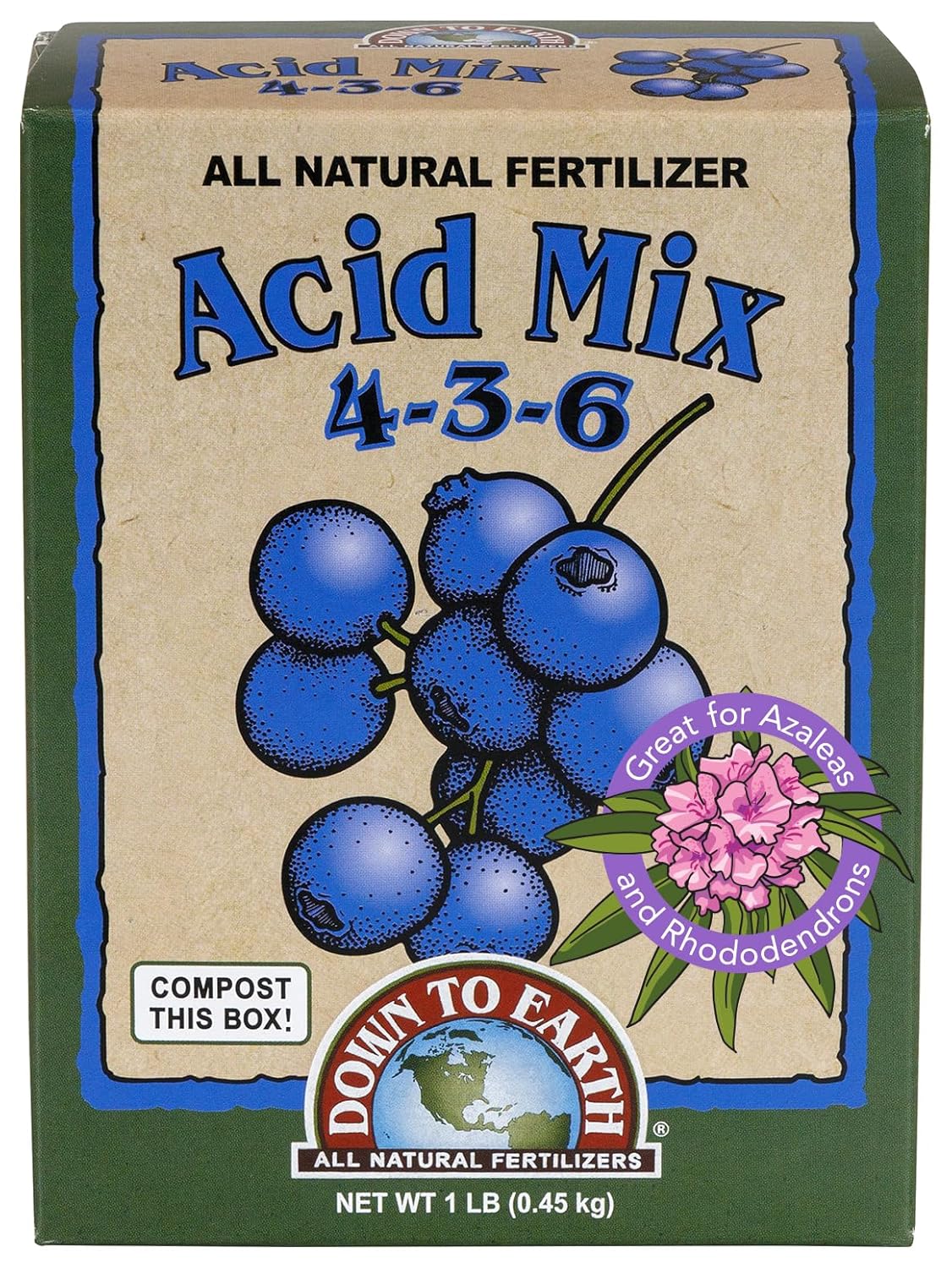
If you grow blueberries, azaleas, rhododendrons, or other acid loving plants, you know they have specific nutritional needs. Down To Earth Organic Acid Mix is a granular fertilizer with an NPK ratio of 4-3-6, designed to feed these plants without messing with your soil pH. It’s a straightforward way to give them the nutrients they crave.
The standout feature here is the slow release formula. Instead of dumping all the nutrients at once, these granules break down gradually over several weeks. That means you get steady feeding with fewer applications. I’ve found it works well for encouraging flowers and fruit: apply in early spring for growth, then again when blooms appear. For extra cold hardiness, a fall application helps too.
The product comes as small, easy to spread granules in a sturdy 1 lb bag. Application is simple: just scatter on the soil surface or mix into the planting hole, then water it in. It doesn’t have a strong smell, and the all natural ingredients are safe for organic gardens. The bag includes clear instructions, so even beginners can use it confidently.
A potential drawback is that this fertilizer won’t lower your soil pH. If your soil is too alkaline, you’ll need to use sulfur or another acidifier separately. Also, granular fertilizers take longer to act than liquid options. And the 1 lb size is fine for a few pots or a small bed, but larger gardens will need multiple bags.
Overall, Down To Earth Organic Acid Mix is a solid choice for anyone who wants targeted, gentle feeding for acid loving plants. It’s effective, organic, and easy to use. Just remember to check your pH and size your purchase accordingly.

Pros
- Produces large, sweet berries ideal for fresh eating or baking
- Grows well in a wide range of hardiness zones (6-9)
- Low maintenance with basic care needs
- Can be used to teach kids about gardening and healthy eating
- Includes detailed planting and care instructions
Cons
- Requires at least one other blueberry variety for cross-pollination to bear fruit
- Does not ship to California or Arizona
- Needs acidic soil, which may require soil amendments in some gardens
The Perfect Plants Premier Blueberry Bush is a 1-gallon live plant that brings the joy of homegrown blueberries to your garden. It's designed for outdoor planting and is a favorite among gardeners for its ability to produce large, sweet berries from late spring to early summer. This bush is ideal for anyone living in hardiness zones 6 through 9 who wants to grow their own antioxidant-rich superfood with minimal fuss.
One of the standout features is its low maintenance nature. Once you plant it in well-drained, acidic soil (which you can easily achieve by adding peat moss), and give it plenty of sunlight, it will reward you with generous harvests each season. The bush reaches a mature height of 8 to 10 feet and spreads about 6 feet wide, making it a substantial addition to any edible landscape. It performs best in full sun but can tolerate partial shade, though that may reduce fruit production.
Keep in mind that this blueberry bush needs a pollination partner. You'll need at least one other blueberry variety planted nearby to get fruit, and for the best yield, the company recommends planting a total of three different varieties. This is a common requirement for most blueberry bushes, so it's not a surprise, but it does mean you'll need to plan your garden layout accordingly. Also note that the plant cannot be shipped to California or Arizona due to agricultural restrictions.
In terms of build quality, the plant arrives in a 1-gallon pot with a healthy root system. The instructions are clear and helpful, covering everything from soil preparation to pruning. Pruning is straightforward: remove any failing limbs, foliage, or berry buds before the growing season to improve plant health and boost your harvest. The berries themselves are versatile, great for eating fresh, baking into muffins or pies, or freezing for later use.
Overall, the Premier Blueberry Bush is a solid choice for home gardeners who want a reliable, productive fruit plant. It's not for those in California or Arizona, and it does require a companion pollinator, but if you have the space and the right conditions, it delivers delicious, healthy berries with reasonable effort. We recommend it for anyone looking to add a productive and rewarding fruit bush to their garden.

Pros
- Includes a thoughtful mix of varieties to boost pollination and extend harvest
- Healthy starter plants that arrive ready to grow with secure packaging
- Versatile for both garden beds and containers, including patio-friendly dwarf options
- Backed by responsive customer support from FamPlants
- Good value for getting multiple plants at a lower cost than buying singles
Cons
- Plants are small starter sprigs that need time and proper care to mature
- Variety selection depends on season and availability, so you may not get specific types
- Some plants may arrive with cold damage or breakage, though the seller is responsive about replacements
The FamPlants Blueberry Plants Collection delivers exactly what it promises: four live starter plants chosen to boost your blueberry harvest through smart variety selection. This pack is for anyone who wants to grow their own fruit at home, whether you have a big garden or just a sunny patio. The mix includes popular types like Emerald, Jewel, Legacy, O'Neal, and Chandler, with the exact blend changing based on what's available each season.
The standout feature here is the focus on cross-pollination. The description stresses planting at least two different varieties, and that's not just marketing talk. Mixing types naturally increases fruit set and berry size, so you get a bigger, more reliable harvest. The assortment also spans early, mid, and late ripening, which means you can pick fresh blueberries for weeks rather than days.
In terms of design and quality, the plants arrive in a secure box with labels on each pot. The starter plants are small, as several reviews note, but they look healthy and have good root systems. One reviewer measured the tallest at 11.5 inches, so they are ready to grow. The care instructions are clear: soak the pots, trim any damaged leaves, and gradually introduce them to full sun. The plants need acidic soil with a pH between 4.0 and 5.2, and they do well in raised beds or containers.
There are a couple of honest drawbacks. The plants are young and small, so you need patience to let them mature into full bushes. Also, the variety mix isn't guaranteed. One reviewer in Pennsylvania was hoping for northern types but got southern highbush instead. That's a risk with any curated collection. The seller is responsive about replacements if a plant arrives damaged, which helps.
Overall, this is a solid value for getting four blueberry plants at a reasonable price. If you want a specific variety for your hardiness zone, you might be better off buying individual plants. But if you're open to a mix and want the pollination benefits that come with variety, this collection is a smart choice. It's a practical way to start growing your own food with minimal fuss.

Pros
- Delivers noticeable improvements in berry size and yield based on user reviews
- Has a mild, pleasant smell compared to many other organic fertilizers
- Simple, mess-free granular application without dissolving or measuring
- Works well for both new plantings and established plants with just two feedings per year
- Trusted brand with decades of experience in organic gardening
Cons
- The scent can attract dogs who may try to dig up treated soil (user-reported)
- Relatively small 4-lb bag may not be sufficient for large berry patches
Espoma Berry Tone is a specialized organic fertilizer formulated for berry lovers. Whether you grow blueberries, strawberries, raspberries, or blackberries, this 4-3-4 blend provides the nutrients these plants crave while keeping things natural. The exclusive Bio-tone formula boosts beneficial soil microbes, helping roots absorb nutrients more effectively. Made in the USA, it's approved for organic gardening and contains no sludges or synthetic chemicals.
In real-world use, the results are impressive. Gardeners report bigger harvests, healthier leaves, and sweeter berries after applying Berry Tone. One reviewer noted that their strawberries and raspberries absolutely thrived with lush growth and abundant fruit. Another mentioned great results with raspberries, yielding bowls full of berries. The granular form is easy to apply and doesn't require any mixing, which saves time and hassle.
The design is straightforward and practical. The granules can be scattered directly around the plant base at planting time or during the growing season. Most berries need two feedings per year in early and late spring. The sulfur in the formula helps maintain acidic soil conditions that blueberries love. There are no strong odors, a common complaint with other organic fertilizers.
One minor drawback to consider: the product's natural smell can be attractive to dogs. A user mentioned that their dog tried to eat the treated soil, so you may need to keep pets away for a few weeks until the granules break down. Also, the 4-pound bag covers only a limited area, so larger gardens might need multiple bags. The price is reasonable for the quality and brand reputation.
Overall, Espoma Berry Tone is a reliable and effective choice for berry growers who prefer organic methods. It delivers visible improvements without the guesswork or harsh chemicals. If you want to grow bigger, tastier berries with minimal effort, this fertilizer is well worth the investment.

Pros
- Ideal low pH formula for acid-loving plants like blueberries, azaleas, and rhododendrons
- All-natural, OMRI listed organic ingredients safe for food crops and the environment
- Promotes stronger root development, lusher foliage, and abundant fruit or flowers
- Lightweight texture makes it easy to handle, pour, and mix with existing soil
- Trusted brand with excellent customer ratings and proven results
Cons
- Price per quart is higher than many all-purpose garden soils
- Some customers report bags arriving only partially filled (around 80% full)
- Limited retail availability; may need to order online if local stores don't stock it
If you grow acid-loving plants like blueberries, azaleas, rhododendrons, or camellias, giving them the right soil makes a big difference. Coast of Maine’s Organic Planting Soil for Acid Loving Plants is a specialized blend designed to provide the low pH these plants crave. With a mix of composted manure, sphagnum peat moss, and aged bark, it delivers a lightweight yet nutrient-rich medium that supports healthy growth and vibrant blooms.
In real-world use, this soil performs well. Numerous gardeners report that it helped revive struggling blueberry bushes and promoted new leaves and fruit. The texture is fluffy and easy to work with, pouring out smoothly and mixing seamlessly into pots or garden beds. It also drains well while retaining enough moisture to keep roots happy, which is a balance many soils miss.
One standout feature is the organic certification. Coast of Maine is OMRI listed, meaning you can use this soil in organic gardens without worrying about synthetic chemicals. The brand has been at it since 1996, using sustainable practices and upcycling local resources like seaweed and lobster compost. That commitment to eco-friendly production adds peace of mind, especially if you’re growing food crops like berries.
However, the price is a common complaint. This soil costs more than generic all-purpose mixes, and some bags arrive only about 80% full, which feels like poor value. A few reviewers also mentioned issues with delivery tracking. But for the quality, most agree it’s worth the investment for plants that truly need acidic conditions.
Overall, Coast of Maine’s Organic Planting Soil is a reliable choice for any gardener serious about growing acid-loving plants. It delivers on its promise of a low pH, organic formula that helps plants thrive. If you’re dealing with yellowing leaves on your blueberries or want your azaleas to bloom, this soil can be a solid solution. Just be prepared for the higher cost and check the bag fullness when it arrives.
Frequently Asked Questions About the Best Spot to Plant Blueberries
Here are some common questions gardeners have when choosing the best spot to plant blueberries. These answers focus on practical solutions you can apply right away.
Can I plant blueberries in partial shade?
Blueberries can tolerate some shade, but for the best spot to plant blueberries, aim for at least six hours of direct sunlight daily. Less light means fewer flowers and smaller berries. If your yard has a spot with morning sun and afternoon dappled shade, that can work in hot climates without stressing the plant too much.
How do I lower the soil pH for blueberries?
To create an acidic environment, you can use fertilizers like Down To Earth Organic Acid Mix or Espoma Berry Tone, both designed for acid-loving plants. Adding peat moss or pine bark fines also helps. Test your soil first, then amend gradually to reach a pH of 4.5 to 5.5. For more fertilizing tips, see our guide on best tree and shrub fertilizer spikes.
What if my soil has poor drainage?
Blueberries hate soggy roots. If your ground stays wet after rain, consider a raised bed or planting in large containers with drainage holes. Using a lightweight, acidic soil mix like Coast of Maine Organic Planting Soil for Acid Loving Plants can improve drainage while keeping roots comfortable. The best spot to plant blueberries should never hold standing water.
Do I need to plant more than one blueberry variety?
Many blueberry bushes are self-pollinating, but planting two different varieties often leads to better fruit set and larger berries. For example, pairing a Premier with a Tifblue or Powder Blue can boost yields. The best spot to plant blueberries allows room for at least two bushes within 10 to 15 feet of each other so bees can do their work.
When is the best time to plant blueberries?
Early spring or late fall (when plants are dormant) is ideal for most regions. This gives roots time to settle before the growing season. Make sure the best spot to plant blueberries is prepared ahead with amended soil and good drainage. For container gardening, you can plant almost anytime as long as you protect the roots from extreme temperatures. If you need pot-related advice, visit our Pot category page for more ideas.




Write Your Review
No reviews yet. Be the first to share your experience!