


Starting herbs in containers is one of the most rewarding steps you can take for your indoor garden or patio. Whether you have a sunny kitchen windowsill or a small balcony, learning how to plant herbs in containers opens up fresh flavors and aromas right at your fingertips. Many gardeners struggle with overwatering or poor drainage when growing herbs in pots, but with the right approach, you can avoid these common pitfalls and enjoy lush, productive plants. This guide covers 8 helpful resources and practical techniques for 2026, perfect for beginners and seasoned plant lovers alike.
Container herb gardening works well because it lets you control the soil quality, sunlight exposure, and watering schedule. Herbs like basil, mint, rosemary, and thyme adapt beautifully to pots, as long as you choose the right container size and provide well-draining soil. If you’re new to container gardening, you might want to check out our guide on best choice products planter box for durable options that support healthy root growth. The key is matching the container depth to the herb’s root system — shallow pots for basil and cilantro, deeper ones for rosemary and lavender.


Pros
- Clear and easy to follow for absolute beginners
- Beautiful illustrations make learning enjoyable
- Focuses on container gardening for small spaces
- Covers a wide variety of plants in one guide
- Highly rated by users with real gardening success
Cons
- Does not include pruning techniques as noted by some readers
- Some users wished for more plant varieties beyond the 50 covered
- May be too basic for experienced gardeners
How to Grow Your Own Food is a practical and beautiful guide for anyone who wants to start growing their own herbs, vegetables, and fruits but has limited space. Author Angela S. Judd, known for her blog GrowingTheGarden.com, brings years of hands-on experience to this illustrated book. It is designed for beginners, especially those living in apartments or homes without a traditional garden plot.
The book covers 50 edible plants, from basil and onions to strawberries and tomatoes. Each entry includes detailed care instructions, container size recommendations, watering and feeding schedules, and harvesting tips. The illustrations are clear and helpful, making it easy to visualize what you need to do. Readers consistently praise the book's organization and how it simplifies the process of container gardening.
Real-world feedback from users confirms that the advice works. One reviewer noted that after following the author's guidance, they were harvesting vegetables for the first time. Another mentioned that the tips helped their dad grow an impressively large cabbage. The book is kept in gardening tool bags and used as a quick reference. It is not just a read-once book but a resource you return to throughout the growing season.
There are a few honest drawbacks to consider. Some readers wished the book included a section on pruning techniques. Others felt that while the 50 plants covered are a good start, they would have liked more variety. For experienced gardeners, the content may feel too basic. However, for its target audience of beginners, the book hits the mark perfectly.
Overall, How to Grow Your Own Food earns a strong recommendation for anyone new to container gardening. It is well-written, beautifully illustrated, and packed with actionable advice. If you want to turn your balcony or patio into a productive mini-farm, this guide is a great place to start.
Pros
- Comprehensive and beginner-friendly with clear explanations and visuals.
- Practical advice on soil, watering, and fertilizing that eliminates guesswork.
- Covers a wide range of vegetables, herbs, and fruits with specific care tips.
- Encourages organic and sustainable methods that are easy to follow.
- Includes troubleshooting for common container gardening mistakes.
Cons
- Strong focus on self-watering containers, which may require extra cost or effort.
- Author prefers larger pots, which may not suit very small balconies or tight spaces.
- Primarily written for a US audience, so some variety and climate advice may vary elsewhere.
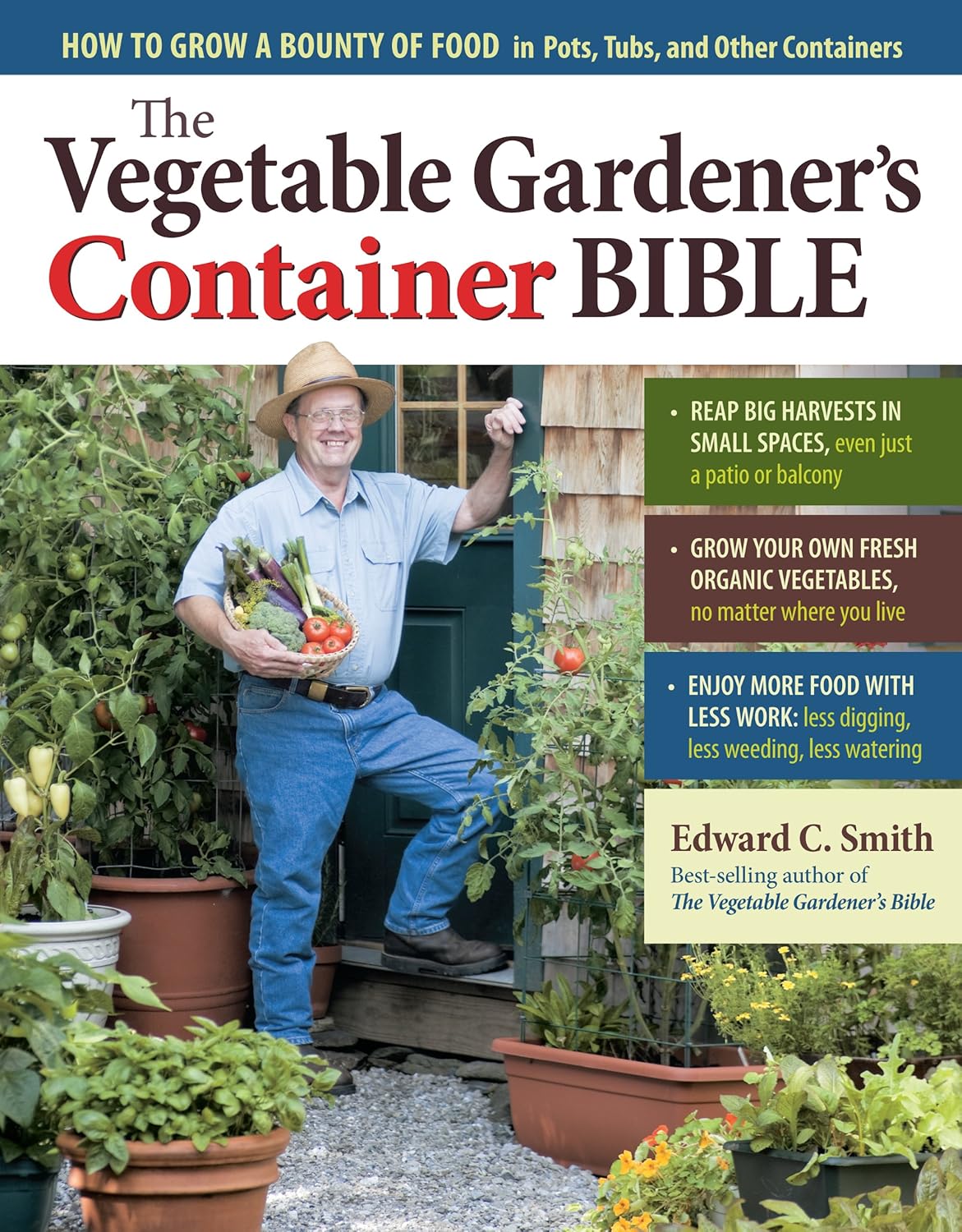
The Vegetable Gardener's Container Bible is a comprehensive resource for anyone who wants to grow fresh food in limited space. Written by Ed Smith, author of the best-selling Vegetable Gardener's Bible, this book zeroes in on container cultivation. It covers everything from selecting the right pots and soil to watering, fertilizing, and pest control. Whether you have a small balcony, a patio, or just a sunny windowsill, Smith shows you how to turn it into a productive vegetable garden.
What really stands out are the detailed photographs and the author's straightforward, experience-based advice. Smith explains how to create your own potting mix and build self-watering containers. He also shares his personal favorite vegetable varieties that consistently perform well in pots. The book includes growing guides for dozens of crops, from tomatoes and peppers to lettuce, herbs, and even pumpkins. Real-world user reviews highlight how this book helped beginners successfully grow their first patio garden and gave seasoned gardeners new techniques to try.
The physical book itself is well-bound on quality paper with vivid images. At 264 pages, it's substantial but not overwhelming. The layout uses clear headings and bullet lists, making it easy to find information quickly. However, some readers note that the author heavily recommends self-watering containers, which can involve extra cost or DIY effort. Also, the guidance is tailored to North American climates and seasons, so gardeners in other regions may need to adjust timing.
Overall, this is a trusted, practical resource that delivers on its promise. It earns a high rating from over a thousand reviewers for a reason. If you're committed to growing your own food in containers and want a single book that covers everything from start to finish, this is an excellent choice.

Pros
- Thorough coverage from seed selection to harvest and storage
- Great for beginners with clear, step-by-step instructions
- Includes both indoor and container gardening advice
- Recipes add practical, tasty value to growing your own
- Highly rated by readers for clarity and usefulness
Cons
- At 160 pages, it may not cover advanced techniques for experienced gardeners
- Focuses on common temperate herbs and spices; tropical varieties are less emphasized
- Some recipes are simple and may not challenge seasoned cooks
The Complete Guide to Growing and Cultivating Herbs & Spices by Linda Gray is a hands-on manual for anyone interested in growing their own flavorings, whether on a sunny windowsill or in a backyard plot. Updated and expanded from an earlier edition, this 160-page paperback from IMM Lifestyle Books is packed with practical advice for gardeners of all skill levels. Its strength lies in its focus on making self-sufficiency achievable, no matter how small your growing space.
The book stands out for its detailed plant profiles covering more than 50 herbs and spices, from basil and chives to ginger and saffron. Each profile includes specific guidance on soil preparation, planting times, harvesting, and culinary uses. Gray also offers strategies for garden design, pest control, and involving kids. The full-color photos help with identification and inspiration, and the included recipes (like Tomato and Basil Salad or Poppy Seed Cake) turn your harvest into meals you'll actually enjoy.
The format is user-friendly, with a logical layout that walks you through planning, planting, and preserving. The paperback binding feels sturdy for frequent flipping, and the 7 x 0.5 x 9 inch size is comfortable to hold. While the content is comprehensive for a beginner or intermediate gardener, some advanced growers might find the information too basic, especially if they already have experience with soil science or large-scale growing. Additionally, the book focuses mainly on common temperate herbs and spices, so if you're looking for deep coverage of exotic tropical varieties, you may need another resource.
Given its approachable tone and wealth of actionable tips, this guide is an excellent starting point for anyone new to herb and spice cultivation. Experienced gardeners may still pick up fresh ideas for container gardening or new recipes. Overall, Linda Gray has created a reliable, no-fluff handbook that delivers on its promise of helping you grow and use your own herbs and spices. It's a solid investment for homesteaders, urban gardeners, and anyone wanting to bring more flavor to their kitchen.


Pros
- Clear, step-by-step approach is ideal for true beginners.
- Combines culinary and medicinal uses, offering more than just basic gardening.
- Lightweight and portable you can read it in one sitting.
- Affordable price point for an introductory resource.
- Focuses on containers, so no backyard needed.
Cons
- Very short only 70 pages, and some readers felt the content was too surface-level.
- Lacks illustrations or specific care guides for individual herbs.
- A few reviews mention the book points you to a library for more detail rather than providing it.
Growing Herbs: A Beginner's Guide to Container Gardening and Growing Medicinal and Culinary Herbs at Home is exactly what the title says: a short, focused primer for people new to growing herbs. Written by Celeste Jarabese, this 70-page paperback skips the fluff and gets straight to the essentials. It's designed for anyone who wants fresh herbs for cooking, natural remedies, or simply adding greenery to a small apartment.
The book covers both culinary and medicinal herbs, which sets it apart from many beginner guides that stick to just one. You'll learn about herbs like oregano, dill, chamomile, and lavender, along with their uses and basic health benefits. The step-by-step container gardening instructions are easy to follow, and the preservation tips at the end add practical value. For someone who has never grown anything before, this can be a helpful starting point.
However, the brevity is both a strength and a weakness. At 70 pages, there isn't room for deep dives into individual herbs or detailed troubleshooting. Some reviewers noted the book reads more like a leaflet and lacks illustrations. The author even suggests visiting a library for more information, which may leave you wanting more substance. If you're looking for a comprehensive encyclopedia of herb gardening, this isn't it.
On the plus side, the book is lightweight, affordable, and focuses on container gardening a perfect fit for urban dwellers or renters. The emphasis on both kitchen uses and natural remedies makes it versatile. But if you already know how to plant a seed, you might find the content too generic.
Verdict: Growing Herbs is a good, low-cost resource for absolute beginners who want a quick overview before diving deeper. Seasoned gardeners or anyone needing specific herb-by-herb guidance should look elsewhere.

Pros
- Clear, beginner-friendly language with visual aids throughout.
- Covers a wide variety of plants in a compact, 160-page format.
- Practical tips for real-world constraints like limited space and budget.
- Strong positive feedback from verified purchasers who found it helpful.
- Affordable price point for a comprehensive guide.
Cons
- Some readers desired more detailed photos for each plant profile.
- A few experienced gardeners found the information too basic.
- Print length may feel brief for those seeking advanced techniques.
Container Gardening for Beginners by Tammy Wylie is a practical, no-nonsense guide designed for anyone who dreams of growing their own food but lacks a traditional garden space. Whether you live in an apartment with a tiny balcony or just have a sunny windowsill, this book shows you how to cultivate vegetables, herbs, fruits, and flowers in containers. It's squarely aimed at newcomers, and it delivers exactly what the title promises: a straightforward path to a productive container garden without overwhelming you with jargon.
The standout feature here is the 30 plant profiles, which break down essential info like ideal container size, sunlight requirements, and growth timeline for popular choices like tomatoes, strawberries, and rosemary. The step-by-step instructions cover everything from soil mix and watering to pruning and harvesting, making it easy to follow along. Real-world feedback from readers confirms that the book is easy to understand and helps correct common mistakes. Many reviewers mentioned they felt confident starting their garden after reading it.
The book's design is clean and functional, with illustrations that complement the text without being cluttered. At 160 pages, it's a quick read but packed with actionable advice. Some readers wished for more detailed photos for each plant, and a few found the content too basic if they already had some experience. But for the target audience, this simplicity is a strength, not a weakness.
Honestly, the main drawback is that it's not meant for experienced gardeners looking for advanced techniques. A couple of reviews noted it lacks expanded information, but that's expected for a beginner's guide. If you're new to container gardening, this book gives you a solid foundation without the fluff.
Overall, Container Gardening for Beginners is a reliable, affordable resource that lives up to its promise. It's earned strong praise from hundreds of readers for being clear, helpful, and motivating. If you want to grow your own food in a small space, this is a great starting point.

Pros
- Extremely beginner-friendly with clear, actionable steps.
- Covers a wide range of topics from soil to pest control in one compact book.
- Focus on organic methods and sustainable practices appeals to health-conscious gardeners.
- Adaptable for any living situation, whether indoor, balcony, or small yard.
- Includes advanced tips like succession planting and grafting for those who want to grow more.
Cons
- Lacks many photos or illustrations, which could help visual learners (noted in reviews).
- At 179 pages, it may not dive as deep into specific topics as a more specialized guide.
- Experienced gardeners may find some content too basic for their needs.
Easy Container Gardening in Any Climate by Kiley Manning is a practical, all-in-one resource for anyone who wants to grow their own organic herbs and vegetables but feels limited by space or experience. The book is specifically designed for urban dwellers, apartment renters, and first-time gardeners who think a green thumb is out of reach. It tackles common misconceptions head-on and provides a clear roadmap to success.
The standout quality of this guide is its thoroughness. Manning covers everything from selecting the right containers and soil mixes to watering schedules, organic pest control, and even edible flowers. The step-by-step format makes it easy to follow, and the emphasis on vertical gardening and succession planting helps you get the most out of small spaces like balconies or windowsills. Real-world feedback from readers confirms that the advice works: several beginners reported successfully growing herbs and vegetables after applying the techniques.
In terms of design, the book is a standard paperback with a clean layout. Some readers wished for more photographs or illustrations to accompany the text, as the few existing images are basic. The writing is straightforward and encouraging, avoiding unnecessary jargon. At 179 pages, it is a concise read but still manages to cover advanced topics like grafting and perennial container gardening.
While the book is excellent for beginners, experienced gardeners might find some sections too introductory. Also, those who rely heavily on visual guides may need to supplement with online resources. However, the depth of information on organic methods and climate adaptability makes it a valuable reference even for intermediate growers.
Overall, Easy Container Gardening in Any Climate delivers on its promise. It is a well-organized, accessible guide that empowers you to transform any small space into a productive garden. If you are ready to start growing your own organic produce without feeling overwhelmed, this book is a smart investment.
Publisher: Verus Digital
Publication Date: May 6, 2025
Language: English
Print Length: 179 pages
ISBN-10: 192342209X
ISBN-13: 978-1923422094
Item Weight: 11.7 ounces
Dimensions: 6 x 0.41 x 9 inches
Best Sellers Rank: #54,920 in Books; #18 in Container Gardening; #31 in Herb Gardening; #55 in Organic & Sustainable Gardening & Horticulture
Frequently Asked Questions About Growing Herbs in Containers
What size container do I need for planting herbs?
Most herbs grow well in containers that are at least 6 to 8 inches deep. Bushy plants like basil or parsley need a pot about 8-10 inches deep, while trailing herbs like thyme or oregano can manage in shallower pots. Always choose a container with drainage holes to prevent root rot. For more ideas, see our planter category for size recommendations.
How often should I water herbs in containers?
The watering frequency depends on the herb type, pot size, and climate. Generally, herbs like mint and basil need consistent moisture, while rosemary and lavender prefer the soil to dry out between waterings. Stick your finger an inch into the soil — if it feels dry, it’s time to water. Overwatering is the most common mistake for beginners, so start with less and adjust based on your plant’s response.
What kind of soil is best for container herbs?
A lightweight, well-draining potting mix is ideal. Avoid garden soil because it compacts in containers and may carry pests. Look for a mix labeled for containers or herbs — many include perlite or vermiculite for aeration. Adding a handful of compost can give your herbs a nutrient boost without over-fertilizing.
Can I grow herbs indoors all year round?
Yes, with proper lighting. Place your containers near a south-facing window for at least 6 hours of sunlight. If natural light is limited, consider using grow lights. Our grow lights category has options that work well for indoor herb gardens. Most culinary herbs are perennials or annuals that can be kept indoors through winter with consistent care.
How do I prevent pests on my container herbs?
Pests like aphids and spider mites can sometimes appear on indoor herbs. Regularly inspect the leaves and gently spray them with water to dislodge bugs. Neem oil spray is a safe option for edible plants. Also, avoid overcrowding pots — good air circulation helps prevent infestations. For more tips, read our article on best plant food for water propagation, which includes natural pest prevention methods.
Have questions about these container herb gardening recommendations? Check out our About Us page to learn more about our approach, or visit our homepage for more plant care guides.





Write Your Review
No reviews yet. Be the first to share your experience!