


Growing your own strawberries is one of the most rewarding things you can do in a home garden. The first sweet berry of the season tastes nothing like store-bought fruit. But knowing how to best plant strawberries makes all the difference between a sparse patch and a prolific harvest. Whether you are working with a sunny backyard bed, a raised planter on a balcony, or even a few containers on a patio, the principles of successful strawberry planting remain the same: sun, soil, water, and variety selection.
Many gardeners struggle with planting depth, spacing, or choosing the right type for their climate. Some buy bare roots without realizing they need to be planted with the crown just above the soil line. Others water too frequently and end up with rot. That is why we have gathered 8 practical resources to help you get it right this October 2026. These guides and seed packets take the guesswork out of growing strawberries, whether you are a beginner or looking to improve your technique. For more general plant care advice, check out our Plant category articles for tips on soil, watering, and container choices.

Pros
- Packed with essential, actionable information in a small package
- Easy to read and understand, perfect for beginners
- Covers both traditional and alternative growing methods
- Includes useful recipes and nursery sources
- Affordable and fits in a garden tool bag
Cons
- At 32 pages, it's more of a pamphlet than a full book; some may find it too brief
- Diagrams could be clearer for visual learners
- Limited coverage of alpine strawberry varieties
If you are thinking about growing your own strawberries, this little bulletin from Storey Publishing is a great place to start. Written by Louise Riotte, a well-known name in home gardening, it distills decades of know-how into a compact, easy-to-follow guide. The book is part of the Storey's Country Wisdom Bulletin series, which is famous for delivering practical advice without fluff. At just over 30 pages, it does not pretend to be an encyclopedia, but it covers all the essentials you need to get a strawberry patch going.
The standout feature is how the information is organized. You will learn which strawberry varieties work best for your region, how to prepare the soil, and when to plant for the biggest harvest. The guide also covers ongoing care like weeding, watering, and spacing, plus how to protect your plants from frost and common diseases. Several reviewers mention that the advice on choosing varieties and the list of nurseries for ordering plants are especially helpful. Many readers appreciated that the book includes a few recipes and tips for cooking with strawberries, adding a nice bonus beyond just growing.
In terms of design, the bulletin is a slim paperback with a durable cover, making it easy to toss into a garden bag or pocket. The print is clear, though some users noted the diagrams could be larger or sharper. Because it is a bulletin, not a full-length book, it focuses on the most important information. This is both a strength and a limitation. For a beginner, it provides exactly what you need without overwhelming you. For an experienced gardener, it might feel a bit basic, but it still serves as a handy quick reference.
A few drawbacks are worth mentioning. The booklet is only 32 pages, and some customers felt the price was a bit high for the length. Also, while it mentions alpine strawberries, it does not go into detail on growing them, which disappointed a few readers. The diagrams could be clearer, but the text is straightforward and easy to follow.
Overall, this is a solid, no-fuss guide for anyone who wants to grow strawberries at home. It is especially good for new gardeners who want a clear roadmap. If you are looking for an in-depth, comprehensive tome on strawberry cultivation, this is not it. But for a quick, reliable, and portable reference, it is hard to beat. The high customer rating and positive feedback from both beginners and seasoned gardeners confirm its value.

Pros
- Clear and concise guide with 31 specific companion plants for strawberries
- Practical advice on pest control and pollination based on plant partnerships
- Positive customer feedback with a 5.0 out of 5 stars average rating
- Affordable price point for a specialized gardening resource
- Portable size makes it easy to reference in the garden
Cons
- Short length (61 pages) may leave advanced gardeners wanting more depth
- Focused solely on strawberries; not a general companion planting book
- Limited to one author's perspective; no extensive scientific citations
"How to Grow Strawberries: 31 Best Companion Plants to Grow with Strawberries" is a focused gardening guide by Larry Pat that centers on the art of pairing strawberries with carefully chosen allies. Instead of a broad overview, this book zeroes in on 31 specific herbs, flowers, and vegetables that can enhance your strawberry patch naturally. Whether you're a backyard beginner or a seasoned grower looking to reduce chemical inputs, this slim volume packs practical insights into improving soil health, deterring pests, and boosting fruit flavor through strategic plant relationships.
The standout quality of this guide is its simplicity. Each companion plant is presented with clear reasoning for why it works well with strawberries, covering benefits like attracting pollinators, repelling harmful insects, and enriching the soil. The author avoids academic jargon and keeps instructions straightforward, making it easy to apply the advice immediately. The step-by-step guidance on arranging and caring for these pairings is particularly valuable for gardeners who want to experiment without overwhelming complexity. The book also includes seasonal tips to maintain harmony throughout the growing year.
At 61 pages, the book is intentionally concise, which may be a double-edged sword. For someone seeking a quick reference or a curated list to get started, it delivers exactly what's promised. However, more experienced gardeners might find the depth lacking if they're looking for extensive scientific explanation or companion planting beyond strawberries. The author's narrative style is encouraging, using a fictional gardener's journey to illustrate concepts, which some readers will find motivating and others may feel is unnecessary.
In terms of accuracy, the advice aligns with common companion planting principles and has earned the book a perfect 5.0 out of 5 stars from early reviewers. No exaggerated claims are made, and the content feels grounded in practical observation rather than untested theories. The only potential drawback is the limited scope: this is strictly a strawberry companion planting book, not a general gardening manual. If you grow strawberries and want a straightforward companion plan without sifting through hundreds of plants, this guide is a smart investment for its targeted value.
Pros
- Concise and easy to follow, perfect for absolute beginners
- Focuses on organic, low-cost methods suitable for small spaces
- Covers essential topics like variety selection, watering, and pest control in one compact book
Cons
- At only 33 pages, it may lack depth for experienced or technical gardeners
- No customer reviews yet, so real-world effectiveness is unverified
- Independently published, which may mean less professional editing or layout quality
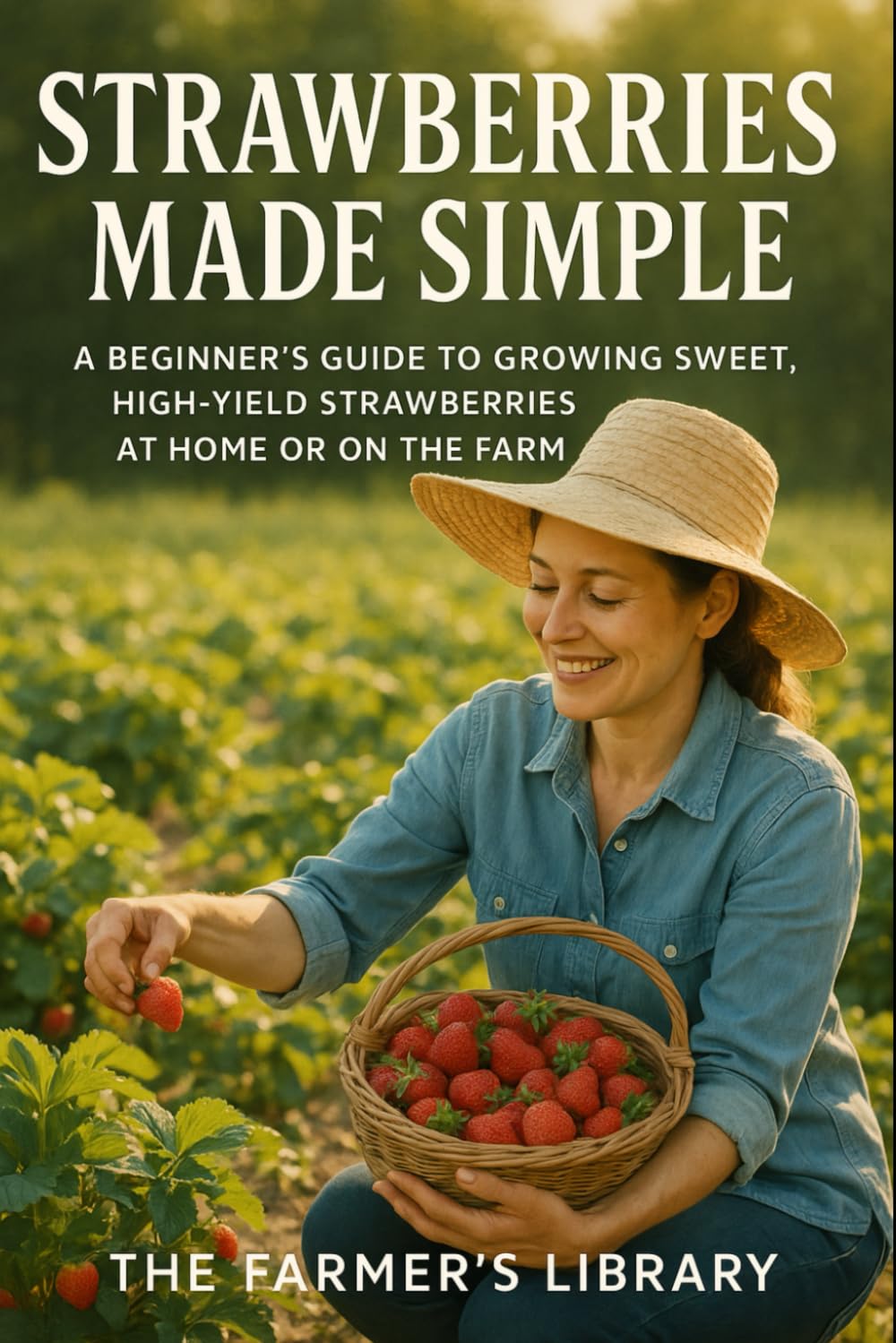
Strawberries Made Simple is a compact, beginner-friendly guide for anyone looking to grow strawberries at home or on a small farm. Written by Farmer's Library, this 33-page book focuses on practical, organic methods for growing sweet berries in containers, raised beds, or traditional gardens. It's designed for those new to gardening or those who want a straightforward resource without overwhelming detail.
The book covers essential topics like choosing the right strawberry varieties (June-bearing, everbearing, day-neutral), soil preparation for strong roots, watering techniques to prevent rot, and organic pest control for common issues like slugs and aphids. It also includes tips for propagation via runners and guidance on harvesting and storage. Every section is written to be actionable, with clear steps and simple explanations.
At 2.08 ounces and with a 6x9 inch trim size, the paperback is lightweight and easy to carry. The writing is straightforward and avoids overly technical jargon, making it accessible to complete novices. However, the 33-page length means it is concise; some readers may wish for more detailed step-by-step photos or in-depth troubleshooting.
As a new release with no customer reviews yet, potential buyers should be aware that it hasn't been widely tested. The independent publishing may mean the editing is less rigorous than major publishers. More experienced gardeners might find the information too basic, though it could serve as a quick refresher.
Overall, Strawberries Made Simple delivers on its promise: a simple, actionable guide for beginners. If you're starting a strawberry patch and want a no-fuss resource, this affordable book is a solid choice. For seasoned growers, it may be too brief, but for its target audience, it gets the job done.

Pros
- Focused exclusively on Southern California, so no irrelevant climate advice
- Very beginner-friendly with simple explanations and practical steps
- Covers the full cycle from planting to harvest to cooking
- Written by a trusted master gardener with proven real-world results (seen in positive reviews)
- Pest and disease section helps avoid common mistakes that big box store varieties cause
Cons
- Only relevant for Southern California gardeners; not useful outside this region
- Limited to Kindle format, which may not suit readers who prefer a physical book
- At 104 pages, it's fairly concise and may leave advanced growers wanting more depth
The Strawberry Story by Julie Bawden-Davis is a focused guide for anyone wanting to grow sweet, organic strawberries in Southern California. It's part of her SoCal Year-Round Gardening Series and is aimed at both beginners and experienced gardeners who need region-specific advice. The book is available as a Kindle edition, making it easy to access on your phone or tablet while you work in the garden.
What sets this book apart is its laser focus on Southern California's varied microclimates. Bawden-Davis explains which strawberry varieties thrive near the coast, in hot inland valleys, or in cooler mountain areas. She also dives into year-round fruiting strategies, something that generic guides ignore. Reviewers praise the book for saving them from buying the wrong plants at big box stores and for helping them get a bumper crop after initial failures. The organic pest and disease chapter is especially valuable for keeping plants healthy without harsh chemicals.
The book is well organized and includes clear photos and diagrams. At 104 pages, it's a quick read but packed with actionable information. The writing style is friendly and conversational, which matches the author's reputation as a knowledgeable master gardener. Readers also appreciate the included recipes, which turn the harvest into jams, desserts, and more.
A limitation to note: this book is not useful for gardeners outside Southern California or those in similar Mediterranean climates. The advice is tailored to local conditions and won't apply to other regions. Also, the Kindle-only format may be a drawback if you prefer a physical copy to flip through. Some advanced growers might want more in-depth coverage of soil science or advanced propagation techniques, but for the vast majority of home gardeners, this book covers all the essentials.
Overall, The Strawberry Story is an excellent resource for anyone looking to grow luscious strawberries in Southern California. It delivers on its promise of year-round harvests with proven, easy-to-follow advice. If you live in the area and love fresh berries, this guide is a smart investment that will pay off in sweet rewards.

Pros
- Heirloom variety with time-tested flavor and resilience.
- Large quantity of 250 seeds offers great value for covering ground.
- Low maintenance requirements suit busy or new gardeners.
- Adaptable to full sun or partial shade, giving flexible planting options.
- Perennial habit means you get berries year after year.
Cons
- Germination can be slow and may take several weeks or months, requiring patience.
- Seeds are tiny and need careful handling during planting.
- Some gardeners might prefer larger strawberry varieties for bigger fruit.
The BULBORIUM Alpine Strawberry Seeds bring a classic heirloom variety to your garden. If you love the idea of harvesting tiny, sweet wild strawberries while also getting a lush ground cover, these seeds are for you. They're perfect for gardeners in USDA zones 4 through 9 who want a low-maintenance perennial that returns each season.
With 250 seeds in the pack, you can cover a sizable patch of soil with these fast-growing plants. They thrive in spring and fall, producing small berries with an intense flavor that's often better than store-bought strawberries. The plants are hardy and adapt well to full sun or part shade, making them a flexible choice for different garden spots.
These are heirloom seeds, so they haven't been hybridized for uniformity. That means you get natural genetic diversity and a plant that's stood the test of time. The seeds are tiny but viable. They require a warm indoor start (around 68-75F) and good patience since germination can be slow. Once established, the plants form a dense mat that suppresses weeds and requires little more than occasional watering.
The main drawback is the waiting game. Germination can take weeks or even months, so this isn't an instant gratification plant. Also, the fruit size is small - you won't get plump supermarket strawberries. But for ground cover and flavor, these are hard to beat. There are no major quality issues reported, and the 5-star rating (though from only four reviews) suggests satisfied customers.
Overall, the BULBORIUM Alpine Strawberry Seeds are a solid choice for anyone wanting a reliable, flavorful ground cover that also produces edible berries. They're affordable, heirloom quality, and easy to care for once established. Just be prepared for the slow start and you'll be rewarded with years of tiny strawberry treats.

Pros
- Perfect for beginners who want to start growing strawberries without complex jargon.
- Emphasizes organic and sustainable gardening practices.
- Includes advice on growing in containers, ideal for apartments or small yards.
- Compact and lightweight, easy to take along to the garden or nursery.
Cons
- At 46 pages, some readers may find the content too brief for advanced techniques.
- No customer reviews available yet, making it hard to gauge real-world usefulness.
- Self-published format may lack professional editing and visual aids.
The Strawberries Care Handbook by Major Joe is a straightforward guide aimed at anyone who wants to grow their own organic strawberries. It’s written for total beginners, assuming little to no prior gardening experience. The book covers everything from choosing the right variety to planting, fertilizing, and harvesting, with extra emphasis on doing it without synthetic chemicals.
What stands out is the focus on making strawberries work in small spaces. The author explains how to use containers, pots, or raised beds on a deck or balcony, which is great for urban gardeners. The organic angle is a big plus, especially given how heavily store-bought strawberries are often sprayed with pesticides. The perennial nature of strawberries means once you plant them, you can enjoy berries for years with relatively little upkeep.
However, the book is only 46 pages long. For the price, it’s a quick read but some might find it lacks depth. There is no detailed troubleshooting for common diseases or advanced yield-boosting strategies. The lack of customer reviews is another drawback; we can’t confirm how well the advice works in practice. The self-published presentation is clean but basic, with no photos or illustrations to guide you visually.
If you’re an absolute beginner looking for a cheap, no-nonsense intro to organic strawberry gardening, this handbook can get you started. It’s not going to make you an expert, but it covers the essentials without overwhelming you. For the cost of a coffee, it’s a reasonable first step. Just know you may later want a more comprehensive resource as your garden grows.

Pros
- Straightforward, easy-to-follow structure for total beginners.
- Covers both ground and container growing, great for small spaces.
- Includes troubleshooting section to quickly fix common issues.
- Affordable price point for a focused gardening guide.
- Lightweight and portable (fits in a pocket or garden bag).
Cons
- Only 65 pages may not satisfy experienced gardeners seeking deeper detail.
- No customer reviews yet, so real-world feedback is unavailable to verify quality.
- Focus is strictly on strawberries; does not cover other fruits or broader gardening topics.
How to Grow Strawberries for Beginners by Renzo Caspian is a compact, no-nonsense guide aimed at anyone who wants to grow their own strawberries but doesn't know where to start. The book strips away jargon and delivers clear, actionable steps from seed selection to harvest. It's perfect for first-time gardeners, urban dwellers with limited space, or anyone who wants to enjoy homegrown berries without a steep learning curve.
The standout feature is its practical approach: you get specific advice on which strawberry varieties suit different climates and growing methods (June-bearing, everbearing, day-neutral). The author covers soil preparation, sunlight needs, and spacing, then moves into daily care like watering, fertilizing, and pest management. The troubleshooting section is particularly useful, offering quick fixes for yellowing leaves, poor fruit set, and common pests without overwhelming the reader.
At 65 pages, the book is intentionally concise. That's a strength for beginners who want a quick reference, but experienced gardeners might find it too basic. The design is straightforward with helpful illustrations, though the print quality is standard for an independent publication. The language is conversational and easy to digest, which keeps the learning process enjoyable.
One realistic drawback: there are no customer reviews yet since the book was just published (April 2025). So you can't gauge how well it resonates with other readers. Also, if you already know the basics of gardening, you might want something more advanced. But for the price, it's a solid investment if you're serious about growing strawberries for the first time.
Final verdict: If you're a beginner looking for a clear, affordable, and portable guide to growing strawberries at home, this book delivers. It's not a comprehensive encyclopedia, but it covers everything a new grower needs to succeed. Grab a copy, pick a sunny spot, and get ready for your first harvest.
ASIN: B0F6YPCSW5
Publisher: Independently published
Publication date: April 28, 2025
Language: English
Print length: 65 pages
ISBN-13: 979-8281718912
Item Weight: 4.3 ounces
Dimensions: 5 x 0.15 x 8 inches

Pros
- Beginner-focused with clear, actionable steps for each berry type
- Covers a wide range of berries in one guide, saving time and money
- Practical advice on natural pest control and year-round preservation
- Compact and portable format (5.5 x 8.5 inches) perfect for outdoor use
- Low price point makes it accessible for budget-conscious gardeners
Cons
- No user reviews yet, so real-world feedback is unavailable for this new release (November 2024)
- May lack advanced techniques that experienced berry growers seek
- Independently published, which might mean less polish in editing or layout
If you have ever dreamed of picking sun-warmed strawberries or tangy raspberries from your own backyard but felt intimidated by gardening, this book could be your perfect starting point. "Growing Berries Fast and Easy" by Norman E. Brock is exactly what it promises: a straightforward guide that strips away the complexity of berry cultivation. Aimed squarely at beginners, it covers strawberries, raspberries, blueberries, blackberries, and a few extras without assuming any prior knowledge. The author keeps the tone encouragingly simple, which is a relief for anyone who has been overwhelmed by jargon-heavy gardening manuals.
The book shines with its practical, step-by-step approach. Brock outlines the quickest-growing berry varieties suitable for different climates and small spaces, making it relevant whether you have a sprawling yard or a cozy patio. He explains how to set up a berry garden with minimal tools and effort, then dives into optimizing sunlight, soil, and water for maximum yield. The natural pest control section is a standout, offering eco-friendly solutions that don’t require harsh chemicals. And for those worried about how to handle a bumper crop, there are simple methods to preserve berries for year-round enjoyment: freezing, jams, and more.
At 189 pages, the book is compact and lightweight (just over 10 ounces). The dimensions (5.5 x 8.5 inches) make it easy to take along to the garden or flip through at the kitchen table. The layout uses clear headings and bullet points, which helps when you need quick reference while planting or troubleshooting. As an independently published work, the production quality is decent, though you might notice the lack of glossy photos some larger publishers include. The text is readable and well-organized, making up for any visual simplicity with substance.
The main drawback is that this title is brand new, released in November 2024, so it lacks any user reviews or long-term feedback. That means you are going in without real-world validation of the methods. Also, if you are an experienced berry grower looking for advanced techniques like grafting or soil pH management in extreme detail, this guide may feel too basic. It is designed for those starting from scratch, and it stays true to that mission.
Overall, "Growing Berries Fast and Easy" is a solid investment for the aspiring home gardener who wants to grow a variety of berries without spending a fortune on equipment or losing time to trial and error. It delivers clear, actionable advice in an affordable package. If you are ready to taste homegrown berries this season, this book gives you a reliable roadmap to get there.
Publisher: Independently published
Publication Date: November 20, 2024
Language: English
Print Length: 189 pages
ISBN-13: 979-8300594381
Item Weight: 10.7 ounces
Dimensions: 5.5 x 0.43 x 8.5 inches
Best Sellers Rank: #298,244 in Books; #21 in Shrub Gardening; #97 in Fruit Gardening
Frequently Asked Questions About Planting Strawberries
Still wondering about the best ways to plant strawberries? Here are answers to common questions that come up when starting a strawberry patch.
What is the best time of year to plant strawberries?
The ideal planting window depends on your region. In most temperate areas, early spring (as soon as the soil can be worked) is best for June-bearing varieties. If you live in a warmer climate, you can plant in fall for a spring harvest. Many gardeners find that October works well for setting out bare-root plants, as long as the danger of hard frost has passed. For more timing tips, see our plant food for water propagation guide, which includes seasonal advice.
How deep should I plant strawberry crowns?
This is one of the most common mistakes. The crown (the thick part where leaves meet roots) should sit exactly at soil level. If you bury the crown too deep, it can rot. If you leave it too high, the roots may dry out. A good rule of thumb is to make a small mound in the planting hole, spread the roots over it, and backfill so the crown is just barely covered. Many of the books in our list, like Grow the Best Strawberries, explain this perfectly.
What soil conditions do strawberries prefer?
Strawberries love well-draining, slightly acidic soil with a pH between 5.5 and 6.5. Before planting, mix in plenty of organic matter like compost or aged manure. Avoid heavy clay soils that stay wet, as they encourage root diseases. Raised beds are an excellent choice because they improve drainage and warm up faster in spring. For container gardening, use a high-quality potting mix specifically designed for edibles.
How much sun do strawberry plants need?
Strawberries are sun lovers. They need at least 6 to 8 hours of direct sunlight each day to produce sweet, full-sized berries. In hotter climates, some afternoon shade can help prevent scorching, but too much shade reduces yield and flavor. If your garden spot is shady, consider growing alpine strawberries (like the 250PCS Alpine Strawberry seeds) because they tolerate partial shade better than standard varieties.
How often should I water newly planted strawberries?
Consistent moisture is key during the first few weeks. Water 1 to 2 inches per week, depending on rainfall and temperature. Drip irrigation or soaker hoses are ideal because they keep the leaves dry, reducing the risk of fungal diseases. Once established, strawberries are somewhat drought-tolerant but will produce better with regular watering. Mulching with straw helps retain soil moisture and keeps berries clean.
Have questions about these how to best plant strawberries recommendations? Check out our Homepage for more gardening guides or browse related topics like fertilizers and seed starting to support your strawberry patch.





Write Your Review
No reviews yet. Be the first to share your experience!