


Designing a planter box isn’t just about making your patio look nice, although that’s a wonderful bonus. The right design directly impacts your plant’s health and your success as a gardener. A well-thought-out planter box provides better root aeration, prevents soil compaction, and offers crucial drainage to stop roots from rotting. Whether you’re growing herbs on a sunny balcony, creating a vegetable patch in a small yard, or adding greenery to an indoor corner, the container you choose sets the stage for everything that follows. For October 2026, we’ve gathered 8 of the most popular resources to help you learn how to design a planter box, ranging from comprehensive guides for beginners to specific project plans and ready-to-use garden beds.
Many gardeners struggle with containers that dry out too quickly, don’t drain properly, or simply aren’t the right size for their plants’ roots. The products and books listed here address those common frustrations. Some focus on the principles of container garden design, helping you choose materials, sizes, and layouts. Others provide step-by-step woodworking plans if you prefer to build your own. There are also options for those who want to skip the building phase and get straight to planting with a sturdy, pre-made raised bed. This variety means you can find an approach that matches your skill level, available time, and gardening goals. If you’re also thinking about what to plant once your box is built, our guide on what to plant in an urn planter offers creative ideas that can be adapted to many container types.

Pros
- Comprehensive collection of 30+ projects covering trellises, planters, raised beds, and more
- Step-by-step instructions with scaled drawings and shopping lists eliminate confusion
- Requires only basic tools – no advanced woodworking skills needed
- Projects use a wide variety of easily sourced materials for creative flexibility
- High-quality full-color photographs throughout make each build easy to follow
Cons
- Digital only format may not suit those who prefer a physical book to reference while working
- Relatively few customer reviews so far, making it harder to gauge widespread satisfaction
- Experienced woodworkers might find the projects too basic for their skill level
If you're a beginner gardener or DIYer looking to add custom touches to your outdoor space, Trellises, Planters & Raised Beds for Beginners is a solid starting point. Published by New Shoe Press and written by the Editors of Cool Springs Press, this Kindle book packs over 30 project plans for building trellises, raised beds, planter boxes, window boxes, and more. The entire focus is on making these projects accessible with common tools and materials you likely already have or can easily find.
The standout quality of this guide is its clarity. Each project includes a full-color photograph of the finished piece, a scaled drawing plan, a shopping list, and a cutting list. Step-by-step instructions are detailed but not overwhelming. The book covers a range of materials from wood and metal to hypertufa and clay pots, so you can pick projects that match your skill level and available resources. As a beginner, you'll appreciate that no specialized power tools are required just basic hand tools and a bit of elbow grease.
In real-world use, the instructions hold up well. The scaled plans are easy to follow, and the lists prevent last-minute trips to the hardware store. One reviewer noted they were new to woodworking and found the book full of great ideas, echoing the experience of many first-time builders. The digital format is convenient for Kindle users, but keep in mind that flipping back and forth between plans and instructions on a small screen can be a bit tedious. Printing out a page or two might help if you prefer a physical reference.
On the downside, the book has only a handful of reviews so far, which doesn't give a complete picture of its reliability. Also, if you're an experienced woodworker, these projects might feel too basic. But for the target audience beginners it's exactly the right level. The price is extremely low, making this an inexpensive way to explore a new hobby or add value to your garden without hiring a contractor.
Overall, Trellises, Planters & Raised Beds for Beginners delivers on its promise: simple, unique, and useful projects anyone can build. It's a worthwhile purchase for gardening enthusiasts and weekend DIYers who want to create something beautiful with their own hands. The step-by-step approach and comprehensive plans take the guesswork out of construction, leaving you with a satisfying finished project and a sense of accomplishment.

Pros
- Features breathtaking photography that clearly illustrates each design concept
- Uses commonly available plants rather than exotic hard-to-find varieties
- Provides clear, straightforward instructions accessible to beginner gardeners
- Covers both design aesthetics and practical maintenance techniques
- Includes valuable information on container materials and their pros and cons
Cons
- Some plant suggestions may be region-specific or harder to find in certain areas
- Published in 2009, so newer plant varieties aren't included
- Occasional shipping issues reported with books arriving creased or bent
Container Gardening: 250 Design Ideas & Step-by-Step Techniques is exactly what its title promises: a comprehensive visual guide and practical manual rolled into one. Compiled from the trusted pages of Fine Gardening magazine, this book targets anyone with limited space or time who still wants to create beautiful, living displays. Whether you're working with a small apartment balcony, a patio, or just want to add strategic greenery around your home, this resource delivers both inspiration and actionable knowledge.
The standout feature is undoubtedly the 250 design ideas, each accompanied by stunning photographs that show you exactly how the finished arrangement should look. What makes these designs particularly valuable is their practicality. Reviewers consistently praise how the book uses plants that are actually available at most garden centers, not exotic specimens you'd need to special-order. Each design comes with clear identification of every plant used and specific notes about ideal planting conditions, sun requirements, and care tips.
Beyond the beautiful pictures, the book delivers substantial educational content. You'll find solid guidance on container selection, including detailed explanations of different materials like plastic, cement, and resin, along with their practical advantages and disadvantages for various situations. The step-by-step techniques cover everything from soil preparation and planting to fertilizing, watering (including drip irrigation setups), and seasonal maintenance. There's even guidance on making your own cuttings for propagation and creating custom potting soil blends.
There are a couple of considerations worth noting. Since the book was published in 2009, it doesn't include newer plant varieties that have become popular in recent years. Some international reviewers mentioned that while the concepts are universal, specific plant recommendations are geared toward the American market. A small number of buyers reported receiving books with minor cosmetic damage, though this appears to be a shipping issue rather than a problem with the book's content or production quality.
For anyone interested in container gardening, this book represents exceptional value. It successfully bridges the gap between pure inspiration and practical how-to guidance. The photography alone makes it worth having on your shelf for reference, while the clear instructions ensure you can actually recreate the designs you love. If you're going to buy just one book on container gardening, as multiple reviewers have stated, this is the one that will give you both beautiful ideas and the knowledge to execute them successfully.
Publisher: Taunton Press
Publication Date: February 3, 2009
Edition: 13th Edition
Language: English
Print Length: 240 pages
ISBN-10: 1600850804
ISBN-13: 978-1600850806
Item Weight: 1.65 pounds
Dimensions: 8.25 x 0.5 x 10.75 inches
Categories: Container Gardening Books, Small Homes & Cottages, House Plant Gardening

Pros
- Clear, accessible instructions make it easy for complete beginners
- Beautiful photography and layout keep you engaged and inspired
- Covers a variety of light conditions, from sunny south-facing to shady north-facing windows
- Includes both indoor and outdoor projects, maximizing your space options
- Focuses on practical maintenance like fertilizing and watering schedules
Cons
- Limited specifically to window box gardening, not broader container gardening
- No reviews available yet, so real-world feedback is lacking
- May be too basic for experienced gardeners looking for advanced techniques
How to Window Box by Chantal Aida Gordon is a friendly and visual guide for anyone wanting to add greenery to small spaces. Whether you live in an apartment with a single windowsill or a house with multiple sunny ledges, this book shows you how to create thriving miniature gardens indoors or out. It's ideal for beginners who feel intimidated by traditional gardening, as well as city dwellers with limited square footage.
The standout quality of this book is its focus on practical, step-by-step projects. It covers a wide variety of plants, from sun-loving succulents and cacti to shade-tolerant herbs and monsteras. Each project includes clear instructions on soil mix, watering, and light requirements. The 'thriller/spiller/filler' formula for arranging plants is explained beautifully, making it easy to achieve professional-looking boxes. The photography is bright and inviting, helping you visualize the final result before you start.
Design-wise, the book is a compact paperback with a clean layout. The instructions are broken down into easy-to-follow steps, and each plant type has its own care chart. One minor drawback is that it focuses solely on window boxes, so if you're looking for advice on larger containers or raised beds, this isn't the right book. Also, since it was published in 2018, some plant availability might have changed, but the core principles remain solid.
There are no major cons, but complete novices might wish for more troubleshooting tips on common pests or diseases. The book assumes you can source the materials easily, which might not be the case in all areas. Still, for its intended purpose, it delivers exactly what it promises.
Verdict: How to Window Box is a delightful and reliable resource for small-space gardeners. Its combination of beautiful photography, clear instructions, and plant-specific guidance makes it a worthwhile purchase for anyone eager to grow a few square feet of green, no matter where they live.

Pros
- Specifically tailored for beginners with no prior gardening expertise required.
- Focuses on practical application and avoiding common design mistakes.
- Provides visual inspiration from the renowned gardens of Charleston, SC.
- Concise and direct format, making it a quick and actionable read.
- Covers foundational design concepts like color theory and visual cohesion.
Cons
- The print length is only 36 pages, which may limit depth on some topics.
- As a new publication, it lacks user reviews to gauge broader reader satisfaction.
- The focus is primarily on aesthetic design rather than detailed horticultural care.
This book by Sue Merriwether serves as a dedicated primer for anyone feeling inspired but intimidated by the idea of designing their own container garden, flower box, or small courtyard. It's expressly written for beginners, promising that you don't need to be an expert to create something beautiful. The core appeal is its geographical inspiration, drawing directly from the iconic and lush floral displays of Charleston, South Carolina. It aims to distill that aesthetic into practical steps you can follow at home.
The standout feature is its structured, benefit-focused approach. Instead of overwhelming you with theory, it introduces key design pillars and practical mistakes to avoid. Concepts like understanding color, creating a cohesive look, and the popular 'Thrill, Fill, and Spill' planting technique are explained to give your arrangements balance and visual impact. The inclusion of pictures for inspiration helps translate these concepts from idea to reality, which is crucial for visual learners and those new to garden design.
Regarding its build and presentation, the book is a concise, independently published paperback. Its 36-page length and focused chapters keep the information straightforward and digestible. This format is a significant advantage for beginners who might be discouraged by lengthy, technical manuals. The physical dimensions make it a handy reference you can easily bring outside while planning or planting.
A potential drawback is the book's brevity. While conciseness is a pro for quick learning, some readers might wish for more in-depth exploration of plant selection, seasonal care, or soil specifics for containers. Its current lack of customer reviews also means prospective buyers must rely solely on the product description to assess its value, as there's no independent feedback yet.
The final verdict is clear. If your goal is to start designing attractive container gardens or small spaces using proven, aesthetic principles from a beautiful source like Charleston, this guide is a solid choice. It effectively bridges the gap between inspiration and action for novices. It won't make you a master gardener, but it will confidently help you create a beautiful display right the first time, which is exactly what many beginners need.
Publisher: Independently published
Publication Date: June 17, 2022
Language: English
Print Length: 36 pages
ISBN-13: 979-8836787790
Item Weight: 3.2 ounces
Dimensions: 5 x 0.09 x 8 inches

Pros
- Clear, easy-to-follow instructions perfect for absolute beginners
- Covers everything from building to soil selection to planting
- Full-color illustrations and practical planting plans throughout
- Great value for a comprehensive all-in-one resource
- Encouraging tone that builds confidence and excitement
Cons
- Limited depth on companion planting and composting methods
- Some building plans assume a moderate DIY skill level
- May not satisfy experienced gardeners seeking advanced techniques
If you have ever wanted to start a raised bed garden but felt overwhelmed by where to begin, this book is the perfect place to start. Written by popular YouTube gardener CaliKim, The First-Time Gardener: Raised Bed Gardening is designed specifically for beginners who want clear, trustworthy guidance. CaliKim shares her own experience and proven methods, helping readers avoid common mistakes and grow with confidence from day one.
What sets this book apart is its practical, hands-on approach. It includes DIY plans for building several types of raised beds, detailed advice on choosing and mixing the best soil, and illustrated planting plans that show exactly how many plants fit in a given space. There are even step-by-step projects for trellising systems that save space and increase yields. Whether you have a large yard or just a small patio, the book covers options like elevated beds and concrete block beds to make gardening accessible anywhere.
Real-world feedback from readers echoes the book's value. Many praise it as an all-in-one resource that answers questions before they arise. Reviewers mention using its tips to grow abundant tomatoes, setting up salad stations, and getting their whole family involved. The friendly, encouraging tone makes it feel like you have a mentor guiding you through each season.
No guide is perfect for everyone. Some reviewers note that the book could go deeper into companion planting and composting for those who want to fine-tune their garden ecology. A couple of the building plans assume basic DIY skills, which might be challenging for complete novices. And if you are already an experienced gardener, you might find some sections too basic. But for its intended audience, these are minor quibbles.
Overall, this is an excellent investment for anyone new to raised bed gardening. It combines solid information with genuine encouragement, making it much easier to go from dreaming about a garden to actually harvesting your own vegetables. CaliKim delivers a trustworthy, beginner-friendly guide that earns its place on any new gardener's bookshelf.
Publisher: Cool Springs Press (April 12, 2022)
Language: English
Print Length: 176 pages
ISBN-10: 0760372756
ISBN-13: 978-0760372753
Item Weight: 1.37 pounds
Dimensions: 8.05 x 0.65 x 10 inches
Part of Series: The First-Time Gardener's Guides
Best Sellers Rank: #77 in Container Gardening, #213 in Vegetable Gardening (Books)

Pros
- Exceptionally clear and practical for first-time gardeners.
- Specifically tailored for small spaces like balconies, patios, and tiny yards.
- Offers a proven system that avoids the typical discouraging trial-and-error phase.
- Packed with actionable tips for both flowers and productive vegetables.
- Well-reviewed by both beginners and experienced gardeners for its useful knowledge.
Cons
- Primarily focused on container methods, not in-ground gardening.
- Future publication date (October 2025) means it's not immediately available for purchase.
Container Gardening for Small Spaces by Tony V Watson is a targeted handbook for anyone who wants to cultivate plants but lacks a traditional garden. It's perfect for apartment dwellers with a balcony, homeowners with a small patio or passageway, or even renters with an awkward yard. The book directly addresses the common belief that you need a large space or innate talent, proving that a productive and relaxing green retreat is possible with just some containers and clever planning.
The book's standout performance lies in its structured approach. Instead of overwhelming readers with fragmented advice, it introduces the simple 5-step GROVE framework. This system provides a clear path from assessing your space to maintaining your garden, which reviewers praise for eliminating confusion. It covers crucial practicalities like sun mapping, the correct soil mixture for containers (explaining why garden soil fails), and budget-friendly container ideas. The focus on vertical gardening techniques is particularly valuable for maximizing every inch of limited space.
In terms of its design and build as a guide, it's comprehensive yet accessible. It spans 176 pages, packing in information on easy-to-grow vegetables, fruit, herbs, and flowers suitable for beginners. The content is logically organized, moving from foundational concepts to specific execution steps. Reviews from both novices and seasoned gardeners confirm that the information is helpful and introduces ideas they hadn't considered, indicating its depth transcends a mere basics booklet.
A potential drawback is its singular focus. This is exclusively a guide for container and small-space gardening. If you have a large yard and intend to do extensive in-ground planting, this book won't cover those methods. Also, note its listed publication date is in the future, so it may not be readily available until that time.
The final verdict is that this is an excellent, highly-rated resource for its specific niche. If you feel intimidated by gardening or have resigned yourself to having no space for it, this guide provides the confidence and clear blueprint to succeed. It transforms the possibility of a personal garden from a dream into a manageable, enjoyable project.
Publisher: Tony V Watson
Publication Date: October 7, 2025
Language: English
Print Length: 176 pages
ISBN-10: 1068472995
ISBN-13: 978-1068472992
Item Weight: 11.4 ounces
Reading Age: 14 - 18 years
Dimensions: 6 x 0.44 x 9 inches
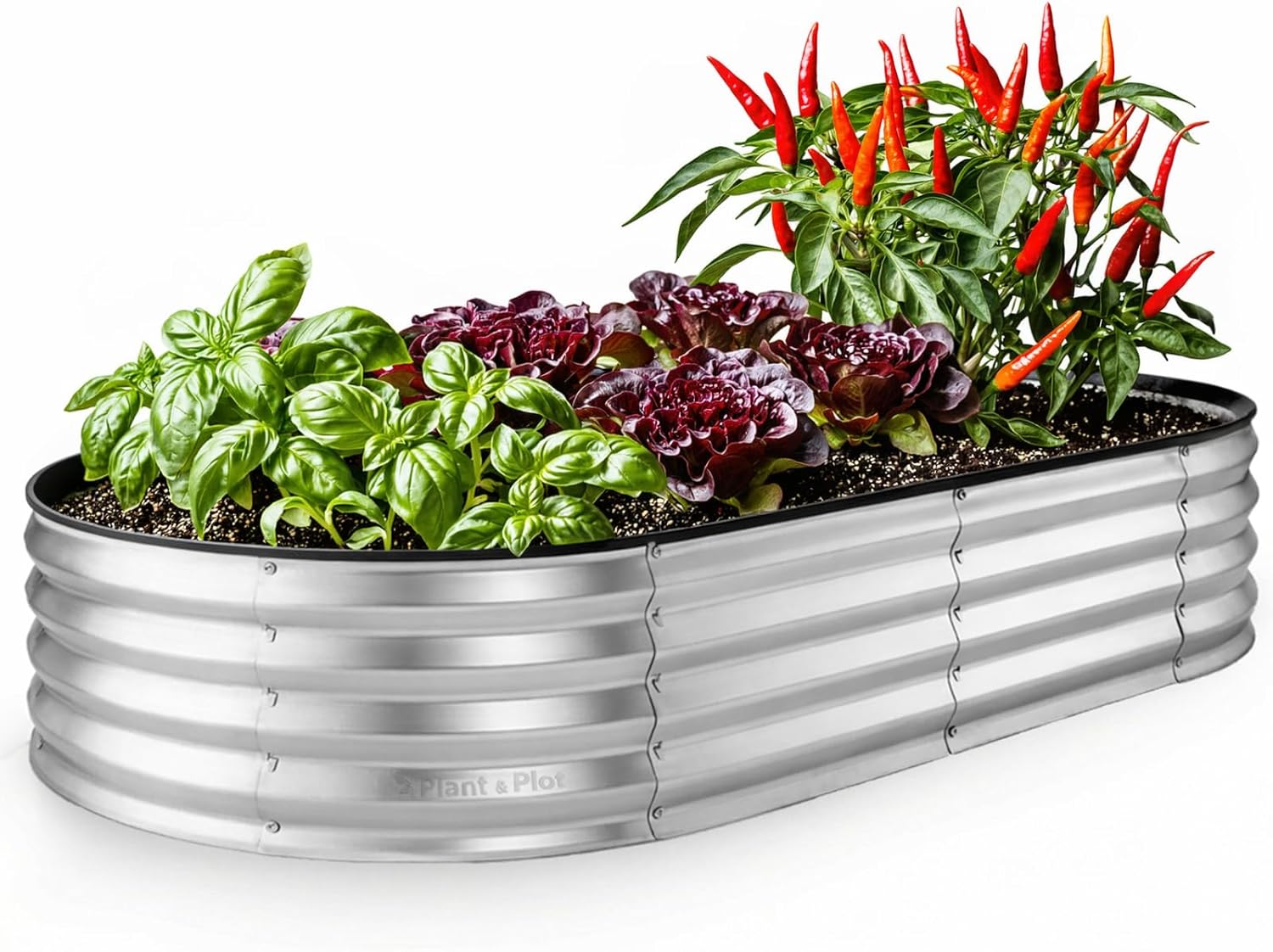
Pros
- Exceptionally easy and quick assembly with clear instructions, often completed in 30 minutes or less.
- Sturdy construction maintains its shape and finish through extreme weather conditions, from Texas heat to Florida humidity.
- Provides a large, productive growing area (18 cubic feet soil capacity) for vegetables, flowers, and herbs.
- Superior customer service with responsive support for any missing parts or assembly questions.
- Eliminates the rotting and maintenance issues commonly associated with wooden raised beds.
Cons
- Some users note the metal panels have very sharp edges during assembly, requiring careful handling.
- The tension rods or tab system can be slightly tricky for one person; having a helper is recommended for easiest assembly.
- Being a bottomless design, it must be placed directly on soil or ground, not on a sealed patio surface without planning for drainage.
The Plant & Plot 6x3 foot galvanized raised garden bed is a smart solution for home gardeners who want a durable, low-maintenance growing space. It's perfect for anyone tired of replacing rotting wooden beds, dealing with complicated assembly, or worrying about chemical leaching into their vegetable patch. Whether you're in a challenging climate with high heat and humidity or simply want a clean, modern look for your backyard, this metal bed delivers a reliable foundation for your gardening dreams.
Where this product truly shines is in its combination of thoughtful design and real-world performance. The patented tool-free assembly isn't just a marketing claim. Reviewers consistently praise how the panels connect easily, with holes that actually line up, leading to a frustration-free setup in as little as 20 to 30 minutes. Once filled, the open-bottom design works brilliantly, allowing excess water to drain away and preventing the soil compaction that can stunt plant growth. Customers from Florida to Texas report their beds holding up beautifully through intense sun, heavy rains, and even hail, with the finish remaining intact and the structure staying sturdy season after season.
Build quality is a clear strength. The bed is made from 0.6mm thick steel coated with a layer of zinc, a process known as galvanization that provides serious rust resistance. This isn't flimsy material. It feels substantial yet is light enough to maneuver during assembly. The company has also paid attention to safety for a product meant for family spaces. The panel tops are rolled over to create rounded edges, and they include safety rubber edging to cover any potential sharp spots, making it safer around children and pets than many metal products. It's also certified safe for growing food, complying with strict European REACH regulations concerning chemicals.
It's not without minor drawbacks. The primary one mentioned by users is that the metal edges can be sharp during the assembly process, so wearing gloves is a wise precaution. While many assemble it solo, the process involving connecting panels and tabs is genuinely easier with two people, as one can hold the panel steady while the other secures it. Also, remember that this is a bottomless bed. This is great for drainage but means you need to place it on soil, grass, or a surface where water can escape. Placing it directly on a wooden deck or patio without a plan would be a mistake.
Final verdict? The Plant & Plot raised garden bed is a standout choice that justifies its popularity. It solves the longevity problem of wood, offers genuinely easy assembly, and performs reliably in diverse climates. The fact that it comes from a family business that gives back to the community and supports it with a 3-year warranty adds to its value. If you're looking for a set-it-and-forget-it garden bed that will host your tomatoes, peppers, and flowers for years to come, this galvanized metal bed is an excellent investment.
Brand: Plant & Plot
Size: 6 ft (Length) x 3 ft (Width) x 1 ft (Height)
Material: Galvanized Steel (0.6mm thickness)
Color: Silver
Shape: Rectangular
Assembly: Tool-Free, Patented Design
Soil Capacity: Approximately 18 cubic feet
Base: Open / Bottomless for drainage
Safety Features: Rolled edges, included safety rubber edging
Usage: Outdoor
Warranty: 3-Year Limited Warranty

Pros
- Clear, step-by-step 3D visual instructions make assembly straightforward
- Designed for beginners; can be completed in a single weekend with basic skills
- Uses affordable and readily available cedar lumber (estimated $55-75)
- Raised design minimizes back strain and helps keep out slugs and weeds
- Customizable with paint or stain for a personalized look
Cons
- Requires own tools and lumber; no physical materials included with the PDF
- Digital guide only, no video walkthrough or physical copy
- Print Replica format may not offer text resizing on all e-readers
The Build Blueprints DIY Raised Planter Box Woodworking Plans PDF is a comprehensive guide for anyone looking to build a sturdy and attractive planter box. Designed for both beginners and experienced woodworkers, this digital download provides everything you need to construct a planter that fits small spaces like patios, balconies, or gardens. The plan uses cedar lumber, known for natural rot resistance and durability, and the estimated lumber cost is a fraction of what you would pay for a pre-built unit.
The standout feature of this guide is its step-by-step 3D visual assembly process. Color-coded instructions, a cut list with diagrams, and a shopping checklist make it easy to gather materials and complete the build in a weekend. The design measures 39.5 inches high, 61 inches wide, and 29 inches deep, providing ample planting space while reducing bending and weed maintenance. Beginners will appreciate the clear technical drawings and direct links to recommended tools.
In terms of build quality, the plan is well thought out. It uses only basic tools and widely available lumber, making it accessible to most DIYers. The raised design also helps keep out pests and minimizes strain on your back. However, keep in mind that this is a PDF guide only; you will need to supply your own tools, lumber, and hardware. Also, the digital file is in Print Replica format, which may not offer text resizing or other e-reader conveniences.
Overall, this plan delivers excellent value for the price (free to download). While it lacks video instruction and has no customer reviews yet, the detailed 3D visuals and comprehensive checklist mitigate those concerns. If you want a cost-effective, customizable planter box that you can build over the weekend, this guide is a solid choice.
Common Questions About How to Design a Planter Box
What is the most important factor when designing a planter box?
Without a doubt, drainage is the most critical factor. Plants suffocate and develop root rot in waterlogged soil. Any planter box design must include drainage holes in the bottom. For wooden boxes, lining the bottom with a permeable landscape fabric can help keep soil in while letting water out. Good drainage is just as important as providing the right plant food and fertilizer for healthy growth.
How deep should a planter box be for vegetables?
For most common vegetables like tomatoes, peppers, and cucumbers, a depth of at least 12 inches is ideal. Deeper rooting crops like carrots or parsnips may need 18 inches or more. For shallow-rooted greens like lettuce and spinach, 6 to 8 inches can be sufficient. Remember, deeper soil holds moisture better and gives roots more room to spread, which leads to healthier, more productive plants.
What wood is best for building a DIY planter box?
For a long-lasting outdoor planter, use naturally rot-resistant lumber like cedar or redwood. These woods contain natural oils that deter decay and insects. Pressure-treated pine is another durable, cost-effective option, but if you’re growing edibles, ensure it is rated for safe contact with soil and food crops. Always avoid woods that have been treated with toxic chemicals, especially for vegetable gardens.
Can I use a planter box indoors?
Absolutely. Planter boxes work well indoors, especially for creating grouped arrangements of houseplants. The key is to manage moisture. Always use a saucer or tray underneath to catch draining water and protect your floors. For indoor use, consider the weight of the filled box and ensure the location gets adequate light, which you can supplement with the right indoor grow lights if needed.
Is it cheaper to build or buy a planter box?
It often depends on the materials. Building your own from wood can be more cost-effective, especially for larger sizes, and allows for complete customization. Buying a pre-made box, often from metal or composite materials, saves time and guarantees a certain durability and finish. For simple projects, DIY is usually cheaper. For complex designs or specific materials like galvanized steel, purchasing might make more sense.




Write Your Review
No reviews yet. Be the first to share your experience!